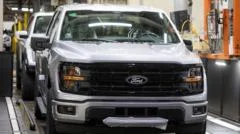
Ford Motor Co. has taken an unusually human approach to fixing its stubborn quality problems: it brought back what it calls "gray beard" engineers — veteran technicians whose decades of hands-on experience proved irreplaceable by artificial intelligence.
Why Ford turned back to veteran engineers
The carmaker had leaned heavily on AI systems to cut costs and reduce recalls. But the automated quality checks failed to match the nuanced judgment of experienced human inspectors. Ford found that its AI tools were missing subtle defects that a trained eye would catch instantly.
Over 350 engineers rehired to retrain AI systems
According to reports, Ford rehired more than 350 former engineers. Their mission: help retrain the AI systems that weren't getting the job done, and mentor younger staff who had become overly reliant on automated tools. The company internally refers to these veterans as "gray beards" — a nod to their age and experience.
How Ford's quality problems escalated
Ford's quality rankings had been slipping in recent years. The company faced rising recall numbers and customer complaints. In an effort to modernize and cut costs, Ford had pushed automation and AI into its quality control processes. But the results fell short of expectations.
What this means for workers and the industry
For Ford's workforce, the rehiring is a validation of human skill in an era of rapid automation. For the broader manufacturing industry, it's a cautionary tale: AI can enhance productivity, but it cannot replace the judgment, intuition, and experience of a veteran technician. The move also signals that companies may need to rethink how they integrate AI without discarding human expertise.
Ford's official response and strategy
Ford has not issued a detailed public statement about the rehiring, but the move has been confirmed by multiple reports. The company is now using these veteran engineers to reprogram the AI tools, teaching the systems what to look for and how to distinguish between acceptable variations and genuine defects.
Why AI fell short in quality checks
AI systems excel at pattern recognition and repetitive tasks. But vehicle quality inspection requires understanding context, material behavior, and subtle visual cues that can vary from one car to the next. A scratch that is cosmetic on one panel might indicate a structural issue on another. Veteran engineers bring this contextual knowledge that AI models, trained on limited datasets, often miss.
Confirmed facts vs what remains unclear
Confirmed: Ford rehired over 350 veteran engineers. They are helping retrain AI systems and mentor younger staff. The company calls them "gray beards." Unclear: The exact cost of the rehiring. Whether this is a temporary or permanent shift. How many AI systems were affected. Whether other automakers are facing similar issues.
Ford's competitive position and what makes it different
Ford's willingness to reverse course and rehire human experts sets it apart in an industry racing toward automation. While competitors like Tesla and GM push aggressively into AI-driven manufacturing, Ford is demonstrating that human judgment remains a critical competitive advantage — especially in quality control, where reputation and safety are at stake.
Risks and balanced view
Critics argue that Ford's AI failure could slow its modernization efforts and increase costs. Relying on veteran engineers, while effective in the short term, may not be scalable. Younger workers may become dependent on mentors rather than developing independent judgment. There is also the risk that Ford falls behind competitors who successfully integrate AI into quality processes.
A broader trend: AI's limits in manufacturing
Ford's experience is not isolated. Across manufacturing, companies are discovering that AI works best as a complement to human workers, not a replacement. From aerospace to electronics, the "gray beard" phenomenon is emerging as industries realize that decades of tacit knowledge cannot be easily encoded into algorithms.
What Ford workers and industry observers should watch
For Ford employees, the rehiring is a signal that their skills remain valued. For investors, it's a reminder that automation carries risks. For other manufacturers, the lesson is clear: before replacing humans with AI, ensure the technology is truly ready. Ford's move may prompt other companies to audit their own AI quality systems.
What could happen next
Ford is likely to continue blending human and AI quality checks, using veteran engineers to refine the technology. The company may also expand its mentorship programs. Industry-wide, expect more automakers to re-evaluate their reliance on AI for critical quality functions. The "gray beard" model could become a template for other sectors.
Our Take
Ford's decision to rehire veteran engineers is a rare and honest admission that AI is not a magic bullet. In an era where every company is racing to automate, Ford has shown the courage to say: some things still require human hands and human eyes. This is not a rejection of technology — it's a smarter integration of it. The real lesson is that experience, judgment, and intuition cannot be replaced by algorithms. They can only be complemented by them.
Frequently Asked Questions
Why did Ford rehire human engineers?
Ford rehired over 350 veteran engineers because its AI-powered quality inspection systems failed to match the skill and judgment of experienced human technicians. The AI was missing subtle defects that trained eyes could catch.
What are "gray beard" engineers at Ford?
"Gray beard" is Ford's internal term for veteran engineers with decades of hands-on experience. These engineers are being brought back to retrain AI systems and mentor younger staff.
How many engineers did Ford rehire?
Ford rehired more than 350 former engineers to help fix its quality control problems after AI systems fell short.
Does this mean AI is failing in manufacturing?
Not entirely. Ford's experience shows that AI has limits in complex quality inspection tasks that require contextual judgment. The lesson is that AI works best as a complement to human expertise, not a replacement.