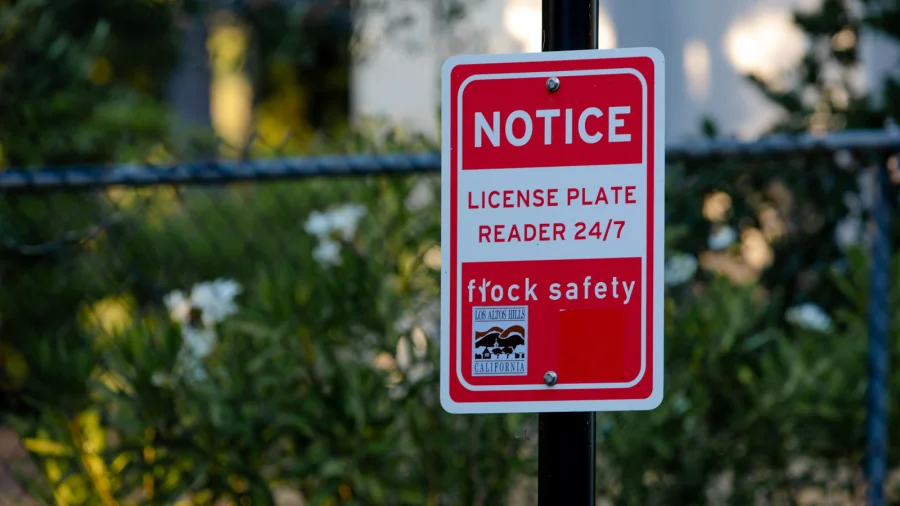
Every time you drive past a Flock Safety camera, it doesn't just read your license plate. It notes your car's make, model, color, speed, and even the sound of your engine. It logs the time, date, and location. And that data — stored for 30 days or more — is shared with police departments across the country, often without a warrant.
There are now more than 80,000 Flock cameras installed across the United States, from suburban cul-de-sacs to rural highways. The company, valued at over $3 billion, has become the dominant player in automated license plate recognition (ALPR) technology. But as its network expands, so do concerns about what exactly these cameras are capturing — and who gets to see it.
What Flock cameras actually capture — beyond the plate
Flock Safety cameras are marketed primarily as license plate readers. But the devices collect far more data than just alphanumeric plates. According to reports and privacy investigations, the cameras also record:
- Vehicle make, model, and color
- Speed and direction of travel
- Audio from the surrounding environment
- Time-stamped location data
- Driver and passenger descriptions (in some configurations)
This data is uploaded to Flock's cloud platform, where it can be searched, analyzed, and shared with law enforcement agencies that subscribe to the service. The company says it does not use facial recognition, but critics argue the combination of vehicle and behavioral data effectively creates a tracking profile for every driver.
Why privacy advocates are sounding the alarm
The American Civil Liberties Union (ACLU) has called Flock's expansion "aggressive" and warned that the system goes "far beyond simple driver surveillance." In a detailed report, the ACLU noted that Flock cameras are being installed in residential neighborhoods without public votes or transparency, and that data is often shared across jurisdictions without clear legal authority.
"This is a surveillance network that operates in the shadows," said a senior ACLU policy analyst. "Most people don't even know these cameras are watching them, let alone that their data is being shared with police in other states."
How Flock cameras spread so fast — and who's pushing back
Flock Safety was founded in 2017 and has grown rapidly by selling directly to homeowners' associations, neighborhood watch groups, and small police departments. The company's pitch is simple: help solve property crimes like car thefts and burglaries faster. And for many communities, it works — police departments report faster case closures and recovered stolen vehicles.
But the backlash is growing. Several cities — including Berkeley, California, and Somerville, Massachusetts — have voted to remove or restrict Flock cameras. Lawsuits have been filed challenging the legality of warrantless data sharing. And state legislators in at least a dozen states have introduced bills to regulate ALPR data retention and sharing.
Who is affected — and what it means for ordinary drivers
If you drive a car in the United States, there's a good chance your vehicle has already been logged by a Flock camera. The company says its cameras capture over 200 million license plate scans per month. That means every trip — to work, school, the grocery store, a doctor's appointment — is being recorded and stored.
For communities of color, the concern is even sharper. Studies have shown that surveillance technologies are disproportionately deployed in minority neighborhoods, raising fears of over-policing and data misuse. "This isn't just about privacy," said a civil rights attorney. "It's about who gets watched, who gets stopped, and who gets tracked."
What police and Flock Safety say in defense
Police departments that use Flock cameras argue they are essential tools for modern law enforcement. "We've solved car theft rings, burglary cases, and even missing person cases using Flock data," a police spokesperson told reporters. "It's not about surveillance — it's about public safety."
Flock Safety itself maintains that its cameras are designed to be privacy-preserving. The company says it does not use facial recognition, that data is automatically deleted after 30 days (unless flagged for an investigation), and that it does not sell data to third parties. "We built Flock to help communities fight crime, not to spy on people," the company has stated.
The deeper problem: data sharing without warrants
Even if Flock's policies are strict, critics point out that once data is shared with police, it can be used in investigations without a warrant. In many jurisdictions, law enforcement can search Flock's database for any license plate at any time — no court approval needed. This has raised Fourth Amendment concerns about unreasonable search and seizure.
Legal experts say the law has not kept pace with the technology. "The Supreme Court has ruled that long-term GPS tracking requires a warrant," said a constitutional law professor. "But license plate readers exist in a legal gray area. Courts are still figuring out how to apply old privacy rules to new surveillance tools."
Confirmed facts vs what remains unclear
Confirmed: Flock cameras capture vehicle make, model, color, speed, and location data. Audio recording is confirmed in some models. Data is stored for 30 days and shared with subscribing police departments. Over 80,000 cameras are installed nationwide.
Unclear: The full extent of audio data collection and whether it is used for voice recognition. Whether Flock shares data with federal agencies like ICE or DHS. The exact number of cities that have rejected or removed Flock cameras. The legal status of warrantless searches in ongoing court cases.
Why Flock Safety dominates the market
Flock's rapid growth is driven by a combination of factors: a simple subscription model (cameras cost $2,500 per year per camera), a user-friendly app that police departments love, and a network effect — the more cameras installed, the more valuable the data becomes. The company has also built strong relationships with homeowners' associations and neighborhood groups, bypassing the need for city council approval in many cases.
This moat — a growing network of cameras, sticky software, and grassroots adoption — makes it difficult for competitors to challenge Flock's dominance. The company has raised over $300 million in venture capital and is reportedly preparing for an IPO.
Risks and balanced view
Supporters argue Flock cameras are a proven crime-fighting tool that helps police solve cases faster and recover stolen property. They point to statistics showing reduced auto theft in neighborhoods with Flock cameras.
Critics counter that the system creates a permanent surveillance infrastructure with little oversight, that data can be misused, and that the benefits are not evenly distributed — wealthy neighborhoods get cameras, while poorer areas remain unprotected. There are also concerns about data breaches, insider misuse, and mission creep (using the system for purposes beyond its original intent).
A wider trend: the rise of private surveillance networks
Flock is part of a broader shift toward privately owned, publicly shared surveillance networks. Ring doorbells, ShotSpotter gunshot detectors, and Flock cameras all operate on a similar model: private companies collect data and share it with police. This blurs the line between public and private security, and raises questions about accountability, transparency, and civil liberties.
"We are building a surveillance state one camera at a time," warned a digital rights advocate. "And most people don't even realize it's happening."
What you should do if you're concerned
If you live in a neighborhood with Flock cameras, you can:
- Check your city council's website for public records on camera installations
- Attend local meetings to voice concerns about surveillance
- Support state-level legislation that limits data retention and requires warrants for searches
- Contact your state representative about ALPR regulation bills
- Use privacy-focused driving habits (though no method fully avoids detection)
What happens next
The battle over Flock cameras is likely to intensify. Several lawsuits are working their way through the courts, and state legislatures are debating new rules. The company's expected IPO could bring more scrutiny to its business practices. Meanwhile, the number of cameras continues to grow — Flock added over 20,000 cameras in 2025 alone.
The central question remains: can a surveillance tool that helps solve crimes also respect privacy? The answer, for now, depends on where you live — and who is watching.
Our Take
Flock cameras represent a genuine innovation in crime-fighting technology. But the speed of their deployment has outpaced public debate and legal safeguards. The fact that most Americans don't know they're being tracked — and that their data can be searched without a warrant — is a failure of transparency, not a feature of security.
The solution isn't necessarily to ban Flock cameras. It's to require clear public notice, warrant requirements for data searches, strict limits on data retention, and independent oversight. Without those guardrails, a tool designed to catch criminals risks becoming a system that watches everyone.
Frequently Asked Questions
Do Flock cameras record audio?
Yes, some Flock camera models are capable of recording audio from the surrounding environment. The company has not fully disclosed how this audio data is used or whether it is stored.
Can police search Flock data without a warrant?
In many jurisdictions, yes. Police departments that subscribe to Flock's service can search the database for any license plate at any time, without a warrant. This has raised Fourth Amendment concerns.
How long does Flock keep my data?
Flock Safety says data is automatically deleted after 30 days, unless it is flagged as part of an active investigation. However, data shared with police may be retained longer under local policies.
Are Flock cameras legal in my state?
Laws vary by state. Some states have passed laws regulating ALPR data, while others have no specific rules. Check your state's privacy laws or contact your local ACLU chapter for guidance.
Can I opt out of being tracked by Flock cameras?
There is no opt-out mechanism for Flock cameras. The only way to avoid being tracked is to avoid driving past them — which is increasingly difficult as the network expands.