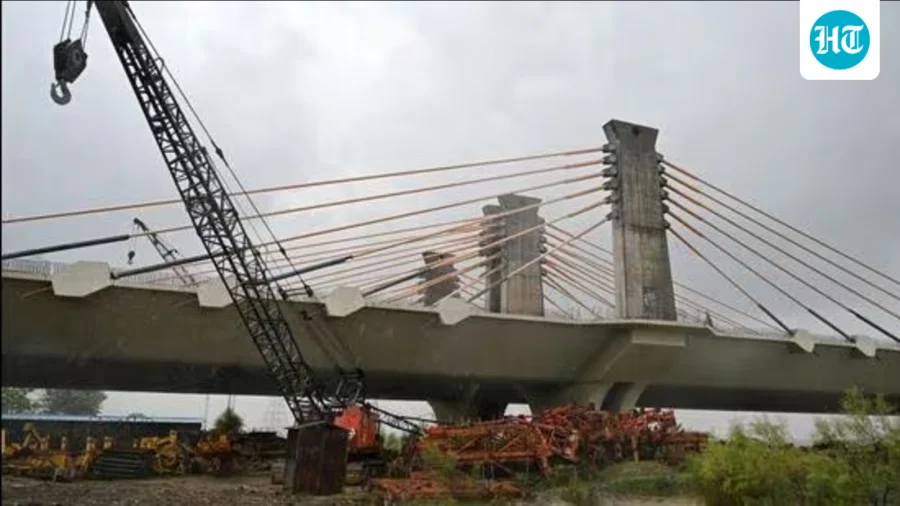
For nearly a decade, Delhi commuters have watched the Barapullah Phase-III corridor rise in fragments — a promise of faster travel between south and east Delhi that never quite arrived. On Monday, that promise took its most concrete step yet. The final deck slab of the elevated corridor was cast, physically linking both ends of the flyover across the Yamuna River for the first time.
Nine-year wait narrows to weeks
The project, originally slated for completion years ago, has been one of Delhi’s most talked-about infrastructure delays. With the final slab now in place, the Public Works Department (PWD) has set its sights on a mid-July opening. For residents of Mayur Vihar, Sarita Vihar, and beyond, that date can’t come soon enough.
Why this flyover matters for daily commuters
The Barapullah Phase-III corridor is designed to connect the existing Barapullah elevated road from Sarai Kale Khan to Mayur Vihar Phase-I, crossing the Yamuna. Once operational, it will slash travel time between south Delhi and east Delhi from over an hour to roughly 15–20 minutes during peak hours. For thousands who commute daily between Noida, east Delhi, and central Delhi, this is a game-changer.
A timeline of delays and milestones
The project was first conceived over a decade ago, with an original deadline that came and went. Land acquisition issues, design changes, and construction challenges pushed the timeline repeatedly. Monday’s slab casting marks the first time the structure has been physically continuous across the river — a milestone that signals the end of major construction work.
Who benefits most from the new link
Residents of Mayur Vihar, Patparganj, and nearby areas in east Delhi will see the most direct impact. For those working in south Delhi, Connaught Place, or AIIMS, the corridor offers an alternative to the congested Nizamuddin bridge and the Ring Road. Students, healthcare workers, and office-goers are among the groups likely to benefit most.
PWD Minister greets workers at site
Delhi PWD Minister Parvesh Verma visited the construction site during the casting of the final slab. In a gesture that underscored the project’s political and public significance, he personally greeted the workers involved. “This is a proud moment for Delhi,” he was quoted as saying in reports, acknowledging the efforts of the team that pushed the project across the finish line.
What the final slab casting actually means
Casting the final deck slab is not just symbolic — it is the structural culmination of the flyover. Until this point, the two ends of the elevated road were separate, with a gap over the Yamuna. The slab now connects them, allowing for the laying of the road surface, installation of railings, and final safety checks. Without this step, the corridor could not function as a continuous road.
Confirmed facts vs what remains unclear
Confirmed: The final deck slab was cast on Monday. The corridor is structurally linked across the Yamuna. PWD Minister visited the site. The project is expected to open by mid-July.
Unclear: The exact opening date has not been officially announced. Whether all approach roads and interchanges will be ready by July is not fully confirmed. The total cost overrun and final budget figures have not been publicly detailed in recent statements.
Why this project faced repeated delays
The Barapullah Phase-III corridor encountered multiple hurdles: land acquisition disputes, environmental clearances related to the Yamuna floodplain, design revisions, and contractor-related issues. Each delay added to the cost and frustration. The project became a symbol of Delhi’s infrastructure challenges — ambitious plans slowed by bureaucratic and logistical realities.
Risks and balanced view
While the completion is welcome news, questions remain about the quality of finishing work, the readiness of connecting roads, and whether the corridor will immediately ease congestion or simply shift bottlenecks. Some experts have pointed out that without proper integration with local road networks, the flyover’s benefits may be limited initially. Traffic management during the opening phase will be critical.
A wider trend in Delhi’s infrastructure push
The Barapullah Phase-III completion comes amid a broader push by the Delhi government to fast-track pending infrastructure projects. Other flyovers, underpasses, and road-widening projects are also in various stages of completion. The corridor is part of a larger plan to improve east-west connectivity across the Yamuna, which has long been a weak link in Delhi’s road network.
What commuters should know now
For those planning to use the new corridor, here’s what to expect: The flyover will likely open in phases, with the main carriageway available first. Check for official announcements from PWD closer to mid-July. Until then, existing routes via Nizamuddin bridge and DND Flyway remain the primary options. Once open, expect a significant reduction in travel time between Mayur Vihar and Sarai Kale Khan.
What happens next
Over the next few weeks, PWD teams will focus on road surfacing, installation of safety barriers, street lighting, and signage. Final load testing and safety inspections will follow. If all goes as planned, the corridor should be ready for inauguration by the end of June or early July, with public access shortly after.
Our Take
The Barapullah Phase-III corridor’s completion is more than just a construction milestone — it is a lesson in persistence. For nearly a decade, this project tested the patience of Delhi’s commuters and the credibility of its planners. That it is finally nearing completion is a relief, but it also raises questions about why such a critical link took so long. As the city grows, the gap between infrastructure ambition and execution must narrow. For now, though, Delhi can look forward to a smoother ride across the Yamuna.
Frequently Asked Questions
When will the Barapullah Phase-III corridor open?
The corridor is expected to open by mid-July 2026, following the casting of the final deck slab. An exact date will be announced by PWD after finishing work and safety inspections.
Which areas will the Barapullah Phase-III connect?
The corridor connects Sarai Kale Khan in south Delhi to Mayur Vihar Phase-I in east Delhi, crossing the Yamuna River. It will provide a direct elevated route between these areas.
Why was the Barapullah Phase-III project delayed for so long?
Delays were caused by land acquisition issues, environmental clearances related to the Yamuna floodplain, design changes, and contractor-related challenges. The project was originally due for completion years ago.
How will the Barapullah Phase-III help commuters?
Once open, the corridor will reduce travel time between south Delhi and east Delhi from over an hour to roughly 15–20 minutes during peak hours, easing congestion on alternative routes like Nizamuddin bridge.