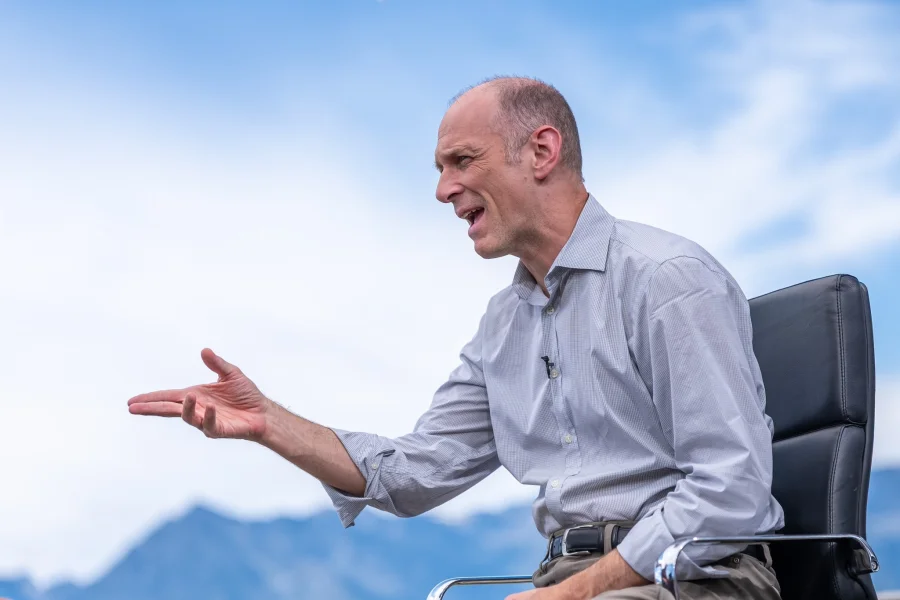
The artificial intelligence boom that has reshaped Wall Street and Silicon Valley may soon collide with the reality of the US economy. Chicago Federal Reserve President Austan Goolsbee has issued a pointed warning: the wave of investment in AI data centers is "not far" from causing what he calls "aggregate overheating."
What Goolsbee's AI Overheating Warning Actually Means
Goolsbee's concern is not about the technology itself, but the sheer scale of physical infrastructure being built to support it. Data centers consume vast amounts of electricity, land, and construction materials. When investment in one sector grows this fast, it can pull resources away from the rest of the economy, driving up costs and fueling inflationary pressures.
According to the Fortune report, Goolsbee sees this as a potential imbalance. The central bank's job is to keep the economy running at a sustainable pace—not too slow, but not so fast that prices spiral out of control.
Why a Top Fed Official Is Watching Data Centers So Closely
For everyday Americans, this matters because the Fed's response to overheating directly influences interest rates. If AI investment pushes the economy too hard, the Fed may need to keep rates higher for longer to cool things down. That affects mortgage rates, car loans, and credit card interest.
Goolsbee's framing suggests the Fed is now treating AI infrastructure like any other major economic force—one that can distort the balance between supply and demand if left unchecked.
The Scale of the AI Investment Wave Behind the Warning
The context here is critical. Tech giants have announced hundreds of billions of dollars in capital expenditure for AI data centers over the next few years. This is not a marginal trend; it is a structural shift in how corporate America spends money.
When a single sector absorbs that much capital and labor, it creates ripple effects. Construction firms are booked solid. Power grids are under strain. Skilled workers are in short supply. Goolsbee's point is that these bottlenecks can translate into broader price increases across the economy.
Who Feels the Pinch First If the Economy Overheats
The first signs of overheating typically appear in industrial costs and energy prices. Businesses that rely on construction, electricity, or specialized labor will see their expenses rise. Those costs often get passed down to consumers in the form of higher prices for goods and services.
Small businesses are particularly vulnerable. They compete for the same resources as the tech giants but without the same financial cushion to absorb price shocks.
How the Federal Reserve Is Reading the AI Investment Signal
Goolsbee's comments, as reported by Fortune, reflect a nuanced position. He is not calling for immediate action, but he is signaling that the Fed is watching this space carefully. The phrase "not far" suggests that the current pace of investment is approaching a threshold that would warrant a policy response.
This aligns with a broader debate inside the Fed about whether AI-driven productivity gains will eventually offset the inflationary pressure of the initial buildout. For now, the concern is on the front-end cost.
Confirmed Facts vs What Remains Unclear
Confirmed: Goolsbee made these remarks about AI potentially causing aggregate overheating. The report originates from Fortune's morning briefing.
Unclear: The specific timeline Goolsbee envisions for this overheating risk. The exact threshold at which the Fed would change its policy stance. Whether this view is shared by other Federal Reserve officials.
It is important to note that this is a reported comment, not a formal policy statement. The full context of Goolsbee's remarks may include additional nuance not captured in the briefing.
Why the AI Capex Boom Is Different From Past Investment Cycles
Previous technology booms, like the dot-com era, were largely about software and digital services. The AI boom is different because it requires physical infrastructure at an unprecedented scale. Every new AI model needs computing power, and that computing power lives in buildings that consume enormous energy.
This makes the current cycle more similar to a traditional industrial boom than a pure tech cycle. It has more direct implications for commodity prices, energy markets, and construction costs.
Risks and the Balanced View on AI-Driven Growth
Not all economists share Goolsbee's concern. Some argue that AI investment will ultimately boost productivity enough to offset the short-term costs. They point to the potential for AI to streamline operations across industries, reducing waste and improving efficiency.
Others worry that the Fed is too focused on traditional inflation metrics and may miss the structural changes AI is bringing. There is also the risk that over-tightening monetary policy could choke off a genuinely transformative technological wave.
The Bigger Pattern: Tech Investment vs. Economic Stability
This tension between technological ambition and economic stability is not new. Every major infrastructure wave—from railroads to highways to the internet—has created similar challenges for policymakers. The question is always the same: how do you let transformative investment proceed without letting it destabilize the broader economy?
Goolsbee's warning suggests the AI wave may be approaching that critical juncture.
What Businesses and Investors Should Watch Now
For investors, the key signal will be any shift in Fed language around AI investment in upcoming speeches or meeting minutes. For business owners, the practical takeaway is to monitor energy costs and construction prices in their regions.
For the general public, the most immediate impact will be through interest rates. If the Fed decides AI investment is pushing the economy too hard, the path to lower rates could lengthen.
What Could Happen Next in This AI-Economy Equation
The coming months will reveal whether Goolsbee's warning is a one-off observation or the beginning of a broader Fed narrative. If data center construction continues at its current pace, other officials may echo his concerns.
The counter-scenario is that AI-driven productivity gains start showing up in economic data, giving the Fed more room to be patient. Either way, the intersection of AI and monetary policy is now firmly on the table.
Our Take
Goolsbee's comment is a reminder that the AI revolution does not happen in a vacuum. It has physical consequences—power demands, construction booms, labor shortages—that intersect with the Fed's core mandate of price stability. The fact that a senior Fed official is publicly flagging this risk suggests it is being taken seriously at the highest levels of economic policy.
This is not a prediction of imminent crisis, but rather a recognition that the pace of change matters as much as the direction. For now, the AI boom continues, but the guardrails are being watched more closely than ever.
Frequently Asked Questions
What did Fed's Goolsbee say about AI and the economy?
Chicago Fed President Austan Goolsbee said AI-driven investment is "not far" from causing "aggregate overheating" in the US economy. He is concerned about the scale of data center construction and its potential to strain resources and fuel inflation.
How could AI data centers cause economic overheating?
Data centers consume massive amounts of electricity, land, and construction materials. When investment in this sector grows extremely fast, it can pull resources from other parts of the economy, driving up costs and creating inflationary pressure.
What does aggregate overheating mean for interest rates?
If the economy overheats, the Federal Reserve typically responds by keeping interest rates higher for longer to cool down spending and price increases. This affects mortgage rates, auto loans, and other borrowing costs for consumers and businesses.
Why is the Fed concerned about AI investment now?
The scale of AI capital expenditure by tech companies has reached historic levels. The Fed is watching whether this concentrated investment wave creates bottlenecks and price pressures that could complicate its goal of achieving a soft landing for the economy.