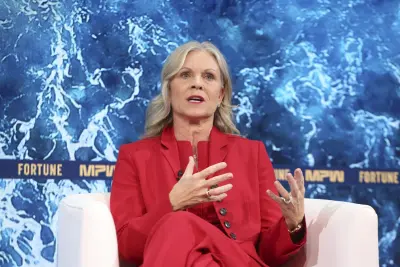
A 22-year-old with a famous last name and a $30 million check from a top venture firm is about to enter the high-stakes world of crypto derivatives. Theodore Gillibrand, son of New York Senator Kirsten Gillibrand — one of the most vocal pro-crypto voices in Congress — has raised funding to launch American Perpetuals Exchange Corporation, or APEC, a platform for perpetual futures trading. The deal values his startup at $300 million, according to two sources familiar with the matter who spoke on condition of anonymity to discuss private business dealings.
What is APEC and why perpetual futures matter
APEC aims to list perpetual futures, commonly called “perps.” Unlike standard futures contracts, perps have no expiration date. They allow traders to bet on the price of assets — often cryptocurrencies — without actually holding them. This makes them popular among speculative traders who want leveraged exposure. The market for perps is already massive: platforms like Binance, Bybit, and dYdX handle billions in daily volume. APEC wants to offer a regulated, US-based alternative.
The family connection that raises eyebrows
Theodore Gillibrand is not just any entrepreneur. His mother, Senator Kirsten Gillibrand, has been a leading advocate for crypto-friendly legislation. She co-sponsored the Lummis-Gillibrand Responsible Financial Innovation Act, which aims to create a regulatory framework for digital assets. She has also pushed for clearer rules around stablecoins and crypto taxation. Now, her son is building a business that depends on the very regulatory clarity she champions. Critics say this creates an unavoidable conflict of interest — or at least the appearance of one.
How the funding came together
The $30 million round was led by Lux Capital, a venture firm known for bets on deep tech and crypto infrastructure. The valuation of $300 million is striking for a startup that has not yet launched a product. Sources say the deal was structured as a seed round, with Lux taking a significant stake. The involvement of a top-tier VC signals confidence in the team and the market opportunity — but also raises questions about whether political connections played a role in the fundraising.
Who is affected by this development
For crypto traders, APEC could offer a regulated alternative to offshore exchanges that dominate the perps market. For regulators, it presents a test case: how to handle a startup with direct family ties to a lawmaker shaping crypto policy. For voters, it raises questions about whether elected officials should be allowed to advocate for industries that directly benefit their families. The story also affects the broader perception of crypto as an industry that operates in a gray zone of influence and access.
Senator Gillibrand’s office has not commented
As of publication, Senator Gillibrand’s office has not responded to requests for comment. The sources who confirmed the fundraising details spoke anonymously because the deal is private. Neither Lux Capital nor Theodore Gillibrand have issued public statements. The lack of official comment leaves many questions unanswered — including whether the senator was aware of her son’s fundraising efforts before they became public.
Why this matters beyond one startup
This story is not just about a 22-year-old founder. It is about the growing entanglement between crypto money and political power. The crypto industry has spent over $119 million on political contributions in the 2024 election cycle, according to Campaign Legal Center data. Senator Gillibrand has been a beneficiary of that spending. Now, her son is building a business that could profit from the regulatory environment she helps shape. Even if no laws are broken, the optics are damaging for an industry already fighting accusations of insider dealing and regulatory capture.
Confirmed facts vs what remains unclear
Confirmed: Theodore Gillibrand raised $30 million from Lux Capital for APEC, a perpetual futures exchange. The startup is valued at $300 million. The information comes from two sources familiar with the matter.
Unclear: Whether Senator Gillibrand knew about the fundraising. Whether any ethics rules were violated. Whether APEC has secured any regulatory licenses or approvals. Whether the exchange will launch in the US or offshore. All of these details remain unconfirmed.
Risks and balanced view
Supporters of the Gillibrand family argue that Theodore is an independent entrepreneur who should not be penalized for his mother’s career. They note that many lawmakers’ children work in finance and tech without controversy. Critics counter that the crypto industry’s heavy political spending creates a unique risk of quid pro quo — even if none exists. The story also highlights a broader concern: the revolving door between Washington and the industries it regulates. For now, the burden is on the Gillibrand family to prove that no improper influence occurred.
The wider pattern of crypto and political influence
This is not an isolated incident. The crypto industry has aggressively courted Washington, spending millions on lobbying and campaign contributions. Several lawmakers have family members working in crypto or blockchain. The line between public service and private gain is becoming increasingly blurred. If APEC succeeds, it could encourage more political families to enter the crypto space — further entrenching the perception that the industry buys access.
What readers should watch for
For those following this story, key developments to track include: any public statement from Senator Gillibrand or her son; any ethics complaint filed with the Senate Ethics Committee; the launch timeline and regulatory status of APEC; and whether Lux Capital or other investors face scrutiny. For crypto traders, APEC could be a legitimate alternative — but only if it operates transparently and within the law.
What could happen next
APEC could launch within months, targeting institutional and retail traders looking for US-based perps. Alternatively, regulatory hurdles could delay or derail the project. The story could also trigger an ethics investigation, especially if new details emerge about coordination between the senator’s office and her son’s startup. In the longer term, this case could influence how Congress writes crypto legislation — with stricter rules around family involvement.
Our Take
This story is a test for both the Gillibrand family and the crypto industry. For Senator Gillibrand, it demands transparency: she should clarify what she knew and when. For the crypto industry, it is a reminder that perception matters. Even if everything is above board, the appearance of a conflict erodes trust. For readers, this is a case study in how money, politics, and family intersect in modern America. The facts are still emerging, but the questions are already clear.
Frequently Asked Questions
What is APEC?
APEC stands for American Perpetuals Exchange Corporation. It is a startup planning to launch a platform for trading perpetual futures, a type of derivative popular among crypto traders.
Who is Theodore Gillibrand?
Theodore Gillibrand is the 22-year-old son of Senator Kirsten Gillibrand (D-NY). He raised $30 million from Lux Capital to launch APEC, which is valued at $300 million.
Is there a conflict of interest?
Senator Gillibrand is a leading pro-crypto lawmaker. Her son is building a crypto business. Critics say this creates a conflict of interest, but no evidence of wrongdoing has emerged. The senator has not commented.
What are perpetual futures?
Perpetual futures, or “perps,” are contracts that let traders bet on the price of an asset without a set expiration date. They are widely used in crypto trading for leveraged speculation.