For months, Kleiner Perkins partner Aditya Naganath had been wrestling with a conviction that felt obvious but unproven: the next wave of artificial intelligence wouldn't be a chatbot that answers questions for 30 seconds. It would be software that works autonomously for hours, executing thousands of tasks across multiple systems simultaneously. The only problem? Nobody had built the plumbing for it.
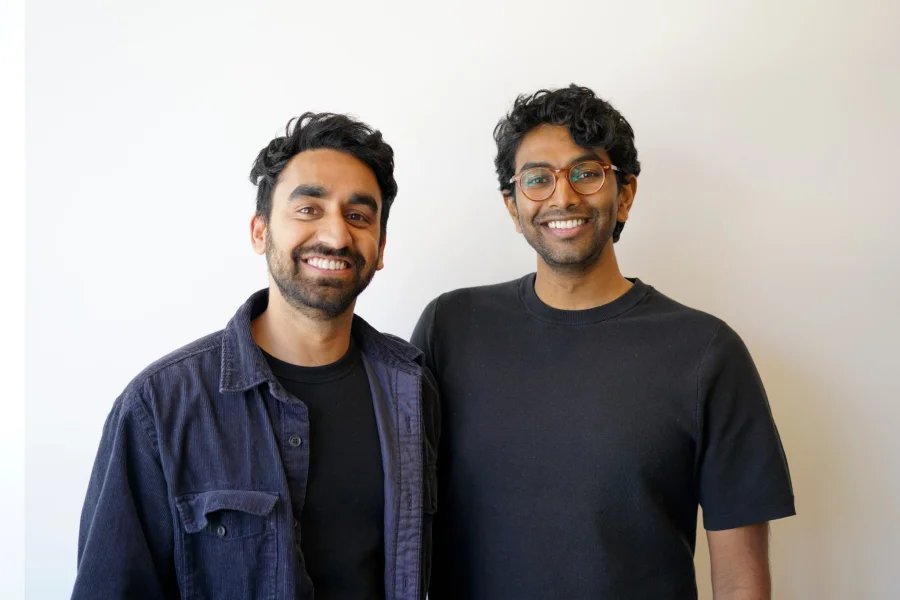
Then he met Neil Movva, a former Apple engineer who had been thinking about the exact same problem — and had already started building the solution.
"It felt obvious to both of us that you're going to need a different, specific inference platform built for these long-running agents," Naganath told Fortune in an exclusive interview.
The $80 million bet on a different AI future
Six months after that first conversation, Movva's startup — Sail Research — has launched from stealth with $80 million in seed and Series A funding at a $450 million valuation, Fortune learned exclusively. Kleiner Perkins led the Series A round, with participation from other investors who share Naganath's thesis that the current AI infrastructure is fundamentally misaligned with where the industry is heading.
The funding represents one of the largest early-stage rounds in the AI infrastructure space this year, signaling that venture capital is increasingly betting on specialized infrastructure over general-purpose AI models.
Why current AI infrastructure is built for the wrong future
Today's AI inference platforms — the systems that run AI models after they've been trained — are optimized for short, stateless interactions. A user asks a question, the model responds, and the conversation ends. This works well for chatbots like ChatGPT or Claude, where each query is relatively independent.
But autonomous AI agents are fundamentally different. They need to maintain context across hours of operation, execute multi-step workflows, interact with external APIs, make decisions based on changing conditions, and recover from errors without human intervention. Current infrastructure wasn't designed for any of this.
"The inference stack today is built for a world where you send a prompt and get a response back in seconds," Naganath explained. "But agents need to run for hours, maintain state, and coordinate across thousands of parallel tasks. That requires a completely different architecture."
From Apple engineer to AI infrastructure founder
Neil Movva spent years at Apple working on systems that required reliability, efficiency, and long-running processes — exactly the kind of engineering discipline needed for autonomous agent infrastructure. His background gave him firsthand experience with the limitations of existing inference platforms when applied to complex, persistent workloads.
Movva declined to comment for this article, but sources close to the company describe him as deeply technical and methodical, with a clear vision for what the next generation of AI infrastructure should look like.
The startup's name — Sail Research — reflects its mission: to navigate the uncharted waters of autonomous AI agents with infrastructure that can handle the complexity and scale required.
Who benefits from agent-ready infrastructure
The implications extend far beyond AI researchers and developers. If Sail Research succeeds, it could accelerate the deployment of autonomous agents across industries that have been slow to adopt AI due to reliability concerns.
Consider a logistics company that wants an AI agent to monitor supply chains, reorder inventory, negotiate with suppliers, and adjust shipping routes — all autonomously over weeks or months. Current infrastructure would struggle to maintain context and reliability across such long-running operations.
Similarly, financial services firms running automated trading strategies, healthcare systems managing patient care workflows, and manufacturing plants coordinating robotic systems all need inference platforms that can handle persistent, multi-step processes.
For everyday users, this could mean AI assistants that don't just answer questions but actually complete complex tasks — booking travel, managing finances, coordinating schedules — without constant human oversight.
Kleiner Perkins' AI thesis takes shape
Aditya Naganath's investment in Sail Research is part of a broader thesis at Kleiner Perkins that the next phase of AI will be defined not by better models but by better infrastructure for deploying those models in real-world applications.
"We've seen the model layer get dramatically better over the past two years," Naganath said. "But the infrastructure layer hasn't kept pace. If you believe that agents are the future — and we do — then you need infrastructure that's built for agents, not chatbots."
The firm has been actively investing in AI infrastructure companies, betting that the winners will be those that solve the hardest engineering problems rather than those that build the most popular consumer applications.
What makes Sail Research different from existing inference platforms
While companies like Nvidia, AWS, and Google Cloud offer inference solutions, they are primarily optimized for short-duration, stateless workloads. Sail Research is building from the ground up for long-running, stateful agent operations.
Key technical differentiators include:
- Persistent context management across hours or days of agent operation
- Parallel task execution across thousands of simultaneous agent instances
- Error recovery and fault tolerance designed for autonomous operation
- Efficient resource allocation for long-running workloads
- API integration frameworks for multi-system coordination
The company has not disclosed specific technical details about its architecture, but sources indicate it is building on top of existing cloud infrastructure while adding a specialized layer for agent workloads.
Confirmed facts vs what remains unclear
Confirmed: Sail Research has raised $80 million in seed and Series A funding at a $450 million valuation. Kleiner Perkins led the Series A. The company was founded by former Apple engineer Neil Movva. The startup is building an inference platform for long-running autonomous AI agents. The funding round closed six months after Movva and Naganath first met.
Unclear: The exact technical architecture of Sail Research's platform. The names of other investors in the round. The company's revenue model or customer traction. Whether the platform is already being used by any customers. The timeline for public availability.
Sail Research's moat: engineering talent and timing
In the competitive AI infrastructure space, Sail Research's advantages include:
- Founder expertise: Movva's Apple background gives him deep experience with reliable, long-running systems at massive scale.
- First-mover positioning: While others are focused on model improvements, Sail Research is targeting a specific infrastructure gap that few are addressing.
- Investor backing: Kleiner Perkins' brand and network provide credibility and access to enterprise customers.
- Clear thesis: The company has a focused mission rather than trying to be everything to everyone.
However, the moat is not unassailable. Larger cloud providers could build similar capabilities, and other startups are also working on agent infrastructure.
Risks and balanced view
While the funding and thesis are compelling, Sail Research faces significant challenges:
- Execution risk: Building reliable infrastructure for autonomous agents is technically extremely difficult.
- Competition: Major cloud providers and well-funded startups are also targeting the agent infrastructure market.
- Market timing: The autonomous agent market is still nascent, and widespread adoption may take years.
- Funding dependency: At a $450 million valuation with no clear revenue, the company will need to demonstrate progress quickly.
- Technical uncertainty: It's not yet clear what the optimal architecture for agent inference looks like.
Critics might argue that existing infrastructure can be adapted for agents, or that the market for autonomous agents is overhyped. The company will need to prove that specialized infrastructure delivers meaningful advantages over general-purpose solutions.
The broader shift toward agent infrastructure
Sail Research's launch is part of a wider trend in AI: the recognition that deploying AI in production requires infrastructure that is fundamentally different from what was built for research and experimentation.
Companies like LangChain, Pinecone, and Weaviate have raised significant funding for agent frameworks and vector databases. But Sail Research is targeting a deeper layer — the actual compute and inference infrastructure that powers agent operations.
This shift reflects a maturing understanding of AI deployment. Early AI infrastructure was built for training large models. Then it was adapted for inference. Now, a new generation of companies is building infrastructure specifically for the unique demands of autonomous agents.
What this means for AI developers and enterprises
For developers building AI agents, Sail Research's platform could reduce the complexity of managing long-running agent workloads. Instead of cobbling together multiple tools and workarounds, they could use a purpose-built platform that handles state management, error recovery, and scaling automatically.
For enterprises evaluating AI adoption, the availability of reliable agent infrastructure could lower the barrier to deploying autonomous systems in production. This is particularly relevant for regulated industries where reliability and auditability are critical.
For investors, Sail Research represents a bet on infrastructure over applications — a strategy that has historically paid off in previous technology cycles.
What happens next
Sail Research will use the $80 million to hire engineering talent, build out its platform, and begin working with early customers. The company has not disclosed a timeline for general availability, but sources suggest it is already testing with select partners.
The startup's success will depend on whether it can deliver a platform that is significantly better than existing alternatives for agent workloads. If it can, it could become a critical piece of the AI infrastructure stack. If not, it risks being overtaken by larger players or a shifting market.
For now, the bet is clear: the future of AI is autonomous agents, and the infrastructure needs to be rebuilt from the ground up.
Our take
Sail Research's funding round is notable not just for its size but for what it represents: a growing recognition that the AI industry's infrastructure investments have been misaligned with where the technology is heading. While everyone has been focused on making chatbots faster and cheaper, the real opportunity may be in building the plumbing for software that works independently for hours or days.
The $450 million valuation for a pre-revenue startup is aggressive, but it reflects the scale of the opportunity — and the risk. If autonomous agents become as ubiquitous as many predict, the company that builds the right infrastructure could be worth tens of billions. If the agent market takes longer to develop, Sail Research may struggle to justify its valuation.
What's most interesting is the speed of the deal: six months from first meeting to launch with $80 million. That suggests a level of conviction from investors that is rare even in the current AI boom. It also reflects the urgency of the problem — companies building agents today are hitting infrastructure limitations, and they need solutions now.
Whether Sail Research delivers on its promise remains to be seen. But the thesis — that current AI infrastructure is built for the wrong future — is hard to argue with.
Frequently Asked Questions
What is Sail Research?
Sail Research is a startup founded by former Apple engineer Neil Movva that is building a specialized inference platform for long-running autonomous AI agents. The company launched from stealth with $80 million in funding at a $450 million valuation.
Why does AI infrastructure need to change for autonomous agents?
Current AI inference platforms are optimized for short, stateless interactions like chatbot conversations. Autonomous agents need to run for hours, maintain context, execute multi-step workflows, and recover from errors — capabilities that existing infrastructure wasn't designed for.
Who invested in Sail Research?
Kleiner Perkins led the Series A round, with partner Aditya Naganath leading the investment. The company also raised seed funding from undisclosed investors, bringing the total to $80 million.
What makes Sail Research different from Nvidia or AWS inference solutions?
While major cloud providers offer general-purpose inference solutions optimized for short workloads, Sail Research is building specifically for long-running, stateful agent operations with features like persistent context management, parallel task execution, and fault tolerance designed for autonomous operation.
When will Sail Research's platform be available?
The company has not disclosed a timeline for general availability. Sources indicate it is already testing with select partners, but no public launch date has been announced.