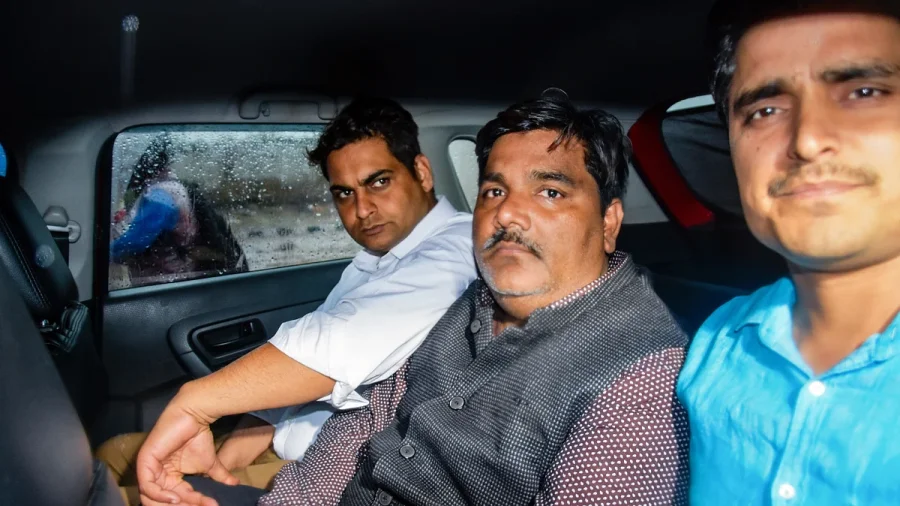
The courtroom fell silent as the judge pronounced the sentence that would close a painful chapter from February 2020. Former AAP councillor Tahir Hussain and four others will now spend the rest of their lives in prison for the murder of Intelligence Bureau officer Ankit Sharma during the northeast Delhi riots — but not on the gallows, as police had demanded.
Life sentence delivered in packed Delhi courtroom
Additional Sessions Judge Praveen Singh delivered the verdict on Friday, 31 July, sentencing all five convicts to life imprisonment. The order came after arguments on the quantum of punishment, with the court observing that the prosecution had failed to establish that the convicts were beyond the possibility of reformation.
The judge's observation effectively ruled out the death penalty, which the Delhi Police had aggressively sought for all five accused in the high-profile case.
Why the death penalty demand was rejected
Under Indian criminal law, capital punishment is reserved for the "rarest of rare" cases. The court's finding that the convicts could potentially be reformed played a decisive role in sparing them from the gallows.
Legal experts note that this reasoning reflects a broader judicial philosophy that weighs the possibility of rehabilitation even in cases involving serious violence. The prosecution's argument for the death penalty was built on the brutal nature of the crime, but the court found that legal threshold unmet.
The murder that shook the intelligence community
Ankit Sharma was an Intelligence Bureau officer who was attacked and killed during the February 2020 northeast Delhi riots — a period of communal violence that left dozens dead and hundreds injured.
His murder became one of the most investigated cases from the riots, with the Crime Branch of Delhi Police leading the probe. The investigation identified Tahir Hussain, then a councillor from the Aam Aadmi Party, as a key accused along with four others.
Who was Tahir Hussain and how the case unfolded
Tahir Hussain was an elected councillor representing the Mustafabad area in northeast Delhi at the time of the riots. His political position made the case politically sensitive, with opposition parties and civil society groups closely watching the proceedings.
The trial progressed through multiple hearings, with the court recording witness testimonies and examining forensic evidence. The conviction and sentencing mark the culmination of a legal process that has taken over three years to reach this stage.
Families and victims await closure
For the family of Ankit Sharma, the life sentence brings a measure of justice, though the pain of losing a loved one in such circumstances never fully fades. The verdict also sends a signal to families of other riot victims that the legal system can deliver accountability.
For the convicts' families, the sentence means years of separation and the stigma of a murder conviction. The human cost of the riots continues to reverberate on both sides.
Police response and security arrangements
The Delhi Police had pressed for the harshest punishment available under law. Their presence at the sentencing — including the Crime Branch's joint commissioner and deputy commissioner of police — underscored the institutional importance of the case.
Security was tight throughout the proceedings, with the convicts produced in person. The courtroom was packed with lawyers and senior officers, reflecting the gravity of the moment.
What the court's reasoning means for similar cases
The judgment's emphasis on reformation over retribution could influence how courts approach sentencing in other riot-related cases. It reinforces the principle that the death penalty remains an exception, not the rule, in Indian jurisprudence.
Legal observers will be watching whether this reasoning is cited in other pending riot cases, where prosecution teams may push for capital punishment.
Confirmed facts versus what remains unclear
What is confirmed: The court sentenced Tahir Hussain and four others to life imprisonment for Ankit Sharma's murder. The prosecution sought the death penalty. The court found the convicts capable of reformation.
What remains unclear: The detailed reasoning behind the court's sentencing decision has not been fully made public. Whether the convicts will appeal to a higher court is also not yet known. The specific roles of each of the five convicts in the murder have not been detailed in public reporting.
Risks and the road ahead
While the life sentence delivers accountability, it also raises questions about deterrence. Some legal analysts argue that lighter-than-requested sentences in riot cases could embolden those who commit violence during communal unrest.
Others counter that the court's careful approach prevents miscarriages of justice and upholds constitutional safeguards. The balance between punishment and rehabilitation remains a contentious debate in Indian criminal law.
A pattern of accountability for 2020 riots
This sentencing adds to a growing list of convictions related to the February 2020 northeast Delhi riots. Courts have been steadily working through cases arising from the violence, which claimed over 50 lives and injured hundreds more.
The verdicts reflect an ongoing judicial effort to address the legacy of the riots, even as some cases remain pending and others face appeals.
What readers should understand about this verdict
For those following the case, the key takeaway is that the court accepted the prosecution's case on guilt but rejected its demand for the maximum punishment. Life imprisonment in India typically means imprisonment for the remainder of the convict's natural life, though remission provisions can apply in some cases.
Those seeking to understand the full judgment should await the detailed court order, which will explain the legal reasoning in depth.
What happens next in the legal process
The convicts have the right to appeal the sentence to the Delhi High Court. If they do, the case will enter a new phase of legal scrutiny.
The prosecution could also challenge the court's decision on the quantum of punishment, though such appeals face a high legal bar. For now, the life sentences stand as the final word from the trial court.
Our Take
This sentencing represents a significant moment in the long aftermath of the 2020 Delhi riots. The court has affirmed that those responsible for Ankit Sharma's murder will face consequences, while also demonstrating that Indian courts do not hand out death sentences lightly.
The balance struck here — conviction without capital punishment — reflects a mature legal system that values both accountability and the possibility of redemption. For the victim's family, the verdict may not erase the loss, but it confirms that the state took their loved one's murder seriously.
Frequently Asked Questions
What sentence did Tahir Hussain receive in the IB officer murder case?
Tahir Hussain and four others were sentenced to life imprisonment by a Delhi court for the murder of Intelligence Bureau officer Ankit Sharma during the 2020 northeast Delhi riots.
Why did the court reject the death penalty for Tahir Hussain?
The court observed that the prosecution failed to establish that the convicts were beyond the possibility of reformation, a key legal requirement for imposing capital punishment in India.
Who was Ankit Sharma?
Ankit Sharma was an Intelligence Bureau officer who was killed during the February 2020 northeast Delhi riots. His murder became one of the most prominent cases investigated by Delhi Police's Crime Branch.
Can Tahir Hussain appeal the life sentence?
Yes, the convicts have the right to appeal the sentence to the Delhi High Court. Any appeal would be heard by a higher judicial forum.
[NEWS_SCHEMA] { "@context": "https://schema.org", "@type": "NewsArticle", "headline": "Ex-AAP councillor Tahir Hussain, 4 others get life for IB officer's murder in Delhi riots", "description": "Delhi court sentences former AAP councillor Tahir Hussain and four others to life imprisonment for the murder of Intelligence Bureau officer Ankit Sharma during the 2020 northeast Delhi riots, rejecting the death penalty demand.", "image": "", "datePublished": "2025-07-31", "dateModified": "2025-07-31", "author": { "@type": "Person", "name": "Newsroom Desk", "url": "", "sameAs": [] }, "publisher": { "@type": "Organization", "name": "", "logo": { "@type": "ImageObject", "url": "" } }, "mainEntityOfPage": { "@type": "WebPage", "@id": "" }, "articleSection": "India", "keywords": "Tahir Hussain life sentence, Ankit Sharma murder, Delhi riots 2020, IB officer murder case" } [SOURCES] Original court proceedings report — Delhi Court Sentencing Coverage