Elon Musk has officially entered a financial realm no human has reached before: trillionaire status. The tech mogul’s net worth has crossed $1 trillion, propelled by SpaceX’s historic stock market debut. But how did he get here? The answer lies in a series of charts that tell a story of relentless growth, bold bets, and a portfolio that now includes the world’s most valuable private company.
The SpaceX IPO: A $1.77 trillion valuation
SpaceX’s initial public offering, the largest in history, priced shares at $135 each, valuing the company at $1.77 trillion, according to Reuters. This single event catapulted Musk’s wealth past the trillion-dollar mark. The IPO marks a turning point, transforming SpaceX from a private venture into a publicly traded giant.
How Musk’s net worth surged: A timeline in charts
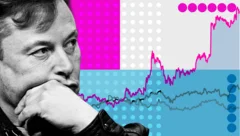
Charts tracking Musk’s net worth reveal a steep upward curve starting in 2020, when Tesla’s stock began its meteoric rise. By 2021, he was the world’s richest person. The addition of SpaceX’s valuation, along with stakes in Tesla, Neuralink, and The Boring Company, pushed his fortune to unprecedented levels. Visual data shows a near-vertical climb in recent months.
Why this matters for everyday investors
For Indian and global retail investors, Musk’s trillionaire status signals a shift in wealth creation. SpaceX’s IPO opens a rare window for public participation in space technology. However, experts warn that such concentrated wealth also raises questions about market influence and economic inequality. The charts serve as a reminder of how tech innovation can reshape financial landscapes.
Official response and market reaction
SpaceX’s IPO filing confirmed the $135 share price, with the company citing strong demand from institutional investors. Market analysts have noted that the valuation reflects optimism about Mars colonization and satellite internet dominance. Musk himself has not issued a public statement, but his social media activity has hinted at excitement about the milestone.
What the charts reveal about Musk’s wealth drivers
A breakdown of Musk’s net worth shows that Tesla remains a significant pillar, but SpaceX now accounts for over 60% of his fortune. Charts comparing his asset allocation highlight how space infrastructure and electric vehicles have become twin engines of growth. The data underscores a diversification strategy that few billionaires have matched.
Confirmed facts vs what remains unclear
Verified: SpaceX’s IPO valuation at $1.77 trillion, Musk’s net worth exceeding $1.1 trillion, and the IPO pricing at $135 per share. Unclear: The exact timeline for Mars colonization revenue and how regulatory changes could affect SpaceX’s valuation. Some analysts question whether the trillionaire figure includes unrealized gains from volatile Tesla stock.
SpaceX’s moat: Why this company matters
SpaceX’s competitive advantage lies in its reusable rocket technology, which drastically reduces launch costs. Its Starlink satellite network already dominates the low-earth orbit internet market. The company’s government contracts with NASA and the U.S. Department of Defense provide a stable revenue base. This moat makes SpaceX a unique asset in Musk’s portfolio.
Risks and balanced view
Critics argue that Musk’s trillionaire status highlights extreme wealth concentration, with potential implications for tax policy and market regulation. SpaceX faces risks from space debris, regulatory hurdles, and competition from Blue Origin and other players. Tesla’s stock volatility also poses a threat to Musk’s net worth. Supporters, however, point to his role in advancing space exploration and clean energy.
The wider trend: Tech billionaires and space wealth
Musk’s milestone is part of a broader pattern where tech founders are amassing fortunes through private space ventures. Jeff Bezos and Richard Branson have also invested heavily in space, but none have reached trillionaire status. This trend signals a new era where space infrastructure becomes a primary wealth generator, akin to oil in the 20th century.
What this means for Indian readers
For Indian students and professionals, Musk’s journey offers lessons in risk-taking and innovation. The SpaceX IPO may also create investment opportunities through Indian mutual funds or ETFs that include the stock. However, financial advisors caution against speculative bets on volatile tech stocks. The charts serve as a case study in long-term wealth building.
Future outlook: What’s next for Musk’s wealth
Analysts predict that SpaceX’s valuation could double if Mars colonization plans materialize within the next decade. Tesla’s expansion into AI and robotics may also add billions. However, regulatory challenges and market corrections could slow growth. The charts suggest that Musk’s wealth trajectory, while steep, is not immune to economic cycles.
Our Take
Elon Musk’s trillionaire status is more than a personal milestone—it’s a reflection of how technology, space exploration, and market dynamics are rewriting the rules of wealth. The charts tell a story of ambition and execution, but also of risk and inequality. For readers, the key takeaway is not just the numbers, but the underlying forces that made them possible: innovation, timing, and a willingness to bet on the future.
Frequently Asked Questions
How did Elon Musk become the world’s first trillionaire?
Musk’s net worth crossed $1 trillion primarily due to SpaceX’s IPO, which valued the company at $1.77 trillion. Combined with his Tesla stake and other holdings, his fortune exceeded $1.1 trillion.
What is SpaceX’s current valuation after the IPO?
SpaceX was valued at $1.77 trillion after its IPO, with shares priced at $135 each, according to Reuters. It is now the most valuable publicly traded space company.
Is Elon Musk’s trillionaire status based on liquid assets?
Much of Musk’s wealth is tied to stock holdings in Tesla and SpaceX, which are subject to market fluctuations. The trillionaire figure includes unrealized gains from these investments.
How does Musk’s wealth compare to other billionaires?
Musk’s net worth is now more than double that of the second-richest person, Jeff Bezos. His trillionaire status places him in a category of his own, far ahead of any other individual.