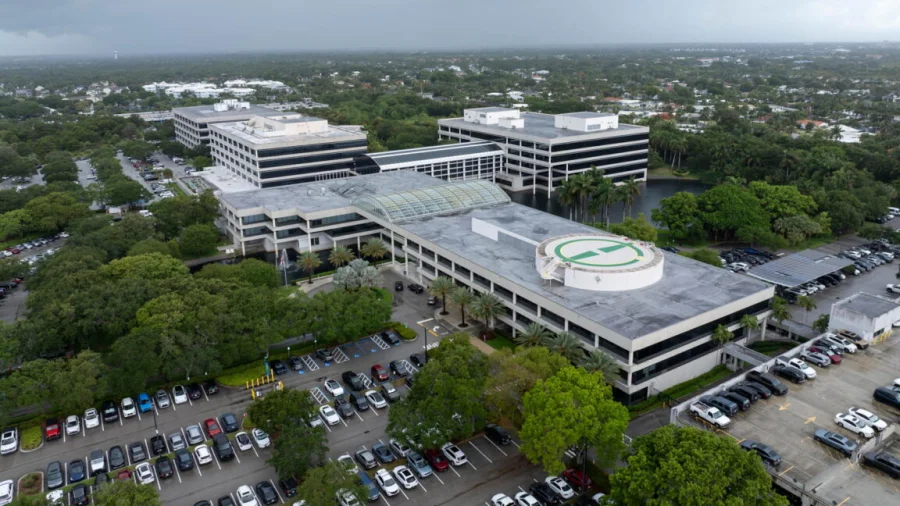
What happens when the insatiable hunger of AI data centers meets the slow-moving world of American utilities? A $67 billion megamerger that could reshape the entire power industry — and your electricity bill.
On Monday, NextEra Energy, the largest utility in the United States by market value, announced a proposed merger with Dominion Energy, the sixth-largest. The combined company would dominate nearly every corner of the US power sector: electricity generation, natural gas, and renewables.
But this isn't just a corporate marriage of convenience. It's a direct response to a seismic shift in how America uses electricity — driven by the explosive growth of data centers powering artificial intelligence.
Why This Merger Is Really About Data Centers
The $67 billion deal isn't just about size. It's about location and timing. Dominion Energy serves northern Virginia, home to the world's largest concentration of data centers. This region, often called "Data Center Alley," is where the cloud lives and where AI models are trained and deployed.
NextEra brings unmatched scale in renewable energy and natural gas generation. Dominion brings direct access to the most electricity-hungry customers on the planet. Together, they create a company uniquely positioned to profit from the AI boom.
According to the proposal, the merger would create a company that leads in overall electricity generation, natural gas generation, and renewables. It would be a one-stop shop for powering the digital future.
Why This Matters Right Now
This isn't just a Wall Street story. It's a story about your home, your wallet, and your environment.
Data centers already consume about 1-2% of global electricity, and that number is skyrocketing. AI models require exponentially more power than traditional computing. Every ChatGPT query, every AI-generated image, every autonomous vehicle test run — it all demands electricity.
If this merger goes through, it could accelerate the construction of new power plants, both renewable and fossil fuel-based. It could also give the combined company enormous pricing power over consumers in regulated markets.
The question is: who benefits? The data center giants like Amazon, Google, and Microsoft? Or the millions of households that will see their electricity bills rise?
How the Merger Proposal Unfolded
The announcement came Monday morning, catching many industry observers by surprise. The deal is structured as a merger of equals, though NextEra's market capitalization significantly exceeds Dominion's.
Both companies have been preparing for this moment. NextEra has been aggressively building renewable energy capacity, while Dominion has been investing in grid infrastructure to support data center growth in Virginia.
The merger is contingent on approval from state regulators in Virginia, North Carolina, and other states where Dominion operates, as well as federal approval from the Federal Energy Regulatory Commission (FERC) and the Department of Justice.
Who Is Affected and What Officials Are Saying
Millions of customers across the East Coast and Florida would be affected. Dominion serves about 7 million customers in Virginia, North Carolina, South Carolina, and Ohio. NextEra's Florida Power & Light serves about 5 million customers in Florida.
State regulators are likely to scrutinize the deal heavily. Consumer advocates are already raising concerns about reduced competition and higher rates.
"This merger could create a utility behemoth with too much market power," said one energy policy expert. "Consumers could end up paying the price for data center expansion."
Environmental groups are also worried. While NextEra is a leader in renewables, the combined company would also be the largest natural gas generator in the country — a fossil fuel that contributes to climate change.
What We Know So Far — and What Remains Unclear
What we know:
- The deal is valued at $67 billion
- NextEra and Dominion have announced the proposal
- The merger is driven by data center electricity demand
- The combined company would lead in generation, natural gas, and renewables
- Regulatory approval is required at state and federal levels
What remains unclear:
- The exact timeline for regulatory review
- Whether state regulators will approve or block the deal
- How the merger will affect electricity rates for residential customers
- The specific terms of the merger agreement
- Whether other utilities will pursue similar mergers
Risks, Concerns, and the Balanced View
The Bull Case: Proponents argue that the merger is necessary to meet the unprecedented electricity demand from data centers. A larger, more efficient company can invest in grid modernization and renewable energy at scale. This could accelerate the transition to clean energy while keeping the lights on for AI.
The Bear Case: Critics warn that the merger creates a monopoly-like entity with too much market power. Consumers could face higher rates as the company prioritizes lucrative data center contracts over residential customers. Environmentalists fear that natural gas expansion will lock in fossil fuel dependence for decades.
The Balanced View: The truth likely lies somewhere in between. The merger could bring efficiencies and investment, but it also concentrates power in a way that demands strong regulatory oversight. The outcome will depend on how state and federal regulators shape the terms of approval.
Why Similar Trends Are Growing Across the Industry
This merger is not an isolated event. The utility industry is undergoing a fundamental transformation driven by three forces:
- AI data center demand: Electricity consumption from data centers is expected to double by 2030
- Renewable energy growth: Utilities need scale to invest in solar, wind, and battery storage
- Grid modernization: Aging infrastructure requires massive capital investment
Other major utilities are watching closely. If this merger succeeds, it could trigger a wave of consolidation across the industry. Smaller utilities may feel pressure to merge to compete with the new giant.
"Data centers are wreaking havoc on North America's power grid," said a major watchdog group. "This merger is a direct response to that crisis."
What Readers, Users, and Investors Should Know Now
For consumers: Your electricity rates could be affected. Pay attention to regulatory hearings in your state. Consumer advocacy groups will likely intervene — consider supporting them.
For investors: The merger creates a dominant player in the utility space. But regulatory risk is high. Watch for updates from FERC and state commissions.
For businesses: If you rely on data centers or cloud computing, this merger could affect your energy costs and availability. Monitor developments closely.
What Could Happen Next
The regulatory process will likely take 12-18 months. Key milestones include:
- Filing with FERC and state commissions
- Public hearings and comment periods
- Potential challenges from consumer and environmental groups
- Possible conditions imposed by regulators
- Final approval or rejection
If approved, the merger would create a utility with unprecedented scale and market power. If rejected, it could signal that regulators are unwilling to tolerate further consolidation in the industry.
Our Take: Why This Story Matters Beyond One Merger
This merger is a window into the future of energy. The AI revolution is not just about software and algorithms — it's about physical infrastructure. Every AI model needs electricity, and that electricity has to come from somewhere.
The question is whether the benefits of this transformation will be shared broadly or captured by a few powerful players. The NextEra-Dominion merger is a test case for how America balances the demands of the digital economy with the needs of ordinary citizens.
It's a story about power — both electrical and corporate — and who gets to control it.
FAQs
What is the NextEra-Dominion merger about?
The proposed $67 billion merger between NextEra Energy and Dominion Energy would create the largest US utility company, driven by surging electricity demand from AI data centers, especially in northern Virginia.
How will this utility merger affect my electricity bill?
If approved, the merger could lead to higher rates for residential customers as the combined company prioritizes lucrative data center contracts. However, regulators may impose conditions to protect consumers.
Why are data centers driving this merger?
Data centers, especially those powering AI, consume enormous amounts of electricity. Dominion serves northern Virginia, the world's largest data center hub, making the combined company uniquely positioned to profit from this demand.
What are the environmental concerns with this merger?
While NextEra is a leader in renewables, the combined company would also be the largest natural gas generator in the US. Critics worry this could lock in fossil fuel dependence and slow the transition to clean energy.