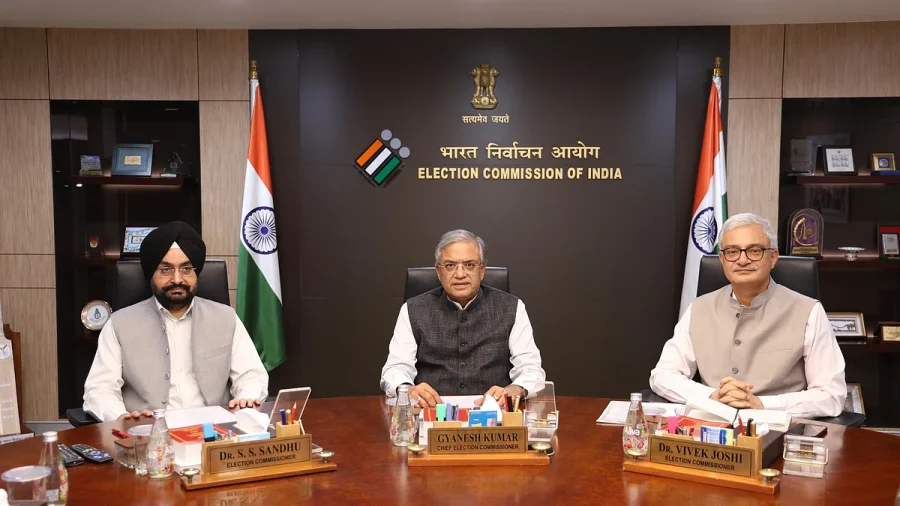
The Election Commission of India called all three of its commissioners to a meeting on 26 September. When the press note came out, it listed changes — to meeting procedures, to voter-registration requirements, to how some SIR cases would be handled. What it did not list was an explanation for how the Commission arrived at its earlier decisions that triggered a nationwide backlash.
That silence is now the story.
What the Commission Changed — and What It Didn't
The measures announced after the 26 September meeting address several specific issues that were raised in an Indian Express investigation into the Commission's functioning. The press note outlined adjustments to internal meeting procedures, revised requirements for voter registration, and a modified approach to certain cases under the Special Intensive Revision of electoral rolls.
These are procedural corrections. They do not reverse the SIR itself. They do not address the demand — now echoing across protests in multiple states — for Chief Election Commissioner Gyanesh Kumar's removal.
Why the SIR Has Become a Flashpoint
The Special Intensive Revision of electoral rolls was launched with the stated aim of cleaning up voter lists. But its implementation has drawn criticism from opposition parties, civil society groups, and citizens who say it has excluded legitimate voters, disproportionately affected marginalised communities, and created confusion at a scale that undermines confidence in the electoral process.
Since June 2025, the Commission has faced mounting scrutiny over how SIR decisions were made, who was consulted, and what data informed the process. The Indian Express investigation brought several of these concerns into the public domain.
The Timeline: From June 2025 to Now
The controversy did not erupt overnight. It built through a series of decisions and omissions that critics say eroded the Commission's credibility. The SIR process moved forward despite objections. Questions were raised. Answers were not forthcoming — or were seen as insufficient.
By the time the Commission met on 26 September, the pressure had become impossible to ignore. Protests had spread. Political parties had taken positions. The Commission's own institutional reputation was on the line.
Who Is Affected — and How
At the centre of this are ordinary voters whose names have been deleted, flagged, or left in limbo. For them, the SIR is not an abstract policy debate. It is the difference between being able to vote and being turned away at the booth.
Then there are the officials and staff who implemented the SIR on the ground, often without clear guidance. And there are the political parties — both ruling and opposition — who must now navigate an electoral landscape where the integrity of the roll itself is in question.
The Commission's Response: Procedural Fixes, No Explanations
The press note issued after the 26 September meeting is, in essence, a list of adjustments. It does not offer a mea culpa. It does not explain why the earlier decisions were taken. It does not address the core allegation that the Commission acted in a manner that raised doubts about its independence.
Officials have not commented beyond the press note. The Commission's public communication remains limited to what was formally issued.
What the Changes Actually Mean
On paper, the adjustments could resolve some of the practical problems voters and officials have faced. If implemented properly, they might reduce the confusion around registration and case handling.
But procedure is not the same as accountability. The Commission has not said who was responsible for the decisions that led to the current crisis. It has not said what internal review, if any, took place. It has not said whether the SIR's design itself was flawed.
Without those answers, the changes look less like reform and more like damage control.
Confirmed Facts vs What Remains Unclear
Confirmed: All three Election Commissioners met on 26 September. A press note was issued. It announced changes to meeting procedures, voter-registration requirements, and handling of some SIR cases. Protests demanding the CEC's removal and SIR's scrapping are ongoing.
Unclear: Whether these changes will be enough to satisfy critics. Whether the Commission will explain its earlier decisions. Whether the SIR will continue in its current form or be modified further. Whether the political pressure will escalate or subside.
The Institutional Stakes for the Election Commission
The Election Commission of India derives its authority not just from law but from public trust. That trust is built over decades and can be eroded quickly. The SIR controversy has tested that trust in ways the Commission has rarely faced.
The 26 September meeting was an attempt to respond. Whether it succeeds depends on what happens next — and whether the Commission is willing to answer the questions it has so far avoided.
Risks and the Balanced View
The Commission's defenders argue that the SIR was a necessary exercise to remove dead and duplicate entries from electoral rolls, and that some disruption is inevitable in any large-scale revision. They point out that the Commission has now shown willingness to adjust its procedures.
Critics counter that the adjustments are too little, too late, and that they do not address the fundamental question of why the SIR was designed and implemented in a way that caused such widespread exclusion. They argue that without accountability, the Commission's credibility remains damaged.
Both perspectives have merit. The truth is that the Commission has taken a step — but it is not clear how far that step goes.
A Pattern Beyond This Moment
This is not the first time India's electoral institutions have faced questions about their independence and functioning. But the scale of the current protests, and the fact that they are happening across multiple states, suggests something has shifted.
Voters are paying closer attention to how electoral rolls are managed. Civil society is more organised. Political parties are more willing to take the Commission on directly. The SIR controversy may be a turning point in how the public engages with the institution that conducts elections.
What Voters and Citizens Should Do Now
If your name has been affected by the SIR, check your voter registration status through the Commission's official portal. If you believe your name has been wrongly deleted, follow the prescribed process for filing an objection. Keep records of any communication with electoral officials.
For those following the broader debate, the key documents to track are the Commission's press notes, any subsequent orders, and the responses from political parties and civil society. The situation is evolving.
What Could Happen Next
The Commission could choose to explain its earlier decisions, which would go some way toward addressing the accountability gap. It could also face legal challenges to the SIR process. The protests could grow or fade depending on how the political landscape shifts.
What seems clear is that the 26 September meeting did not close the chapter. It opened a new one — with the same unanswered questions at its centre.
Our Take
The Election Commission's decision to adjust its procedures is a recognition that something went wrong. But recognition is not the same as accountability. The Commission has fixed some of the symptoms without addressing the cause. Until it explains how and why the SIR decisions were made, the damage control will remain just that — control, not repair. The jury is still out on whether the Commission has climbed out of the hole or dug it deeper.
Frequently Asked Questions
What is the Special Intensive Revision (SIR) of electoral rolls?
The SIR is a process undertaken by the Election Commission of India to revise electoral rolls, with the stated aim of removing dead, shifted, or duplicate entries. It has been criticised for causing large-scale exclusion of legitimate voters.
What changes did the Election Commission announce on 26 September?
The Commission announced adjustments to meeting procedures, voter-registration requirements, and the handling of some SIR cases. These measures respond to several issues raised in an Indian Express investigation.
Why are people protesting against the Election Commission?
Protesters are demanding the removal of Chief Election Commissioner Gyanesh Kumar and the scrapping of the SIR. They say the process has excluded legitimate voters and that the Commission has not been transparent about its decisions.
Will the SIR be scrapped?
There is no official indication that the SIR will be scrapped. The Commission has adjusted some procedures but has not reversed the process itself. The situation remains fluid.