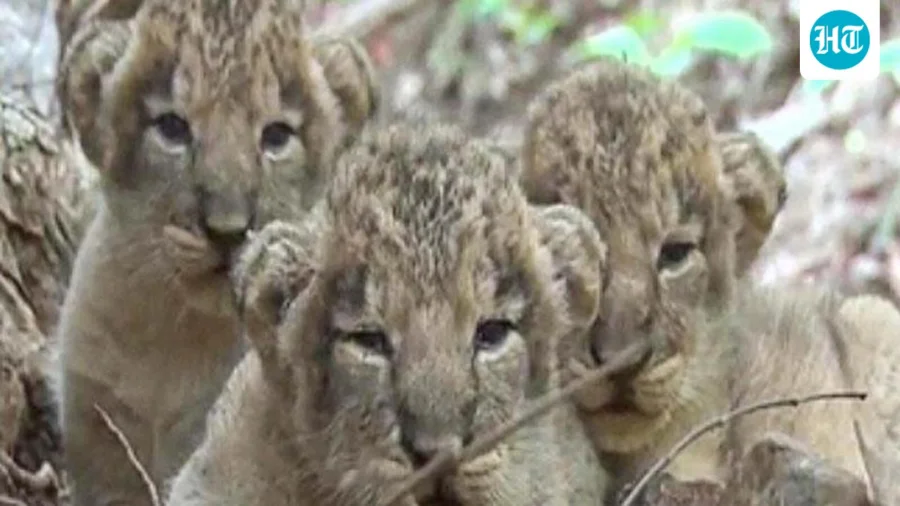
Eight Asiatic lion cubs have died in Gujarat's Gir forest region within a single week, prompting an urgent and escalated response from the state government. Forest Minister Arjun Modhwadia confirmed that the situation is being monitored directly by the Chief Minister's Office and the Prime Minister's Office, as authorities rush to contain what appears to be a tick-borne health crisis.
The deaths have sent a wave of concern through conservation circles and local communities who depend on the Gir ecosystem. For a species that was once on the brink of extinction, every cub death carries weight far beyond the forest floor.
What Happened in Gir: Eight Cub Deaths in Seven Days
Between late May 2026, eight lion cubs died across different locations within the Gir forest landscape. Forest department officials suspect the cause to be Babesia, a parasitic infection transmitted through tick bites. The infection can cause severe anemia, fever, and organ failure in young cubs with developing immune systems.
The deaths were not concentrated in a single pride or territory. Reports indicate the cubs died in separate incidents, suggesting the threat is widespread rather than localized. This pattern has raised alarms about the overall health of the cub population in the region.
Why This Matters Right Now
The Asiatic lion is classified as endangered, with its entire wild population confined to Gujarat's Gir forest and surrounding areas. A sudden spike in cub mortality threatens the fragile recovery of a species that numbered fewer than 20 individuals a century ago.
Beyond conservation biology, these deaths carry emotional and economic weight. The Gir lions are a source of pride for Gujarat and a major draw for wildlife tourism, which supports thousands of local livelihoods. A prolonged health crisis could ripple through the local economy and erode decades of conservation gains.
Forest Minister Modhwadia acknowledged the gravity, stating that the monitoring extends to the highest levels of government. This is not a routine wildlife incident — it is being treated as a priority matter of state.
How the Situation Developed
The first reports of unusual cub deaths emerged in late May. Forest department teams conducting routine patrols began finding carcasses of young cubs in different parts of the sanctuary. Initial post-mortem examinations pointed toward a possible parasitic infection.
As the death toll climbed to eight within a week, the state government moved from standard response to emergency mode. The forest department immediately isolated 17 lions showing signs of illness, separating them from healthy populations to prevent further spread.
Large-scale deticking operations were launched across affected areas. These involve spraying and treating the forest floor, water bodies, and animal resting spots to kill tick populations that carry the Babesia parasite.
Who Is Affected and What Officials Are Saying
The immediate victims are the cubs themselves and their prides. But the impact extends to forest staff, veterinarians, conservationists, and local communities who live alongside the lions.
Forest Minister Arjun Modhwadia stated that the Chief Minister's Office and the Prime Minister's Office are both monitoring the situation closely. This level of oversight is rare for a wildlife incident and signals the seriousness with which the government views the threat.
"Preventive measures, including large-scale deticking operations, are being carried out," Modhwadia said, according to reports. The government has also deployed additional veterinary teams to affected zones.
Local conservation groups have expressed concern but also appreciation for the swift response. The key question now is whether the measures will be enough to stop further deaths.
What We Know So Far — and What Remains Unclear
Confirmed:
- Eight lion cubs have died in Gir within a week
- Suspected cause is Babesia infection transmitted by ticks
- 17 lions showing symptoms have been isolated
- Large-scale deticking operations are underway
- CMO and PMO are monitoring the situation
Unclear:
- Exact cause of death for each cub (awaiting final lab reports)
- Whether the infection has spread to adult lion populations
- How many ticks remain in the affected zones
- Whether this is an isolated outbreak or part of a broader pattern
The forest department has sent samples for laboratory analysis. Final confirmation of Babesia as the primary cause is still pending.
Risks, Concerns, and the Balanced View
The immediate risk is further cub deaths if the tick population is not fully controlled. Young cubs are especially vulnerable because their immune systems are not fully developed. Even with treatment, recovery from Babesia can be difficult.
There is also concern about the broader lion population. If the infection spreads to adults, the death toll could rise significantly. Adult lions are more resilient, but a severe outbreak could still cause losses.
On the positive side, the government's rapid response — including high-level monitoring — suggests resources and attention are being directed where needed. Deticking is a proven method for controlling tick-borne diseases in wildlife. The isolation of symptomatic animals is also a standard and effective containment strategy.
Conservationists caution that this incident highlights the vulnerability of a single-population species. With all Asiatic lions confined to one geographic area, a single disease outbreak can threaten the entire subspecies. This has long been a concern among wildlife experts.
Why Similar Trends Are Increasing
Tick-borne infections are becoming more common in wildlife populations globally. Climate change is expanding the range and breeding season of ticks, increasing the risk of outbreaks. Warmer temperatures and changing rainfall patterns create favorable conditions for tick survival and reproduction.
In Gir specifically, the dense population of lions in a relatively confined area increases the risk of disease transmission. With over 600 Asiatic lions now living in and around the sanctuary, the density is higher than ever before. This makes the population more susceptible to outbreaks.
Wildlife officials have been aware of this vulnerability for years. The current outbreak may accelerate discussions about establishing a second wild population of Asiatic lions in another state — a proposal that has been debated for over a decade.
What Readers, Users, or Investors Should Know Now
For those concerned about wildlife conservation, this incident is a reminder of the fragility of endangered species recovery. The gains made over decades can be threatened by a single disease outbreak.
For travelers planning visits to Gir National Park, the situation is being managed but may affect safari operations in certain zones. It is advisable to check with the forest department or tour operators before booking.
For conservation donors and organizations, this highlights the need for continued investment in wildlife health monitoring, veterinary infrastructure, and disease preparedness. The current response is strong, but long-term resilience requires ongoing support.
What Could Happen Next
The immediate priority is containing the outbreak. If deticking operations are successful and the isolated lions recover, the crisis may be contained within weeks. The forest department will likely maintain heightened surveillance for several months.
If the infection spreads further, the government may need to consider more aggressive interventions, including vaccination trials or relocation of healthy prides to safer zones. Discussions about establishing a second lion population may gain renewed urgency.
The final lab reports will determine whether Babesia is confirmed as the primary cause. If other pathogens are identified, the response strategy may need to be adjusted.
Long-term, this incident is likely to influence wildlife health policies in Gujarat and beyond. The involvement of the Prime Minister's Office suggests that this is being treated as a matter of national conservation importance.
Our Take: Why This Story Matters Beyond One Incident
The deaths of eight lion cubs in Gir is not just a wildlife story — it is a test of India's conservation infrastructure. The Asiatic lion's survival depends on the ability of authorities to detect, respond to, and contain health threats quickly.
The government's swift response, including monitoring at the highest levels, is commendable. But the incident also exposes the inherent vulnerability of a species confined to a single location. No matter how well-managed, a single disease outbreak can undo decades of work.
This moment should serve as a catalyst for broader thinking about species resilience. Protecting the Asiatic lion means not just guarding its current habitat, but planning for its future in a changing world. The cubs that died this week are a painful reminder that conservation is never finished — it is a continuous, evolving responsibility.
FAQs
What caused the death of eight lion cubs in Gir?
Forest officials suspect Babesia, a tick-borne parasitic infection, as the likely cause. Final laboratory reports are awaited for confirmation. The infection can cause severe anemia and organ failure in young cubs.
What is the Gujarat government doing to stop further deaths?
The government has launched large-scale deticking operations across affected areas, isolated 17 lions showing symptoms, and deployed additional veterinary teams. The Chief Minister's Office and Prime Minister's Office are monitoring the situation directly.
Are adult lions also at risk from this outbreak?
Adult lions are generally more resilient to Babesia infection than cubs, but they are not immune. The forest department has isolated symptomatic animals to prevent spread. If the infection is contained quickly, the risk to adults remains low.
Can visitors still go to Gir National Park after these deaths?
Safari operations may be affected in certain zones as authorities focus on containment and surveillance. Travelers should check with the forest department or authorized tour operators for the latest updates before planning a visit.