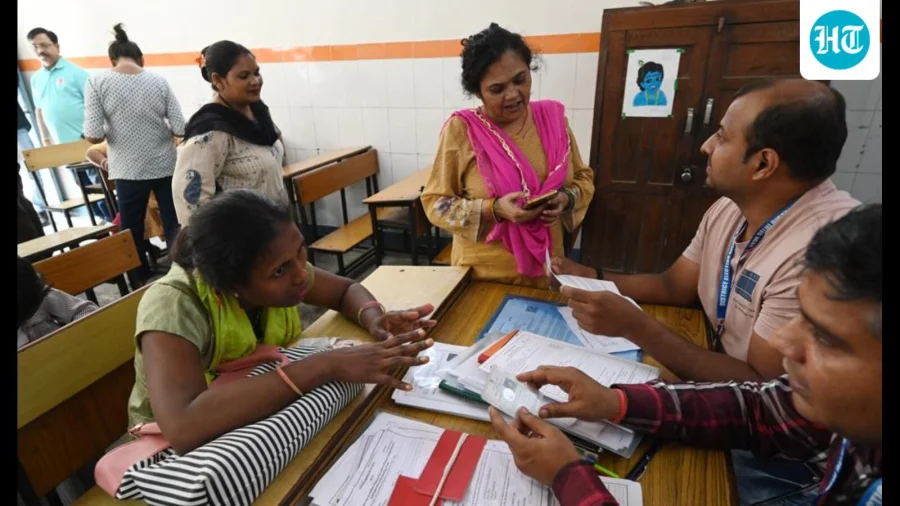
For thousands of Delhi voters, the queue outside their neighbourhood polling station this week is not about casting a vote — it is about keeping their name on the list. The Election Commission has set up special camps at polling stations across the capital to help residents submit SIR forms and sort out queries tied to the ongoing revision of electoral rolls.
The camps are meant to close the gap between voters and the paperwork that decides whether they can vote at all.
What the Election Commission Is Actually Doing at These Camps
The camps serve two purposes. First, they let voters physically submit their SIR forms — the documents required under the Special Intensive Revision exercise — without navigating district election offices. Second, they provide a counter where voters can raise queries about discrepancies in their existing voter details.
Officials at the camps are assisting with form filling, document verification, and basic clarifications on eligibility. The setup is designed to be accessible to first-time voters, senior citizens, and those who may not be comfortable with online submissions.
Why This Matters for Delhi's Voter Roll
The SIR process is not routine housekeeping. It determines whose name stays on the electoral roll and whose name gets struck off. For a voter, a mismatch in address, a missing document, or an unsubmitted form can mean losing the right to vote in the next election.
That is why the extension of deadlines for claims and objections matters. It gives voters who missed earlier windows a second chance to correct their records — but only if they act within the revised timeline.
How the SIR Process Reached This Stage
The Special Intensive Revision exercise has been underway as part of the Commission's effort to clean up electoral rolls and remove entries that no longer meet verification standards. The process involves door-to-door verification, form submission, and a structured window for claims and objections.
As discrepancies surfaced during verification, the need for accessible help centres became clear. The special camps are the Commission's response to that gap — a physical touchpoint where voters can resolve issues face-to-face rather than through a portal or a helpline.
Who Is Affected — and Who Should Visit a Camp
Any Delhi voter whose details appear incorrect, incomplete, or flagged during verification should visit a camp. This includes residents who have shifted within the city, those whose family members' names are missing from the roll, and voters who received notices seeking clarification.
First-time voters and those who have never updated their photographs or addresses are also likely to benefit. The camps are not restricted to a specific category — anyone with a query about their voter record can walk in.
What Officials Are Saying
The Commission has positioned the camps as a voter-friendly measure, emphasising that the goal is inclusion, not exclusion. Officials have urged residents to check their voter details proactively and use the camps before the extended deadlines lapse.
Voters are advised to carry original identity and address documents — Aadhaar, passport, ration card, or any other document listed in the Commission's approved list — to avoid repeat visits.
Reading the Signal Behind the Camps
The decision to hold physical camps, rather than relying solely on digital submissions, suggests the Commission is aware that a significant section of voters — particularly older residents and those in lower digital-access brackets — need handholding.
It also signals that the volume of queries and corrections is substantial enough to warrant a decentralised, polling-station-level response. In effect, the camps are both a service and a pressure-release valve.
What Is Confirmed — and What Is Still Unclear
Confirmed: Special camps are being held at polling stations in Delhi. They accept SIR forms and address voter queries. Deadlines for claims and objections have been extended.
Unclear: The exact duration of the camps, the final cut-off date for submissions, and whether further extensions will be granted have not been definitively confirmed in available information. Voters should rely only on official Election Commission communications for updates.
Risks and the Balanced View
The camps address accessibility, but they do not eliminate all concerns. Critics of the SIR process have argued that verification drives can inadvertently exclude legitimate voters — especially those with incomplete documentation or those who have moved frequently.
The Commission's position is that the exercise is meant to strengthen the integrity of the electoral roll. Both views exist in the public domain, and the effectiveness of the camps will ultimately be judged by how many genuine voters are retained rather than removed.
A Wider Pattern Across States
Delhi is not an isolated case. Similar SIR-related exercises and voter assistance mechanisms have been rolled out in other states, reflecting a broader push to update electoral rolls nationally. The Delhi camps are part of that larger, ongoing effort.
What Voters Should Do Right Now
Check your voter details on the Election Commission's official portal. If anything looks wrong — name spelling, address, age, or a missing family member — visit your nearest polling station camp with original documents. Do not wait for the deadline to get closer.
If you have already submitted a form, keep a copy or acknowledgement. If you have received a notice, treat it as urgent and respond within the stated window.
What Could Happen Next
Depending on turnout at the camps and the volume of pending queries, the Commission may extend deadlines further or add more camp dates. Voters should monitor official announcements rather than relying on forwarded messages or social media claims.
Our Take
The special camps are a practical fix to a process that has real consequences for real people. Whether they succeed depends less on the Commission's paperwork and more on whether voters actually show up. The window is open — but it will not stay open indefinitely.
Frequently Asked Questions
What are the EC special camps in Delhi for?
They are set up at polling stations to help voters submit SIR forms and resolve queries related to discrepancies in the electoral roll.
Who should visit these camps?
Any voter with incorrect, incomplete, or flagged details — including those who received notices, shifted addresses, or have missing family members on the roll.
What documents should I carry?
Original identity and address proof such as Aadhaar, passport, or ration card, as per the Commission's approved document list.
Have the deadlines been extended?
Yes, deadlines for claims and objections have been extended. Voters should check official Election Commission notifications for exact dates.
[NEWS_SCHEMA] {"@context":"https://schema.org","@type":"NewsArticle","headline":"EC Opens Delhi Polling Booths for SIR Forms — Your Last Chance to Fix Voter Details","description":"Election Commission holds special camps at Delhi polling stations for SIR form submission and query resolution. Check extended deadlines and what voters need to do.","image":"","datePublished":"","dateModified":"","author":{"@type":"Person","name":"Newsroom Desk","url":"","sameAs":[]},"publisher":{"@type":"Organization","name":"","logo":{"@type":"ImageObject","url":""}},"mainEntityOfPage":{"@type":"WebPage","@id":""},"articleSection":"India","keywords":"EC special camps Delhi SIR forms, SIR form submission, Delhi polling stations, voter list revision, claims and objections"} [SOURCES] No high-confidence sources were available for this story. Content is based on the provided headline and original story summary only. Readers should verify all details through official Election Commission of India communications.