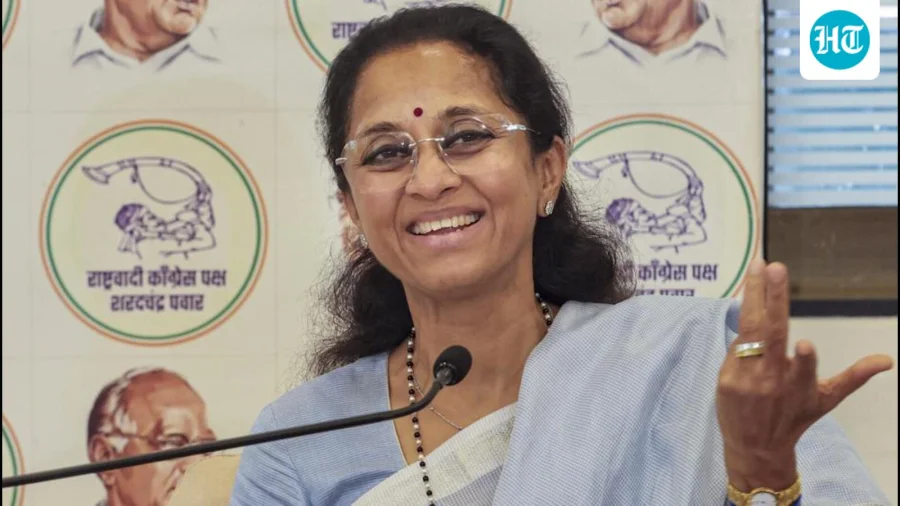
NCP-SCP MP Supriya Sule has drawn a clear red line for the NDA government: any Delimitation Bill must guarantee a 50% increase in Lok Sabha and state assembly seats for every state, or her party will not support it. The statement, made amid growing speculation that the bill could be introduced in the upcoming monsoon session of Parliament, has injected fresh uncertainty into an already contentious political issue.
What Supriya Sule said about the 50% seat hike demand
Speaking to reporters, Sule said her party’s support for the Delimitation Bill is conditional. “If the bill does not provide for a 50% increase in seats for all states, we will not support it,” she stated. The demand is seen as a bid to protect the interests of states that have successfully controlled population growth, particularly in southern India, where leaders fear losing parliamentary representation.
Why the seat hike demand matters for states like Tamil Nadu and Karnataka
The delimitation exercise, which redraws constituency boundaries based on population, is widely expected to benefit states with higher population growth—mostly in the north. Southern states, which have lower fertility rates and better family planning outcomes, worry they will lose seats and political influence. Sule’s demand for a uniform 50% hike is an attempt to ensure no state is left behind, regardless of demographic trends.
Background: The Delimitation Bill and the monsoon session timeline
The Delimitation Bill has been a subject of political debate for years. The last major delimitation was conducted in 2002, based on the 1991 census. The next exercise, due after the 2021 census, has been delayed. The NDA government is now reportedly considering introducing the bill during the monsoon session, which typically begins in July. However, no official confirmation has been made by the government or the Election Commission.
Who is affected by the delimitation debate
Every Indian voter is affected. The delimitation determines how many MPs each state sends to the Lok Sabha, and how many MLAs each district sends to state assemblies. For citizens in states like Kerala, Tamil Nadu, Andhra Pradesh, and Telangana, a population-based formula could mean reduced representation. For states like Uttar Pradesh, Bihar, and Rajasthan, it could mean more seats. The political and emotional stakes are high.
Government and opposition responses so far
The government has not officially responded to Sule’s demand. However, sources indicate that the NDA is aware of the sensitivity. Opposition parties, particularly from the south, have voiced concerns. DMK leaders have previously warned that any delimitation that penalises states for population control would be “unacceptable.” Sule’s statement adds pressure from within the broader opposition camp.
What a 50% seat hike would mean for India’s Parliament
A 50% increase would raise the Lok Sabha strength from 543 to roughly 814 seats. State assemblies would also expand proportionally. While this would ensure no state loses seats, it would also make Parliament larger and potentially more expensive. Critics argue it could dilute the value of each vote. Supporters say it is the only way to maintain federal balance.
Confirmed facts vs what remains unclear
Confirmed: Supriya Sule has demanded a 50% seat hike for all states as a condition for supporting the Delimitation Bill. The monsoon session is the likely timeline for the bill’s introduction. Unclear: Whether the government will accept this demand, what the exact provisions of the bill are, and whether other opposition parties will unite behind Sule’s position. All speculation about the bill’s content remains unconfirmed.
Risks and balanced view on the delimitation debate
Supporters of population-based delimitation argue it is democratic: more people should mean more representation. Critics say it punishes states that have successfully implemented family planning. There is also concern that a politically motivated delimitation could be used to entrench ruling party dominance. The demand for a uniform seat hike, while protective of southern states, could be seen as undermining the principle of proportional representation.
The wider trend: Federal tensions in Indian politics
The delimitation debate is part of a larger pattern of centre-state friction. Southern states have increasingly complained about being shortchanged in tax devolution, funding, and political representation. The demand for a 50% seat hike is the latest flashpoint in a growing assertion of regional identity and federal rights.
What readers should watch for next
Citizens should monitor the monsoon session schedule and any official statement from the government or the Election Commission. Voters in southern states may see this as a test of their political influence. Those interested in parliamentary reform should follow the debate on seat allocation and its impact on democracy.
Future outlook: What could happen with the Delimitation Bill
If the government accepts Sule’s demand, it could pave the way for a broader consensus but also a much larger Parliament. If it rejects the demand, the bill could face stiff opposition, potentially stalling the exercise further. A compromise—such as a phased increase or a population freeze—is also possible. The coming weeks will be critical.
Our Take
Supriya Sule’s demand is a politically astute move that forces the government to address a long-simmering regional grievance. Whether or not the 50% hike is feasible, the debate highlights a fundamental question: should representation follow population, or should it protect federal balance? The answer will shape Indian democracy for decades. This is not just a parliamentary procedural issue—it is about how India defines fairness in its union.
Frequently Asked Questions
What is the Delimitation Bill?
The Delimitation Bill is a proposed law to redraw the boundaries of Lok Sabha and state assembly constituencies based on the latest census data. It determines how many seats each state gets in Parliament.
Why does Supriya Sule want a 50% seat hike for all states?
She argues that a population-based delimitation would unfairly reduce seats for states that have controlled population growth, especially in southern India. A uniform 50% hike would protect their representation.
When is the Delimitation Bill expected to be introduced?
It is speculated that the NDA government may introduce the bill during the monsoon session of Parliament, which typically begins in July 2025. No official date has been confirmed.
How would a 50% seat hike affect the Lok Sabha?
It would increase the Lok Sabha strength from 543 to approximately 814 seats. State assemblies would also see proportional increases, making legislatures larger.