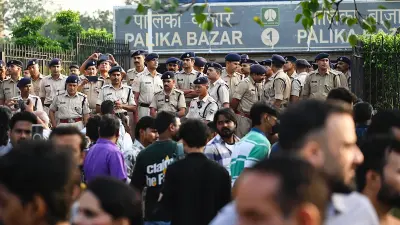
The fires that gutted a factory in west Delhi last month. The building that collapsed in a south Delhi slum cluster, burying a family of five. The blaze that swept through a crowded resettlement colony, leaving dozens homeless. These are not random tragedies. They are the predictable outcome of a city that has spent decades expanding without a plan—pushing millions into neighbourhoods where safety was never part of the design.
Decades of unplanned expansion: How Delhi's growth outpaced its safety net
Delhi's population has exploded from around 4 million in 1951 to over 30 million today. But the city's formal housing stock never kept pace. The result: unauthorised colonies, slum clusters, and illegal floor additions have become the default shelter for the majority. According to urban planners, nearly 40% of Delhi's population lives in some form of informal housing—neighbourhoods built without building bylaws, fire safety norms, or basic infrastructure like wide roads for emergency access.
Why fires and collapses are inevitable in these neighbourhoods
In unauthorised colonies, houses are often built floor by floor, without structural engineering. Electrical wiring is haphazard, frequently overloaded, and rarely maintained. Narrow lanes—sometimes less than three feet wide—mean fire tenders and ambulances cannot enter. In the event of a fire, residents are trapped. In the event of a collapse, rescue is delayed. These are not design flaws; they are the direct consequence of a system that allowed growth without oversight.
The human toll: Who pays the price for unplanned growth?
The victims are overwhelmingly the city's working poor—migrant labourers, factory workers, domestic help, street vendors. They come to Delhi seeking opportunity, but end up in neighbourhoods that offer only risk. A single fire can wipe out a family's savings, their home, and their livelihood. A building collapse can kill multiple generations. And when authorities demolish these settlements—as they did recently in Bhoomiheen Camp—the same families are displaced again, losing even the fragile shelter they had.
Demolitions without rehabilitation: A cycle of displacement
Official responses to the crisis have focused on demolition. In Bhoomiheen Camp, thousands of workers who sustain Delhi's economy—as drivers, cleaners, construction labourers—were evicted. But demolition without providing alternative safe housing does not solve the problem. It merely pushes people to another unauthorised neighbourhood, where the cycle of risk and displacement begins again. Urban experts argue that regularisation with safety upgrades, not demolition, is the only sustainable solution.
What authorities say vs what residents experience
Delhi's municipal corporations and the Delhi Development Authority (DDA) have repeatedly stated their commitment to clearing encroachments and enforcing building norms. But residents of unauthorised colonies say they have no choice. "Where do we go?" asked a factory worker in a recent interview after his home was demolished. "Rent in a legal colony is double my salary. Here, at least I can afford to live near my work." The gap between official policy and ground reality remains vast.
The deeper crisis: A city designed for the rich, not the working class
Delhi's planning has historically prioritised formal, middle-class and elite neighbourhoods, while ignoring the housing needs of the poor. The Master Plan of Delhi has repeatedly failed to allocate sufficient land for affordable housing. As a result, the market has created its own solution—unauthorised, unsafe, and unregulated. This is not a failure of the poor, but a failure of planning. The city's economy depends on millions of low-wage workers, but its housing policy treats them as an afterthought.
Confirmed facts vs what remains unclear
Confirmed: Multiple fires and building collapses have occurred in unauthorised colonies and slum clusters in recent weeks. Demolitions in Bhoomiheen Camp have displaced thousands. Narrow lanes and lack of fire safety infrastructure are common in these areas. Unclear: The exact number of people living in unsafe housing across Delhi is not officially tracked. The long-term rehabilitation plan for displaced families has not been publicly detailed. Whether the current spate of demolitions will be followed by safety upgrades or simply more displacement remains uncertain.
Risks and balanced view: The challenge of regularisation
Regularising unauthorised colonies is politically and logistically complex. Critics argue it rewards illegal construction and encourages further encroachment. Supporters say it is the only way to bring safety and services to millions. There are also concerns that regularisation could lead to gentrification, pushing out the very people it aims to help. A balanced approach would involve strict safety audits, phased upgrades, and a parallel push for affordable formal housing—but such a policy has yet to emerge.
Wider trend: India's urban crisis in miniature
Delhi's unsafe neighbourhoods are not unique. Across India, cities from Mumbai to Bengaluru to Lucknow are grappling with the same problem: rapid urbanisation without adequate planning. The National Commission on Urbanisation has repeatedly warned that India's cities are becoming "unsafe by design" for the poor. Delhi's fires and collapses are a microcosm of a national crisis—one that will only worsen as more people move to cities in search of work.
What residents and policymakers should do now
For residents of unauthorised colonies: Form neighbourhood committees to demand basic safety audits and fire extinguishers. Report unsafe wiring and structural cracks to local authorities. For policymakers: Stop treating demolition as a solution. Instead, create a time-bound plan for regularisation with safety upgrades, widen lanes where possible, and mandate fire safety equipment in all informal settlements. Most critically, build affordable formal housing near employment hubs so that workers are not forced into unsafe neighbourhoods.
Future outlook: Will Delhi break the cycle?
The coming months will test whether Delhi's authorities can shift from reactive demolition to proactive safety planning. With the city projected to become the world's most populous by 2028, the pressure on housing will only intensify. Without a fundamental change in approach—one that prioritises safety and dignity for all residents—the fires and collapses will continue. The human cost of unauthorised growth is not a one-time tragedy. It is a recurring crisis, and the city is running out of time to fix it.
Our Take
Delhi's unsafe neighbourhoods are not a problem of the poor, but a problem of planning. The city has built its economy on the backs of millions of workers, yet refuses to build safe homes for them. Every fire, every collapse, every demolition is a verdict on a system that values order over people. The solution is not more demolitions—it is a political will to treat housing as a right, not a privilege. Until that changes, the human cost will keep rising.
Frequently Asked Questions
Why are Delhi's unauthorised colonies unsafe?
They are built without building bylaws, fire safety norms, or structural engineering. Narrow lanes prevent emergency vehicle access, and electrical wiring is often overloaded and poorly maintained, making fires and collapses common.
Who lives in these unsafe neighbourhoods?
Mostly migrant workers and low-income families who cannot afford rent in formal housing. They work as drivers, factory workers, domestic help, and street vendors—jobs that sustain Delhi's economy.
What is the government doing about it?
Authorities have conducted demolitions in areas like Bhoomiheen Camp, but without providing alternative safe housing. Urban experts argue that regularisation with safety upgrades is a more effective solution.
Can these neighbourhoods be made safe?
Yes, through regularisation, safety audits, widening of lanes where possible, mandating fire extinguishers and safe wiring, and building affordable formal housing near employment centres. But this requires political will and investment.