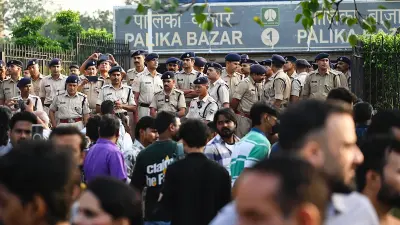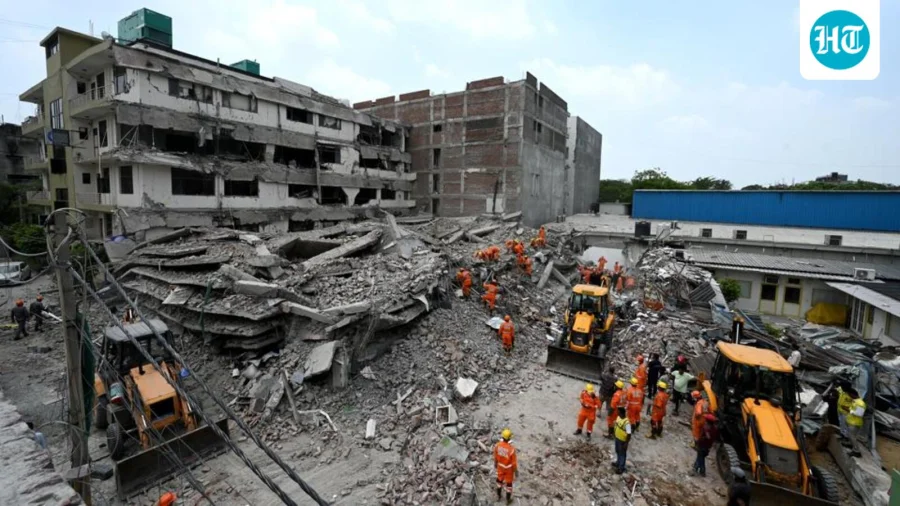
A six-storey building in Delhi came crashing down without warning, turning a busy neighborhood into a scene of chaos and grief. The structure collapsed beside a dining mess frequented by postgraduate students—doctors and engineers who now face the terrifying reality that the very ground beneath their feet is unstable. This is not an isolated tragedy. It is the latest, most brutal symptom of a city expanding so fast that safety has become an afterthought.
Another Building Collapse in Delhi: A City on Shaky Ground
The collapse of a six-storey building in Delhi has once again raised urgent questions about the city’s rapid and often illegal construction. The building, located in a densely populated area, gave way without any apparent trigger, trapping residents and passersby under tons of rubble. Rescue operations are underway, but the incident has already claimed lives and left many injured. For the families affected, the nightmare is just beginning. For the rest of Delhi, it’s a grim reminder that the city’s foundation is far from solid.
Why This Matters Right Now
This isn’t just a story about one building. It’s a story about a city that is growing faster than its infrastructure can handle. Delhi’s unchecked expansion—driven by a booming population and a relentless demand for housing—has created a perfect storm. Old buildings are being retrofitted without proper engineering. New ones are being thrown up on unstable land, often without approved plans. The result? A fragile foundation that is cracking under pressure. Every collapse is a warning. Every life lost is a cost of negligence. And the pattern shows no signs of stopping.
How the Incident Unfolded: A Sudden, Terrifying Collapse
Witnesses described a sudden, thunderous roar as the six-storey structure gave way. The building, which housed several families and businesses, collapsed onto a narrow street, crushing vehicles and damaging adjacent properties. The dining mess nearby—a place where postgraduate students, including doctors and engineers, would gather for meals—was narrowly missed. But the psychological impact is profound. “We heard a loud crack, and then everything went dark,” one survivor told local media. “We ran, but some people didn’t make it.” The collapse happened in seconds, but its consequences will last a lifetime.
Who Is Affected and What Officials Are Saying
The immediate victims are the residents of the collapsed building and their families. But the ripple effect extends to the entire neighborhood, where fear and uncertainty now reign. Delhi’s Lieutenant Governor has publicly warned against the city’s “unchecked expansion,” calling for stricter enforcement of building codes and a halt to illegal construction. “We cannot allow this to continue,” he stated. “Every illegal floor, every unauthorized extension is a potential death trap.” However, critics argue that warnings alone are not enough. They point to a systemic failure in urban planning and a lack of accountability that allows such tragedies to repeat.
What We Know So Far — and What Remains Unclear
What we know: A six-storey building collapsed in Delhi. Multiple casualties have been reported. The building was located in a densely populated area. The Delhi LG has linked the incident to the city’s unchecked expansion.
What remains unclear: The exact cause of the collapse is still under investigation. Was it a structural failure due to poor construction? Was the building built on unstable land? Were there any prior warnings or complaints? The number of people still trapped under the debris is also uncertain. Rescue teams are working against time, but the full scale of the tragedy may not be known for days.
Risks, Concerns, and the Balanced View
The risks are clear: every illegally constructed or poorly maintained building in Delhi is a potential disaster waiting to happen. The concerns are not just about safety, but about the systemic corruption and negligence that allow such construction to flourish. On the other hand, some argue that the city’s housing crisis leaves many with no choice but to live in unsafe conditions. The demand for affordable housing far outstrips supply, pushing people into the arms of unscrupulous builders. The balanced view is that while individual builders and residents must be held accountable, the root cause is a failure of urban governance. Without addressing the housing shortage and strengthening regulatory oversight, more collapses are inevitable.
Why Similar Trends Are Growing: The Pattern of Unchecked Expansion
Delhi is not alone. Across India, cities are expanding at a breakneck pace, often without proper planning. But Delhi’s case is particularly alarming due to its high population density and the prevalence of illegal construction. The pattern is consistent: a building goes up without proper approvals, it is extended floor by floor without structural reinforcement, and eventually, it collapses under its own weight. The victims are almost always the poor and the middle class, who can’t afford to live in safer, more expensive areas. This is not just a construction problem—it’s a social and economic one.
- Many buildings in Delhi are constructed on reclaimed or unstable land.
- Illegal floor additions are common, often without any engineering assessment.
- Corruption in the municipal corporation allows unsafe buildings to be occupied.
- Lack of regular inspections means problems go unnoticed until it’s too late.
“We cannot allow this to continue. Every illegal floor, every unauthorized extension is a potential death trap.” — Delhi Lieutenant Governor
What Readers, Residents, and Investors Should Know Now
For residents of Delhi, this tragedy is a wake-up call. If you live in a multi-storey building, especially one that has been extended or built in a high-density area, it is crucial to check its structural integrity. Look for signs of cracks, uneven floors, or water seepage. Report any suspicious construction to the local municipal corporation. For investors and developers, the message is clear: cutting corners on safety is not just unethical—it’s deadly. The long-term cost of a collapse far outweighs any short-term profit. For policymakers, the need for urgent action is undeniable. Stricter enforcement, better urban planning, and affordable housing solutions are no longer optional—they are essential.
What Could Happen Next
In the short term, rescue operations will continue, and the death toll may rise. The municipal corporation is likely to issue show-cause notices to the building owner and the builder. There may be a temporary crackdown on illegal construction in the area. In the long term, however, without systemic change, the pattern will repeat. The Delhi LG’s warning may lead to new policies or stricter enforcement, but history suggests that such measures are often short-lived. The real change will come only when the demand for safe, affordable housing is met, and when the cost of negligence becomes too high to ignore.
Our Take: Why This Story Matters Beyond One Incident
This collapse is not a freak accident. It is the predictable outcome of a city that has prioritized growth over safety, profit over people. Every time a building falls in Delhi, it exposes the fragile foundation on which the city is built—not just of concrete and steel, but of governance, accountability, and trust. The tragedy is that these warnings have been sounded before, and they will be sounded again. The question is not whether another collapse will happen, but when—and how many lives will be lost before we finally decide to build a safer city.
FAQs
Why do buildings collapse so often in Delhi?
Buildings collapse in Delhi primarily due to unchecked urban expansion, illegal construction, poor materials, and lack of proper structural engineering. Many buildings are extended floor by floor without reinforcement, making them unstable.
What is being done to prevent future building collapses in Delhi?
The Delhi government has issued warnings against illegal construction and called for stricter enforcement of building codes. However, critics say these measures are not enough and that systemic changes in urban planning and housing policy are needed.
How can I check if my building in Delhi is safe?
Look for visible signs of structural damage like cracks in walls, uneven floors, or water seepage. You can also request a structural audit from a licensed engineer. Report any concerns to your local municipal corporation.
What should I do if I see illegal construction in my neighborhood?
Report it immediately to the local municipal corporation or the Delhi Police. You can also file a complaint through the Delhi government’s online portal. Early reporting can prevent a future tragedy.