Over three million people in Delhi have been told their names are under scrutiny. What they haven't been told is why.
According to a Supreme Court petition, approximately 33.13 lakh voters included in Delhi's draft electoral roll have been identified for notices under two categories — 'No Mapping' and 'Logical Discrepancies' — as part of the Special Intensive Revision (SIR) of the capital's voter list. The notices have begun going out. Hearings have started. But the Election Commission of India has not published the names of those flagged, nor the specific reasons each person was selected.
That silence is now at the centre of a legal challenge.
Two Categories, 33 Lakh People, and a Wall of Silence
The SIR process flags voters under different categories. 'No Mapping' typically refers to cases where a voter's address or details cannot be matched with existing records. 'Logical Discrepancies' covers inconsistencies in the data — mismatches that the system identifies as requiring verification.
Both categories are procedural. Neither is an accusation of wrongdoing. But for the 33.13 lakh voters who fall under them, the practical consequence is the same: they must appear for hearings or risk being removed from the electoral roll.
What they cannot access is the specific reason they were flagged. The ECI has not made this information public.
Why This Matters Beyond Delhi's Borders
Delhi's SIR is not happening in isolation. It is part of a wider revision exercise that has already been conducted or is underway in several states. What happens in Delhi — legally, procedurally, and politically — will shape how similar exercises unfold elsewhere.
For the voters themselves, the stakes are immediate. A removal from the electoral roll means losing the right to vote in the next election. For many, that is not an abstract concern. It is the difference between having a voice and being erased from the list.
The lack of transparency around who is being flagged and why has raised a fundamental question: if the process is fair, why not disclose the grounds?
How the SIR Process Reached This Point
The Special Intensive Revision of Delhi's electoral roll began with the publication of a draft roll. During this phase, the ECI's system cross-references voter data against multiple databases. Where matches fail or inconsistencies appear, voters are flagged.
Notices are then issued, and hearings are scheduled. Voters are expected to present documentation to prove their eligibility. If they fail to appear or cannot provide satisfactory evidence, their names may be struck from the final roll.
The process is designed to clean up electoral rolls. But the scale — 33.13 lakh in Delhi alone — has raised concerns about whether the system is flagging genuine discrepancies or casting too wide a net.
The People Behind the Numbers
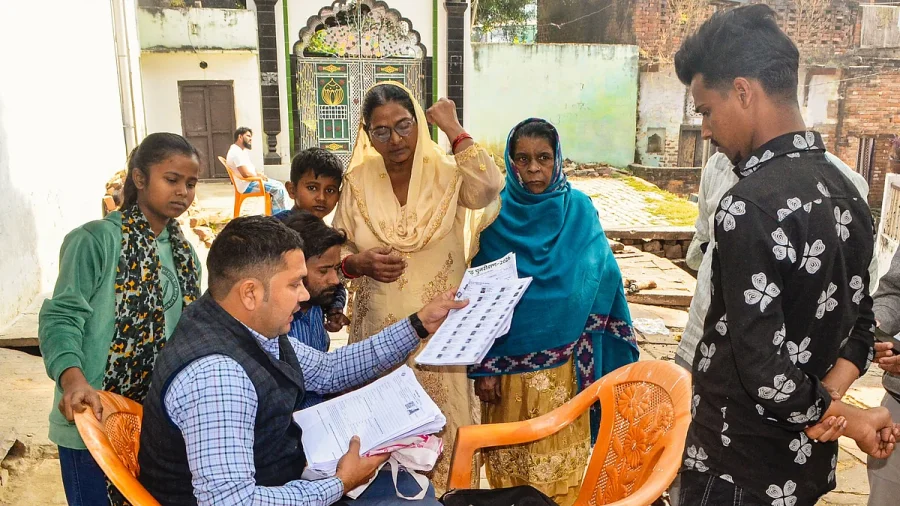
In JJ Bela Estate, hundreds of names were excluded from the draft roll. Residents there are now filing Form 6 applications — the form used for new voter registration — in an attempt to get back on the list.
For these residents, the SIR has meant starting from scratch. Many are daily-wage workers, migrants, or families who have lived in the area for years. The paperwork required to prove residency is not always easy to produce, especially for those in informal housing.
The situation in JJ Bela Estate is a microcosm of what could be happening across Delhi. The difference is that here, the exclusions were visible enough to prompt collective action.
Petitioners Take the Fight to the Supreme Court
Anjali Bhardwaj and Amrita Johri have challenged the ECI's refusal to publish the names of those served notices and the specific grounds for each. Their petition argues that without this information, voters cannot effectively defend themselves in hearings.
The Supreme Court is scheduled to hear the plea on 21 September. The outcome could determine whether the ECI is required to disclose more details about the SIR process — or whether the current level of transparency is legally sufficient.
The ECI has not publicly commented on the specifics of the petition. Officials have previously stated that the SIR is a routine exercise aimed at ensuring the accuracy of electoral rolls.
What's Confirmed — and What Isn't
Confirmed: 33.13 lakh voters in Delhi's draft roll have been identified for notices under 'No Mapping' or 'Logical Discrepancies'. Hearings have begun. A Supreme Court petition has been filed. The court will hear the matter on 21 September.
Not confirmed: The exact criteria used to flag individual voters. The number of voters who have already been removed. Whether the ECI will voluntarily disclose more information before the hearing.
Unclear: How many of the 33.13 lakh will ultimately be removed from the roll. Whether the legal challenge will result in procedural changes. How the SIR in Delhi compares to other states in terms of exclusion rates.
The Risks of a Wide Net
Electoral roll revisions are necessary. Duplicate entries, outdated addresses, and deceased voters can distort the list. Cleaning them up is a legitimate administrative task.
But when the scale of flagging is large and the reasons are not disclosed, the risk of wrongful exclusion increases. Voters who are legitimately registered may find themselves unable to prove their eligibility in time — especially if they are unaware of the specific discrepancy they need to address.
Critics argue that the burden of proof has shifted unfairly onto the voter. Supporters of the SIR say the process is necessary to maintain the integrity of the electoral roll and that genuine voters have nothing to fear if their documents are in order.
Both perspectives have merit. The question is whether the current process strikes the right balance.
A Pattern Across States
Delhi is not the first state to undergo SIR. Similar exercises have been conducted elsewhere, with varying degrees of controversy. In some states, the process was completed with relatively little public friction. In others, it sparked protests and legal challenges.
The common thread is transparency. Where the ECI has provided detailed information about flagged voters and the reasons for flagging, the process has faced less resistance. Where it hasn't, trust has eroded.
Delhi's case may become a test case for how much information the ECI is legally required to provide during such exercises.
What Voters Should Do Now
If you are a registered voter in Delhi, check your name on the draft electoral roll. If you have received a notice, do not ignore it. Attend the hearing. Bring whatever documentation you have — proof of address, identity, and any other relevant papers.
If your name has been excluded, you can file Form 6 to reapply. This is what residents in JJ Bela Estate are doing. The process is not quick, but it is the available remedy.
Keep records of any communication with electoral officials. If you believe you have been wrongly flagged, you have the right to challenge it — but you need to know the grounds first. That is precisely what the Supreme Court petition is seeking to establish.
What Happens After 21 September
The Supreme Court's decision on the petition will have immediate implications. If the court directs the ECI to disclose names and grounds, the SIR process in Delhi will become more transparent — and potentially more contested.
If the court declines to intervene, the current process will continue as is. Voters will still have the right to hearings, but without knowing the specific reason they were flagged.
Either way, the SIR will proceed. The final electoral roll will be published. And 33.13 lakh voters will either have cleared their names or been removed.
The question is whether they will have had a fair chance to do so.
Our Take
The SIR is not inherently unfair. Cleaning up electoral rolls is a necessary function of any democracy. But necessity does not excuse opacity.
When 33 lakh people are flagged, the system owes them an explanation. Not because they are entitled to special treatment, but because the burden of proof should not fall entirely on the voter without them knowing what they are proving.
The Supreme Court hearing on 21 September is not just about Delhi. It is about whether the ECI's processes are transparent enough to withstand legal scrutiny — and public trust. The answer will shape how voters view the SIR, not just in Delhi, but across the country.
Frequently Asked Questions
What is 'No Mapping' in the Delhi SIR?
'No Mapping' is a category used during the Special Intensive Revision when a voter's details cannot be matched with existing records. It does not automatically mean the voter is ineligible — it means the system requires verification. Voters in this category are issued notices and must attend hearings to confirm their details.
How many voters are affected by the Delhi SIR notices?
According to a Supreme Court petition, approximately 33.13 lakh voters in Delhi's draft electoral roll have been identified for notices under 'No Mapping' or 'Logical Discrepancies'. This is the figure cited in the petition, not an official ECI disclosure.
What should I do if I receive a SIR notice in Delhi?
Do not ignore it. Attend the scheduled hearing and bring all relevant documentation — proof of address, identity, and any other papers that establish your residency. If your name has already been excluded, you can file Form 6 to reapply for registration.
Why is the ECI not disclosing the names of flagged voters?
The ECI has not publicly explained its decision to withhold names and specific grounds. The petitioners argue that this lack of transparency prevents voters from effectively defending themselves. The Supreme Court is scheduled to hear the matter on 21 September.