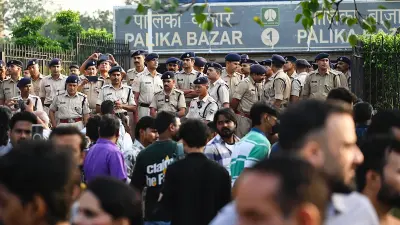
The Delhi Police has approached the Delhi High Court with a strong plea to cancel the bail granted to a female teacher accused in the Janakpuri school rape case. The move, which escalates the legal battle, comes after the trial court’s decision to grant bail was met with sharp opposition from law enforcement, who argue that the nature of the crime demands the strictest judicial response.
Why the Police Are Pushing for Bail Cancellation
In its submission before the High Court, the Delhi Police, represented by Additional Solicitor General (ASG) S V Raju, described the case as "gross." The prosecution’s central argument is that the accused faces a minimum punishment of 20 years of imprisonment if convicted. This severity, they contend, makes the grant of bail by the lower court a decision that undermines the gravity of the offense and the safety of children in educational institutions.
Why This Matters Right Now
This is not just a routine legal appeal. The case has reignited public anxiety about safety within school premises, a space parents trust implicitly. The police’s decision to directly challenge the bail in the High Court signals a zero-tolerance approach, but it also raises uncomfortable questions: How did the accused, a staff member, gain access to a child? And what does this say about the systems meant to protect students? The outcome of this plea could set a significant precedent for how courts handle bail in cases involving sexual offenses against minors, especially when the accused is in a position of trust.
How the Situation Developed
The case first came to light following an incident at a school in Delhi’s Janakpuri area, where a female teacher was accused of sexually assaulting a minor student. The trial court, after initial proceedings, granted bail to the accused. This decision was immediately contested by the Delhi Police, who moved the High Court seeking its cancellation. The matter is now pending before a High Court bench, which will hear arguments from both sides.
What Officials Are Saying
Additional Solicitor General S V Raju, appearing for the Delhi Police, argued that the case is "gross" and that the accused faces a minimum sentence of 20 years. He emphasized that the nature of the crime and the potential sentence should have been sufficient grounds for the trial court to deny bail. The police’s stance is clear: the safety of children and the integrity of the investigation must not be compromised by what they see as a lenient judicial order.
What We Know So Far — and What Remains Unclear
What is confirmed is that the Delhi Police has formally moved the High Court, and the case has been labeled as "gross" by the prosecution. The accused is a female staff member of the school, and the victim is a minor student. However, the specific details of the alleged crime, the exact timeline of events, and the reasoning behind the trial court’s initial bail order remain under legal wraps. The High Court’s decision will likely clarify these points.
Risks, Concerns, and the Balanced View
While the police’s move is widely seen as a necessary step to ensure justice, legal experts caution that bail cancellation is a serious judicial step. Courts typically grant bail unless there is a clear risk of the accused fleeing, tampering with evidence, or influencing witnesses. The prosecution will need to prove that such risks exist. On the other hand, critics of the initial bail argue that in cases involving minors and positions of trust, the presumption should lean towards detention, not freedom. The balance between individual liberty and societal safety is once again under the judicial microscope.
Why Similar Cases Are Drawing More Scrutiny
This case is part of a broader, troubling pattern. Incidents of sexual abuse within schools, often involving staff members, have led to a nationwide demand for stricter background checks, better surveillance, and harsher punishments. The Delhi Police’s aggressive legal stance reflects a growing institutional recognition that leniency in such cases can erode public trust. The High Court’s ruling will be watched closely by school administrations, parents, and legal professionals across the country.
- The accused is a female staff member at a school in Janakpuri, Delhi.
- The victim is a minor student at the same institution.
- The Delhi Police has termed the offense "gross" in its High Court plea.
- The minimum sentence for the crime is 20 years of imprisonment.
"This is a gross case. The accused faces a minimum punishment of 20 years imprisonment." — Additional Solicitor General S V Raju, representing the Delhi Police
What Parents and Schools Should Know Now
For parents, this case is a stark reminder to remain vigilant about the environment their children are in. Schools, in turn, must review their safety protocols, including background verification of all staff and the implementation of strict reporting mechanisms. The legal system is now actively engaged, but prevention remains the most powerful tool. The outcome of this High Court plea will likely lead to renewed discussions on mandatory safety audits for educational institutions.
What Could Happen Next
The Delhi High Court will now hear the police’s plea. If the court agrees to cancel the bail, the accused will be taken back into custody. If the plea is dismissed, the bail will stand, but the case will proceed to trial. In either scenario, the legal process is far from over. The case is expected to set a significant legal precedent regarding the grant of bail in cases involving sexual offenses against minors, particularly when the accused holds a position of authority.
Our Take: Why This Story Matters Beyond One Incident
This is not just about one accused teacher or one school. It is about the fundamental question of how seriously the justice system treats crimes against children. The Delhi Police’s decision to escalate this to the High Court is a signal that the state is willing to fight for stricter accountability. However, the real test will be whether this leads to systemic change — in how schools are monitored, how staff are vetted, and how quickly justice is delivered. For now, all eyes are on the High Court bench.
FAQs
Why is the Delhi Police seeking cancellation of bail in the Janakpuri school rape case?
The Delhi Police has termed the case "gross" and argues that the accused faces a minimum 20-year prison sentence. They believe the trial court’s decision to grant bail undermines the severity of the crime and poses a risk to the investigation and public safety.
Who is the accused in the Janakpuri school rape case?
The accused is a female teacher or staff member at a school in Janakpuri, Delhi. She has been charged with sexual assault against a minor student at the same institution.
What does "bail cancellation" mean in this context?
Bail cancellation is a legal process where a higher court (in this case, the Delhi High Court) is asked to revoke the bail granted by a lower court. The prosecution must show that the bail was granted improperly or that the accused has violated its conditions.
What is the minimum punishment for the accused if convicted?
According to the Delhi Police, the accused faces a minimum punishment of 20 years of imprisonment if convicted under the relevant sections of the law dealing with sexual offenses against minors.