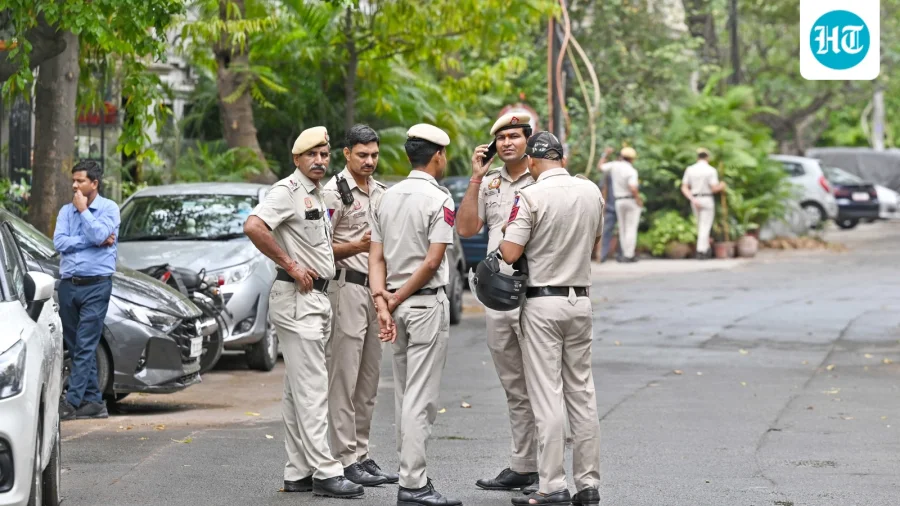
Seven hours. That's all it took for Delhi Police to move from a stabbing call to three people in custody — after a 17-year-old boy was killed in the national capital. The speed is striking in a city where violent crime investigations often stretch for weeks. But for the family of the teenager, no arrest can undo what happened.
A Teenager's Life, Ended in a Stabbing
The victim was 17 — a minor under Indian law, which means his identity is protected and details around his death are tightly held. What is confirmed: he was stabbed to death in Delhi, and police have since arrested a key accused while apprehending two juveniles in connection with the case.
The circumstances leading up to the attack — where exactly it happened, what triggered it, whether the accused and the victim knew each other — have not been officially detailed in the information available so far.
Why a Seven-Hour Crackdown Matters
In Delhi, where tens of thousands of criminal cases are registered every year, a murder solved within a single shift is unusual. It suggests either strong local intelligence, quick CCTV recovery, or both. For residents, the message is dual-edged: the system can respond fast — but only after a life is already lost.
For the families of young people in the city, the case lands as a reminder of how quickly street-level disputes can turn fatal.
How the Case Unfolded
According to the information available, the sequence was compressed: the stabbing occurred, police registered the case, and within roughly seven hours, one key accused was arrested and two juveniles were apprehended. The exact timeline of the attack, the FIR registration, and the arrests has not been independently verified beyond the official account.
No details have been released about the weapon recovered, the location of the crime, or whether the accused have prior records.
Who Is Affected — and How
The immediate circle is the victim's family, now navigating a loss that no legal process can reverse. Beyond them, the case touches two other families — those of the apprehended juveniles, whose futures now hinge on the juvenile justice system.
Under Indian law, juveniles are dealt with under the Juvenile Justice Act, which prioritises rehabilitation over punishment in most cases — though heinous offences can be tried as adults if a Juvenile Justice Board recommends it. Whether that applies here is not yet known.
What Police Have Said — and What They Haven't
Officials have confirmed the arrests and the seven-hour turnaround. They have not, in the information available, disclosed the motive, the relationship between the accused and the victim, or the exact sequence of events.
Until those details emerge — through a chargesheet, a police briefing, or court proceedings — any narrative about "why" remains speculation.
Reading the Speed of the Investigation
Fast arrests are not the same as a closed case. Indian criminal procedure requires evidence to withstand trial, and premature conclusions have, in past cases, led to acquittals or wrongful detentions. The seven-hour timeline is a strong operational signal — but the legal test is still ahead.
It also raises a quieter question: if police can mobilise this quickly for one case, why does that speed not feel consistent across the city?
Confirmed Facts vs What Remains Unclear
Confirmed: A 17-year-old was stabbed to death in Delhi. One key accused has been arrested. Two juveniles have been apprehended. Police say the case was solved within seven hours.
Unclear: The motive. The location. The relationship between the accused and the victim. Whether the juveniles will be tried as adults. Whether any prior disputes or criminal history were involved.
Anything beyond the confirmed list should be treated as unverified until officially stated.
Risks and the Balanced View
The swift arrests are a positive signal for law enforcement responsiveness. But they also invite scrutiny: were the right people picked up? Was due process followed for the juveniles? Will the evidence hold up in court?
These are not accusations — they are the standard questions any serious investigation must answer. A fast arrest is the beginning of accountability, not the end of it.
The Wider Pattern: Youth Violence in Indian Cities
This case sits within a broader, uncomfortable trend — stabbings and street-level violence involving teenagers in Indian metros. Most stem from personal disputes, territorial friction, or peer-group conflict rather than organised crime. The pattern has prompted repeated calls for better school-level intervention, mental health support, and community policing.
Whether this particular case fits that pattern is not yet known.
What Readers and Families Should Take Away
For parents and young people in Delhi, the practical takeaways are grim but real: disputes escalate faster than most expect, and the consequences can be irreversible within minutes. Reporting threats early, avoiding confrontational gatherings, and knowing local police station contacts are basic but effective precautions.
For those following the case, the responsible approach is to wait for official updates rather than rely on circulating claims.
What Happens Next
The investigation is expected to continue — statements will be recorded, forensic evidence examined, and the juveniles produced before the Juvenile Justice Board. A chargesheet will follow if the evidence supports it. Until then, the case remains open in the legal sense, even if police consider it solved operationally.
Our Take
A 17-year-old is dead. Three people are in custody. The seven-hour timeline is a genuine operational achievement — but the story that matters most is the one that can't be fixed: a family that sent a teenager out and will not see him return. The speed of justice is worth noting. The loss is worth remembering.
Frequently Asked Questions
How did Delhi Police solve the case so quickly?
According to the information available, police arrested a key accused and apprehended two juveniles within seven hours of the stabbing. The specific investigative steps — such as CCTV analysis or local intelligence — have not been officially detailed.
Will the two juveniles be tried as adults?
Under the Juvenile Justice Act, juveniles are typically tried through the Juvenile Justice Board, which prioritises rehabilitation. Heinous offences can be transferred to adult trial if the Board recommends it. No such decision has been confirmed in this case.
What was the motive behind the stabbing?
The motive has not been officially disclosed. Any claim about the reason circulating online should be treated as unverified until police or court records confirm it.
Is the case fully closed now that arrests have been made?
No. Arrests are an early stage. The case will proceed through investigation, evidence collection, and likely trial. A legal conclusion is still ahead.