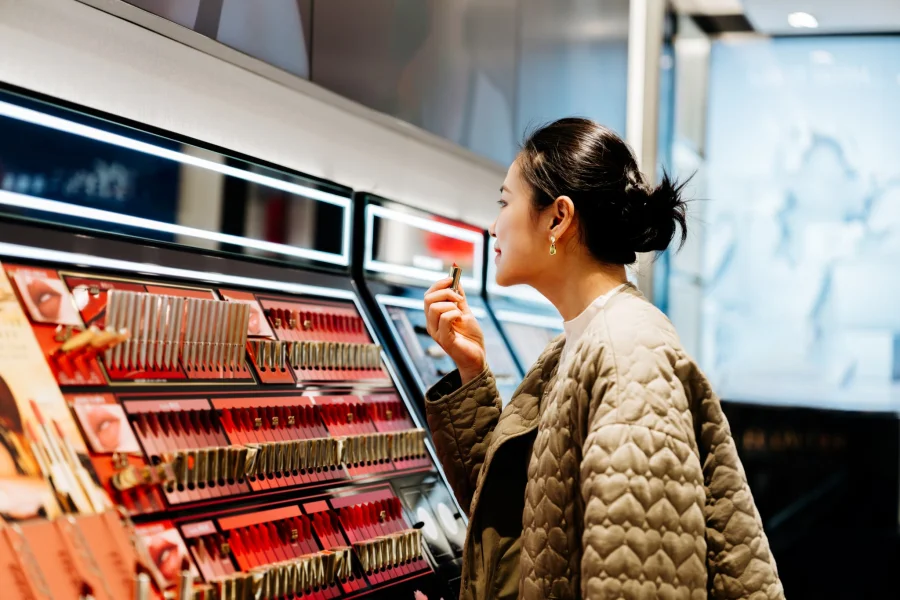
For decades, Japanese and Korean beauty brands dominated Asia’s cosmetics landscape. Now, a new wave is emerging from China — and its first stop is not Paris or New York, but Southeast Asia.
How Chinese beauty brands are entering Southeast Asia
Joy Group, the parent company behind popular C-beauty brands Judydoll and Joocyee, is leading this charge. After opening its first overseas boutiques in Singapore last year, the group will open a store in Malaysia by the end of 2025, according to a report by Fortune.
The Singapore office, established in 2024, serves as a regional hub to tap into other Southeast Asian markets. Fanqi Kong, Joy Group’s general manager of international business, told Fortune: “Southeast Asia has a huge consumer market, and people are generally very accepting of Chinese products.”
Why Southeast Asia is the first global test for C-beauty
The region offers a unique combination of scale and cultural proximity. With a population of over 650 million and a rapidly growing middle class, Southeast Asia is a natural first step for Chinese brands looking to go global. Consumers here are already familiar with Asian beauty trends, making the transition smoother than entering Western markets.
For Chinese beauty brands, Southeast Asia is not just a market — it’s a proving ground. Success here could open doors to broader international expansion, while failure would provide valuable lessons without the high stakes of a Western launch.
Joy Group’s financial momentum and overseas push
In 2025, Joy Group’s retail sales exceeded $730 million, of which $87 million came from overseas sales. While the overseas share is still small — about 12% — it represents a growing commitment to international markets.
The group’s strategy mirrors that of other Chinese consumer brands: first build a strong domestic base, then expand regionally before attempting a global footprint. The Singapore hub is designed to coordinate marketing, distribution, and retail operations across multiple Southeast Asian countries.
What this means for consumers in Singapore and Malaysia
For beauty shoppers in Singapore and Malaysia, the arrival of Chinese brands means more choice and often lower price points compared to established Japanese and Korean competitors. Judydoll and Joocyee are known for their trendy packaging, affordable pricing, and innovative formulas — attributes that have already won them a loyal following in China.
Local consumers can expect to see these brands in physical stores, not just online. The Malaysia store will be a key test of whether C-beauty can replicate its domestic success in a foreign retail environment.
Joy Group’s strategy: from Singapore hub to regional expansion
Fanqi Kong’s comments to Fortune highlight a deliberate, phased approach. The Singapore office is not just a store — it’s a command center for Southeast Asia. From there, Joy Group can manage logistics, marketing, and partnerships across markets like Malaysia, Indonesia, Thailand, and Vietnam.
This hub-and-spoke model reduces risk and allows the company to adapt its product offerings to local preferences. For example, shades and formulations may be tweaked for Southeast Asian skin tones and climates, which differ from those in China.
Confirmed facts vs what remains unclear
Confirmed: Joy Group will open a Malaysia store by end of 2025. The Singapore office opened in 2024. Overseas sales in 2025 were $87 million. Fanqi Kong’s comments are on record with Fortune.
Unclear: The exact location and size of the Malaysia store. Whether other Chinese beauty brands are following a similar timeline. The long-term profitability of overseas operations. No official statement from Joy Group beyond the Fortune interview has been released.
What makes Joy Group different from other Chinese beauty companies
Joy Group’s moat lies in its brand portfolio and distribution network. Judydoll and Joocyee have strong recognition among young Chinese consumers, known for their social media-driven marketing and affordable luxury positioning. The group’s ability to operate both online and offline gives it flexibility in new markets.
Unlike some competitors that rely heavily on cross-border e-commerce, Joy Group is investing in physical retail, which builds brand credibility and consumer trust in new regions.
Risks and challenges for C-beauty in Southeast Asia
Expanding into Southeast Asia is not without risks. Chinese brands face competition from established Japanese and Korean players who have decades of regional presence. There are also regulatory differences across countries, supply chain complexities, and cultural nuances in marketing.
Consumer perception is another factor. While Kong noted that Southeast Asians are “generally very accepting” of Chinese products, some markets may have lingering skepticism about quality or safety. Building trust will take time and consistent product performance.
The bigger picture: C-beauty’s global ambitions
Joy Group’s move is part of a broader trend. Chinese beauty brands — collectively known as C-beauty — are increasingly looking beyond their home market. Domestic growth has slowed, and competition is intense. Going global is no longer optional for ambitious brands.
Southeast Asia is the logical first step, but the ultimate prize is the West. Success in Singapore and Malaysia could pave the way for entry into Europe and North America, where Asian beauty trends have already gained traction.
What beauty shoppers and investors should watch
For consumers, the Malaysia store opening is a chance to try new products. For investors, Joy Group’s overseas performance will be a key indicator of whether C-beauty can scale internationally. Watch for sales figures, store traffic, and consumer reviews in the coming months.
For other Chinese beauty brands, Joy Group’s strategy offers a blueprint: start with a regional hub, invest in physical retail, and adapt to local preferences.
What’s next for Joy Group and C-beauty in Southeast Asia
The Malaysia store opening by end of 2025 is the next milestone. If successful, Joy Group is likely to expand to Indonesia, Thailand, and Vietnam. The Singapore hub will continue to coordinate regional operations.
Longer term, the company may explore partnerships with local retailers or e-commerce platforms to accelerate growth. The overseas sales figure of $87 million is small today, but it could grow rapidly if the Southeast Asian bet pays off.
Our Take
Joy Group’s expansion into Southeast Asia is a smart, measured first step in a long global journey. The region offers a low-risk, high-reward testing ground for Chinese beauty brands. But the real challenge will come when these brands try to enter Western markets, where consumer loyalty to established names is strong and regulatory hurdles are higher.
For now, Southeast Asia is the perfect laboratory. Success here will prove that C-beauty can compete beyond China. Failure would be a setback, but not a fatal one. Either way, the world is watching.
Frequently Asked Questions
Which Chinese beauty brands are expanding into Southeast Asia?
Joy Group, the parent company of Judydoll and Joocyee, is leading the expansion. It opened stores in Singapore in 2024 and plans a Malaysia store by end of 2025.
Why are Chinese beauty brands choosing Southeast Asia first?
Southeast Asia has a large consumer market, cultural openness to Chinese products, and lower entry barriers compared to Western markets. It serves as a testing ground for global expansion.
How much overseas revenue does Joy Group generate?
In 2025, Joy Group’s overseas sales were $87 million, out of total retail sales exceeding $730 million.
Will other Chinese beauty brands follow Joy Group to Southeast Asia?
It is likely. Joy Group’s strategy could serve as a blueprint for other C-beauty brands looking to expand internationally. However, no official announcements have been made by competitors.