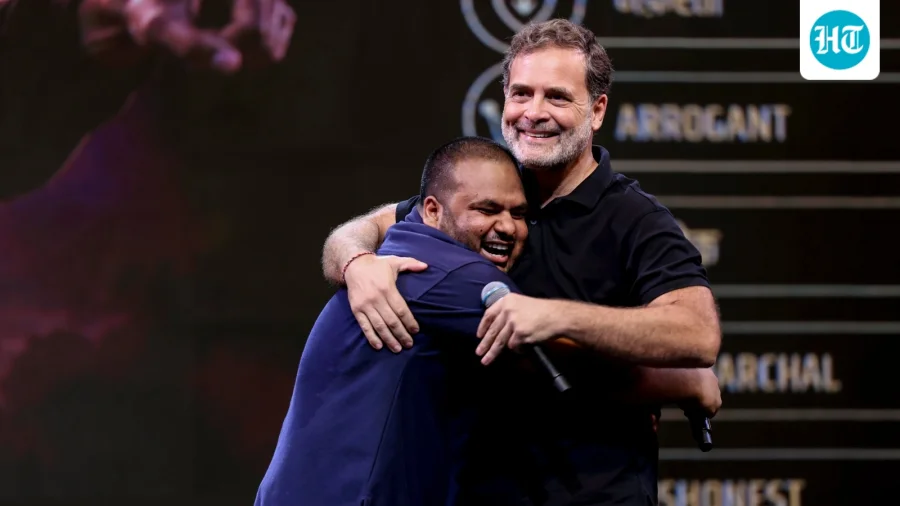
What began as a moment at a Rahul Gandhi event has snowballed into a full-blown political confrontation. A mimicry of Prime Minister Narendra Modi — performed in the presence of the Congress leader — has drawn sharp reactions from the BJP, which labelled it "cheap political theatre," even as opposition parties from the Congress, AAP and TMC closed ranks to defend it as an exercise of democratic right.
The episode has once again exposed the thin line Indian politics walks between satire and insult, between free expression and political provocation.
The Moment That Set Off a Political Firestorm
At a Rahul Gandhi event, a mimicry of PM Modi was performed, drawing laughter and attention. The act, which appears to have been part of the programme, quickly became the flashpoint. BJP leaders seized on it, calling it "cheap political theatre" — a phrase that has since dominated television debates and social media timelines.
The Congress, AAP and TMC, however, pushed back firmly. Their argument: political satire and mimicry are legitimate tools of democratic expression, not offences.
Why This Row Matters Beyond the Headlines
This is not merely a dispute over one performance. It touches a nerve that runs through Indian democracy — how far can political criticism go? Where does satire end and disrespect begin?
For the BJP, the mimicry crossed a line of decorum toward the Prime Minister's office. For the Opposition, the backlash is an attempt to police political expression and distract from substantive issues.
Both framings carry weight with their respective support bases, which is precisely why the row has escalated so quickly.
How the Confrontation Unfolded
The sequence was swift. The mimicry took place at the Rahul Gandhi event. BJP leaders responded with the "cheap political theatre" charge. Opposition leaders — from the Congress, AAP and TMC — countered by framing it as a democratic right.
What started as a comment on a single act has now become a broader argument about political culture, respect for institutions, and the boundaries of protest and parody.
Who Is Affected — and Why It Resonates
For ordinary voters, this is not an abstract debate. It feeds into a larger perception battle: does the ruling party tolerate criticism, or does it seek to silence it? Does the Opposition engage in genuine satire, or does it stoop to personal mockery?
These questions shape how citizens view their leaders — and, eventually, how they vote. The mimicry row is a small episode, but it carries the weight of a much larger political argument.
What the Two Sides Are Saying
BJP leaders have been unequivocal: the mimicry was in poor taste and amounted to "cheap political theatre." Their framing positions the act as beneath the dignity of political discourse.
Opposition leaders from the Congress, AAP and TMC have been equally firm: they see the criticism as an attack on democratic expression. For them, the right to parody and critique public figures — including the Prime Minister — is fundamental.
No official statement from the Prime Minister's Office has been reported in the available material, leaving the BJP's political leadership to carry the counter-argument.
Confirmed Facts vs What Remains Unclear
Confirmed: A mimicry of PM Modi took place at a Rahul Gandhi event. BJP leaders called it "cheap political theatre." Congress, AAP and TMC leaders defended it as a democratic right.
Unclear: The exact nature of the mimicry, the identity of the performer, and whether any formal complaint or action has been initiated. No verified information is available on these points.
Readers should treat any claims beyond these confirmed facts with caution until official sources clarify.
The Risks of Escalation — for Both Sides
For the BJP, the risk is appearing intolerant of satire — a charge the Opposition is quick to amplify. For the Opposition, the risk is that the mimicry is perceived as disrespectful rather than witty, alienating undecided voters.
Both sides are navigating a narrow path: rallying their bases without overplaying their hand. The row's political cost will depend on how long it stays in the headlines — and how it is framed in the days ahead.
A Familiar Pattern in Indian Politics
This is not the first time satire has triggered a political storm in India. Mimicry, cartoons, and parody have repeatedly become flashpoints, with ruling parties and oppositions trading charges of intolerance and disrespect.
The pattern reflects a deeper tension: as political competition intensifies, the space for humour and criticism becomes more contested. What one side calls wit, the other calls insult.
What This Means for the Political Discourse
For voters, the takeaway is simple: this row is a preview of the arguments that will dominate the political season ahead. It is less about one mimicry act and more about how India negotiates the boundaries of political speech.
For political observers, the episode is a reminder that in Indian politics, symbolism matters — and satire can be as potent as policy.
What to Watch Next
Whether the BJP escalates its response, whether the Opposition sustains its defence, and whether the controversy fades or feeds into larger electoral narratives — these are the questions that will determine the row's shelf life.
For now, the mimicry has done what political theatre often does: it has forced both sides to reveal their positions on free expression, respect, and the limits of political conduct.
Our Take
This is a row where both sides have a point — and both have an interest in keeping it alive. The BJP's objection to "cheap theatre" speaks to a genuine concern about decorum. The Opposition's defence of "democratic right" speaks to a genuine concern about free expression.
But beyond the immediate sparring, the episode matters because it tests something larger: whether Indian politics can accommodate sharp satire without descending into mutual recrimination. On that test, the early returns are not encouraging.
Frequently Asked Questions
What exactly happened at the Rahul Gandhi event?
A mimicry of Prime Minister Narendra Modi was performed at a Rahul Gandhi event. The act triggered a political row, with BJP leaders calling it "cheap political theatre" and Opposition leaders defending it as a democratic right.
Why did the BJP call it "cheap political theatre"?
BJP leaders viewed the mimicry as disrespectful and beneath the dignity of political discourse, labelling it "cheap political theatre." Their objection centred on the manner in which the Prime Minister was portrayed.
How did the Congress, AAP and TMC respond?
Leaders from the Congress, AAP and TMC rallied behind Rahul Gandhi, arguing that satire and mimicry are legitimate forms of democratic expression and that criticising the Prime Minister is not an offence.
Is there any official response from the Prime Minister's Office?
No official statement from the Prime Minister's Office has been reported in the available material. The BJP's political leadership has led the criticism.
What does this row mean for Indian politics?
It highlights the ongoing tension over the boundaries of political satire and free expression in India. The episode is likely to feed into broader political narratives in the run-up to future elections.