Imagine being confident about your own future while losing faith in the world around you. That’s exactly where America’s top finance chiefs find themselves today.
A new Deloitte survey has uncovered a striking disconnect: chief financial officers are increasingly bullish about their own companies—even as they turn decisively bearish on the broader economy. The findings, from the firm’s North American Q2 2026 CFO Signals survey, reveal a tension that Deloitte’s Ed Hardy calls a “paradox of promise versus pessimism.”
The numbers that tell the story
About a third—33%—of CFOs surveyed said the economy in North America is bad. That’s a dramatic jump from just 5% who felt that way in the first quarter of 2026. Yet at the same time, 90% of respondents said they are significantly or somewhat more optimistic about the future financial prospects of their own company.
The survey, conducted among 200 CFOs from companies across the U.S., Canada, and Mexico with at least $1 billion in revenue, captures a moment of deep uncertainty—and surprising self-belief.
Why CFOs are splitting their outlook
For the average Indian reader, this might seem like a distant Wall Street story. But the psychology behind it is universal. When business leaders lose faith in the economy but remain confident in their own firms, it signals a belief that internal strategy—cost control, innovation, market positioning—can override external headwinds.
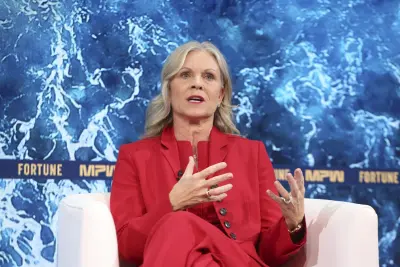
Ed Hardy, U.S. financial services leader at Deloitte, told Fortune that the findings reflect a fundamental shift in how CFOs view their role. “CFOs can’t control the economy, but they increasingly believe they can control the outcome for their own companies,” he said.
How the sentiment shifted so fast
In just three months, the percentage of CFOs calling the economy “bad” has multiplied more than six times—from 5% to 33%. That’s a rapid deterioration in confidence that mirrors rising concerns about inflation, interest rates, geopolitical tensions, and slowing growth across North America.
Yet the same CFOs are not retreating. Instead, they are signaling a sharper focus on what they can influence: operational efficiency, digital transformation, talent retention, and pricing power.
Who is affected and why it matters
This paradox matters far beyond boardrooms. When CFOs—the people who control corporate spending, hiring, and investment—turn pessimistic about the economy, it can lead to slower hiring, reduced capital expenditure, and cautious expansion plans. That affects job seekers, suppliers, and entire supply chains.
But their optimism about their own companies suggests they are not freezing. They are reallocating resources, not retreating. For employees and investors, this means some firms may still grow aggressively even as the broader economy cools.
What Deloitte and experts are saying
Ed Hardy’s framing of a “paradox of promise versus pessimism” captures the core tension. The survey does not specify which industries are driving the optimism, but the data suggests a broad-based confidence in internal execution rather than external conditions.
Deloitte’s CFO Signals survey is a widely watched barometer of corporate sentiment. The Q2 findings are based on responses collected in May and June 2026, from CFOs at large-cap companies across multiple sectors.
What this paradox really means
At its heart, this survey reveals a shift in mindset. CFOs are no longer waiting for the economy to improve. They are acting as if they can outperform the environment. That could mean aggressive cost-cutting, strategic acquisitions, or doubling down on high-margin products.
But it also carries risk. If the economy deteriorates faster than expected, even well-managed companies may find their optimism tested. The gap between company-level confidence and macroeconomic reality may narrow—or widen.
Confirmed facts vs what remains unclear
Confirmed: 90% of CFOs are more optimistic about their own company’s prospects. 33% view the economy as bad, up from 5% in Q1. The survey covered 200 CFOs at companies with $1B+ revenue across North America. Ed Hardy of Deloitte described the findings as a “paradox of promise versus pessimism.”
Unclear: Which specific sectors are driving the optimism. How CFOs plan to execute their strategies. Whether this divergence will persist or collapse as economic data evolves. The survey does not provide granular breakdowns by industry or company size.
Risks and balanced view
Critics might argue that CFO optimism about their own companies could be a form of overconfidence—especially if macroeconomic headwinds prove stronger than anticipated. A recession could erase the advantages of even the best internal strategies.
Supporters, however, would point out that CFOs have access to real-time data about their own order books, customer demand, and cost structures. Their optimism may be grounded in tangible evidence that their companies are outperforming peers.
The truth likely lies somewhere in between: some firms will thrive, others will struggle, and the economy will shape the boundaries of what’s possible.
A wider pattern in corporate confidence
This isn’t the first time CFOs have shown a split between macro pessimism and micro optimism. Similar patterns emerged during the 2020 pandemic and the 2022 inflation shock. In each case, CFOs initially turned bearish on the economy but remained confident in their own firms—until the broader downturn eventually caught up.
The question now is whether this time is different. With interest rates still elevated and geopolitical risks rising, the gap between company-level confidence and economic reality may be a warning sign—or a sign of resilience.
What readers should watch for
For investors, the key signal is whether CFO optimism translates into actual spending and hiring. If companies are truly confident, they should be investing. If they are merely hopeful, capital expenditure may remain subdued.
For employees, the message is mixed: your company may be optimistic, but the broader job market could tighten. For students and young professionals, this means focusing on companies with strong internal strategies rather than betting on the economy as a whole.
What could happen next
If the economy stabilizes or improves, CFO optimism about their own companies could prove prescient. If conditions worsen, the gap may close as reality catches up with confidence. The next quarter’s survey will be critical to see if the trend accelerates or reverses.
Deloitte will likely release Q3 data in September 2026, offering the first real test of whether this paradox is a temporary blip or a lasting shift in CFO psychology.
Our Take
This survey captures something real about how business leaders think today. They are not ignoring the economy—they are choosing to focus on what they can control. That’s a rational response to uncertainty, not denial. But history suggests that when enough CFOs turn bearish on the economy, their collective actions—hiring freezes, spending cuts—can make the pessimism self-fulfilling. The paradox may not last. For now, it reveals a corporate America that is hopeful about its own future, even as it worries about the world it operates in.
Frequently Asked Questions
What is the Deloitte CFO Signals survey?
It’s a quarterly survey of CFOs from large North American companies (over $1 billion revenue) that tracks sentiment on the economy, their own companies, and strategic priorities. The Q2 2026 survey covered 200 CFOs from the U.S., Canada, and Mexico.
Why are CFOs optimistic about their own companies but not the economy?
CFOs believe they can control outcomes within their own firms through cost management, innovation, and strategy—even when they cannot control macroeconomic factors like inflation, interest rates, or geopolitical risks. This creates a split between micro optimism and macro pessimism.
What does “paradox of promise versus pessimism” mean?
It’s a phrase used by Deloitte’s Ed Hardy to describe the contradiction between CFOs’ negative view of the economy (pessimism) and their positive view of their own company’s prospects (promise). It highlights the tension between external conditions and internal confidence.
How reliable is this survey for predicting economic trends?
The CFO Signals survey is widely followed as a leading indicator of corporate sentiment, but it reflects opinions, not hard data. It’s useful for understanding business psychology but should be combined with other economic indicators for a complete picture.