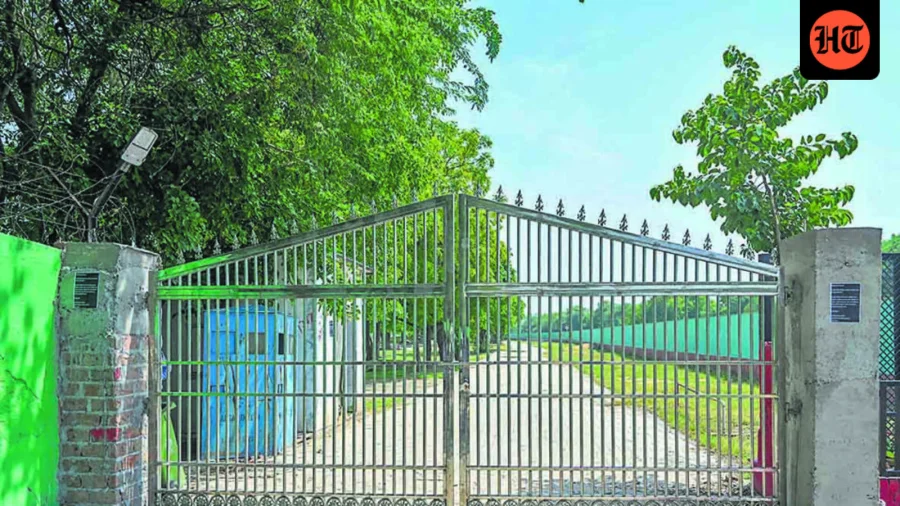
For decades, the Jaipur Polo Ground in Delhi’s Race Course area was synonymous with elite sport and colonial-era privilege. On June 13, 2026, that changed. The Centre, through the Land and Development Office (L&DO), took physical possession of the 15.20-acre property after the Delhi High Court declined to stay an eviction order. Locked gates, government notices, and warnings against encroachment now mark the entrance of a land that has been at the center of a long-running legal dispute.
How the Centre took possession of the Jaipur Polo Ground
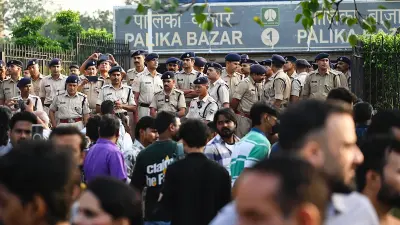
Officials from the Union Housing and Urban Affairs Ministry arrived at the ground on Friday morning. They pasted a formal notice on the front wall of the venue, declaring it government property. The notice warned that any unauthorised occupation or encroachment would face strict legal and penal action. The Indian Polo Association, which had been using the ground for polo matches and training, was not present during the takeover. The gates were locked, and security was deployed to prevent any disruption.
Why this land dispute matters for Delhi
The Jaipur Polo Ground is not just any piece of land. Located in Lutyens’ Delhi, one of the most expensive real estate zones in the country, the property is valued at hundreds of crores. The government’s decision to reclaim it signals a broader push to recover prime land parcels whose leases have expired. For residents and observers, this is a test case for how the state handles legacy leases granted to elite institutions and clubs during the British era. The outcome could set a precedent for other disputed properties in the area, including the Delhi Race Club.
The lease that expired in 1993 — a timeline of the dispute
The land was originally leased to the Jaipur royal family for polo and recreational purposes. The lease, granted decades ago, expired in 1993. Despite the expiry, the Indian Polo Association continued to use the ground, arguing that it had been maintaining the property and that the eviction would harm the sport. The government, however, maintained that the occupation was unauthorized. Legal notices were issued, and the matter went to court. The Delhi High Court’s recent decision to reject the stay plea effectively cleared the way for the takeover.
Who is affected by the eviction
The immediate impact is on the Indian Polo Association, its members, and the polo community in Delhi. The ground was used for regular matches, training sessions, and events. Players, trainers, and support staff who depended on the facility are now left without a venue. Beyond the sport, the eviction also affects the broader ecosystem of horse owners, stable hands, and vendors who operated around the ground. For the general public, the loss of a green, open space in a densely built-up area is another reminder of how Delhi’s commons are shrinking.
Government’s stand and legal justification
The Union Housing and Urban Affairs Ministry has stated that the land is being reclaimed for public purposes. Officials have not specified what those purposes are, but the property’s location in the Race Course area makes it suitable for government offices, diplomatic missions, or infrastructure projects. The government’s legal position is clear: the lease expired over three decades ago, and the association had no legal right to continue occupying the land. The notice pasted on the ground explicitly warns against any attempt to re-enter or encroach upon the property.
What the Indian Polo Association’s challenge means
The Indian Polo Association has not given up. It has challenged the eviction in court, arguing that the land was being used for a public purpose — promoting polo, a traditional Indian sport — and that the eviction was arbitrary. The association also claims that it had invested in maintaining the ground and that the government had not provided an alternative venue. The legal battle is ongoing, and the association may seek a stay from a higher court. However, for now, the physical possession remains with the government.
Confirmed facts vs what remains unclear
Confirmed: The Centre took physical possession of the Jaipur Polo Ground on June 13, 2026. The lease expired in 1993. The Delhi High Court rejected a stay plea. A formal notice was pasted on the property. Unclear: The exact public purpose for which the land will be used. Whether the Indian Polo Association will get an alternative venue. The timeline for any further legal proceedings. Whether the government will auction the land or use it for its own needs.
Why this property matters beyond the dispute
The Jaipur Polo Ground is part of a cluster of elite properties in Lutyens’ Delhi that have been under government scrutiny. The Delhi Race Club, another iconic institution, is also facing eviction proceedings. Together, these properties represent over 100 acres of prime real estate. The government’s actions signal a shift in policy: no more automatic renewals of colonial-era leases. For investors and developers, this could open up opportunities, but for heritage and sports enthusiasts, it raises concerns about the loss of historic spaces.
Risks and concerns around the eviction
Critics argue that the eviction was carried out without adequate consultation with the polo community. The Indian Polo Association says it was not given enough time to vacate or find an alternative. There are also concerns about the lack of transparency regarding the land’s future use. If the government auctions the land to private developers, it could lead to further commercialization of Lutyens’ Delhi. On the other hand, supporters of the eviction say that no entity should be allowed to occupy prime government land indefinitely without a valid lease.
A wider pattern of lease recoveries in Delhi
The takeover of the Jaipur Polo Ground is not an isolated incident. In recent years, the government has moved to reclaim several properties in Delhi whose leases had expired. These include clubhouses, sports grounds, and residential bungalows. The policy is part of a broader effort to maximize the use of government land for public infrastructure and housing. However, each case has sparked legal battles, with occupants arguing that they have historical or cultural rights to the land. The Polo Ground case could become a landmark judgment that defines how such disputes are resolved in the future.
What should the polo community and residents do now
For the Indian Polo Association, the immediate priority is to secure an alternative venue to continue the sport. The association may approach the Delhi government or the Sports Authority of India for temporary facilities. For residents and activists concerned about the loss of green spaces, the next step is to demand transparency from the government about the land’s future use. Public interest litigations (PILs) could be filed to ensure that the land is used for a genuine public purpose and not sold to private entities.
What happens next — the road ahead
The legal battle is far from over. The Indian Polo Association is expected to appeal the High Court’s decision. If the case reaches the Supreme Court, it could take months or even years to resolve. In the meantime, the government will secure the property and may begin preliminary work on its planned use. If the association fails to get a stay, the land could be repurposed within a year. The outcome will be closely watched by other institutions facing similar eviction notices.
Our Take
The eviction of the Jaipur Polo Ground is a classic case of competing public interests. On one hand, the government has a legitimate right to reclaim land whose lease has expired. On the other, the polo community has a genuine grievance about losing a historic venue without a clear alternative. The lack of transparency about the land’s future use is troubling. If the government intends to use it for a school, hospital, or park, it should say so. If it plans to auction it, that should be disclosed too. The best outcome would be a compromise: the government allows the polo association to use a portion of the land temporarily while developing the rest for public benefit. But in the current climate of zero-tolerance for expired leases, that seems unlikely.
Frequently Asked Questions
Why did the Centre take possession of the Jaipur Polo Ground?
The Centre took possession because the lease for the 15.20-acre land expired in 1993. The government says the Indian Polo Association had no legal right to continue occupying the property after the lease ended.
What is the Indian Polo Association’s response to the eviction?
The Indian Polo Association has challenged the eviction in court. It argues that the land was being used for promoting polo, a traditional sport, and that the eviction was arbitrary. The association is seeking an alternative venue.
Will the land be used for public purposes?
The government has stated that the land will be used for public purposes but has not specified what those purposes are. The property is located in Lutyens’ Delhi, a high-value area, so it could be used for government offices, diplomatic missions, or infrastructure projects.
What happens to the polo community now?
The polo community has lost its primary venue in Delhi. The Indian Polo Association is looking for alternative grounds, possibly with the help of the Delhi government or the Sports Authority of India. In the meantime, polo activities in the city are likely to be disrupted.