For millions living in Delhi-NCR, winter isn't just about cold — it's about a toxic haze that chokes the lungs and dims the sun. Now, in what could be one of the most significant steps to clean the region's air, the Centre has approved a massive ₹9,585-crore scheme to replace over 2 lakh polluting BS-IV trucks and buses. For vehicle owners, the offer is simple: scrap your old, polluting vehicle and get a 5% interest subvention on a loan for a new one, for five years.
Why This ₹9,585-Crore Scheme Matters for Delhi-NCR's Air
Delhi's air pollution is a public health emergency. While stubble burning and construction dust grab headlines, a quieter, deadlier culprit is the region's aging fleet of trucks and buses. These vehicles, running on outdated BS-IV engines, spew a disproportionate amount of particulate matter and nitrogen oxides. By targeting over 2 lakh of these vehicles, the government is aiming at one of the largest single sources of vehicular pollution in the National Capital Region. This isn't just about cleaner engines — it's about saving lives and reducing the staggering healthcare costs linked to air pollution.
How the Vehicle Replacement Scheme Will Work
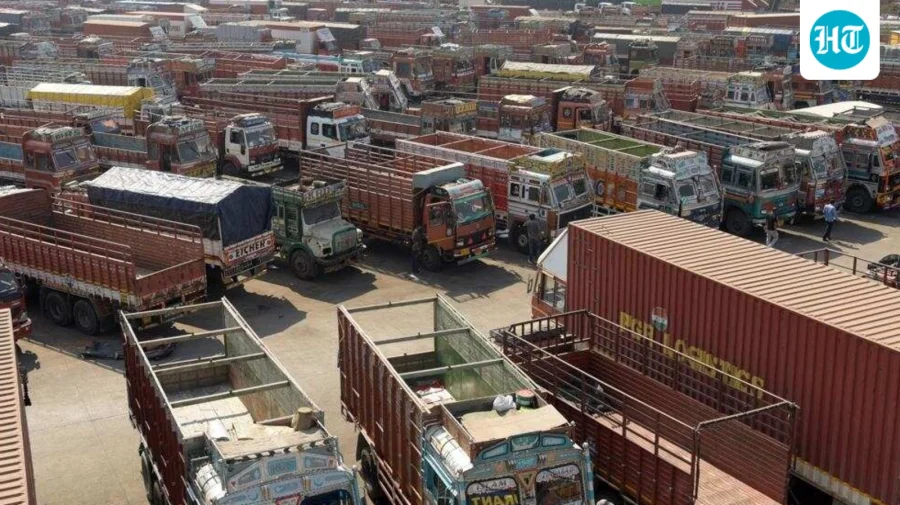
Under the newly approved scheme, owners of BS-IV trucks and buses in Delhi-NCR will be eligible for a financial incentive to scrap their old vehicles and purchase new, less polluting ones. The key incentive is a 5% interest subvention on loans taken for the new vehicle, which will be available for a period of five years. This effectively reduces the cost of borrowing, making the transition more affordable for fleet owners, many of whom are small operators. The scheme is expected to cover around 2 lakh trucks and 16,000 buses, creating a significant shift in the region's commercial vehicle profile.
Who Stands to Benefit Most from the Scrappage Scheme
The primary beneficiaries are the owners of older BS-IV commercial vehicles — the truckers and bus operators who form the backbone of the region's logistics and public transport. For a small truck owner, the cost of upgrading to a new vehicle can be prohibitive. The 5% interest subvention directly addresses this financial hurdle. Beyond the owners, the biggest beneficiary will be the 46 million residents of Delhi-NCR, who will breathe cleaner air. The scheme also provides a boost to the automobile industry, creating demand for new, cleaner vehicles and supporting the government's vehicle scrappage policy.
What We Know So Far — and What Remains Unclear
What we know: The Union Cabinet has cleared the ₹9,585-crore scheme. The scheme offers a 5% interest subvention on loans for five years. It targets over 2 lakh BS-IV trucks and buses in Delhi-NCR.
What remains unclear: The exact eligibility criteria for vehicle owners, the timeline for the scheme's rollout, and the specific scrappage process. It is also not yet clear how the scheme will be monitored to ensure that old vehicles are actually scrapped and not simply sold to other regions. The detailed guidelines are expected to be released by the Ministry of Road Transport and Highways.
Risks, Concerns, and the Balanced View
While the scheme is a welcome step, experts point to potential challenges. The success depends entirely on participation from vehicle owners. If the incentive is not attractive enough, or if the process is cumbersome, uptake could be low. There is also the risk of "leakage" — where old vehicles are not scrapped but are instead moved to other states, simply shifting the pollution problem. Furthermore, the scheme only targets BS-IV vehicles, leaving older BS-III and BS-II vehicles on the road. A balanced view suggests that while this is a powerful tool, it must be part of a larger, multi-pronged strategy that includes stricter enforcement, better public transport, and a focus on non-vehicular pollution sources.
Why Similar Scrappage Schemes Are Gaining Traction Across India
This Delhi-NCR scheme is part of a broader national push. The central government's Voluntary Vehicle-Fleet Modernisation Programme (V-VMP), or the "Scrappage Policy," has been in effect since 2021. Similar state-level initiatives are being explored in other polluted cities like Mumbai and Bengaluru. The logic is universal: older vehicles are far more polluting than modern ones. As India pushes for stricter emission norms (BS-VI and beyond), incentivizing the scrapping of older, polluting vehicles is seen as a critical step to meet national air quality targets and climate commitments.
- The scheme targets over 2 lakh BS-IV trucks and 16,000 buses in Delhi-NCR.
- Vehicle owners will receive a 5% interest subvention on loans for five years.
- The total outlay for the scheme is ₹9,585 crore.
"Under the scheme, vehicles owners have been offered a 5% interest subvention on loans for five years." — Official statement on the Cabinet decision
What Truck and Bus Owners Should Know Now
If you own a BS-IV truck or bus operating in Delhi-NCR, this scheme is designed for you. The first step is to wait for the official guidelines, which will detail the registration process, the list of authorized scrapping centers, and the exact documentation required. It is advisable to start gathering your vehicle's registration and ownership papers. The 5% interest subvention is a significant financial benefit — for a loan of ₹10 lakh, it could save you around ₹50,000 in interest over five years. Keep an eye on announcements from the Ministry of Road Transport and Highways for the official launch date.
What Could Happen Next: The Road to Cleaner Air
The immediate next step is the release of detailed operational guidelines. Following that, the scheme is expected to be rolled out in phases across Delhi-NCR. If successful, this model could be replicated in other highly polluted urban centers across India. The long-term impact will depend on the participation rate. A high uptake could lead to a measurable drop in vehicular emissions within a year or two, making Delhi's winters slightly more breathable. The scheme also sets a precedent for using financial incentives to drive environmental change, a strategy that could be applied to other sectors.
Our Take: Why This Scheme Is a Critical Step, Not a Silver Bullet
This ₹9,585-crore scheme is arguably the most ambitious financial intervention to tackle vehicular pollution in Delhi-NCR. It directly addresses the economic barrier that prevents fleet owners from upgrading. However, it is not a silver bullet. The scheme must be complemented by robust enforcement of pollution norms, expansion of the electric vehicle ecosystem, and a serious crackdown on other pollution sources like construction dust and industrial emissions. For the millions who wake up to a grey sky every winter, this is a glimmer of hope — but the real test will be in its execution and the collective will to see it through.
FAQs
What is the ₹9,585-crore scheme for Delhi-NCR?
It is a central government scheme to replace over 2 lakh old, polluting BS-IV trucks and buses in the Delhi-NCR region. The government will provide a 5% interest subvention on loans for five years to help vehicle owners buy new, cleaner vehicles.
Who is eligible for the BS-IV vehicle replacement scheme?
The scheme is for owners of BS-IV compliant trucks and buses that are currently plying in the Delhi-NCR region. The exact eligibility criteria, including the age of the vehicle, will be specified in the detailed guidelines to be released by the government.
How will the 5% interest subvention work for truck owners?
If a vehicle owner takes a loan to purchase a new truck or bus under this scheme, the government will subsidize 5% of the interest rate for a period of five years. This means the effective interest rate on the loan will be lower, reducing the monthly EMI and the total cost of the vehicle.
Will this scheme actually reduce Delhi's air pollution?
Yes, it has the potential to significantly reduce vehicular emissions. BS-IV vehicles are far more polluting than modern BS-VI vehicles. Replacing over 2 lakh of these vehicles will cut down a major source of particulate matter and nitrogen oxides, which are key contributors to Delhi's toxic smog. However, its success depends on high participation from vehicle owners.