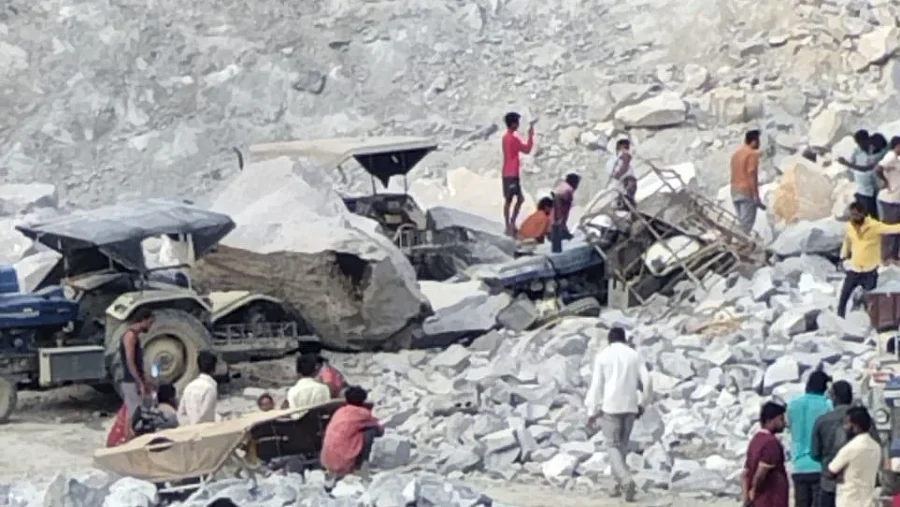
Seven migrant labourers from Bihar are feared dead after a massive boulder collapsed at a stone quarry in Bengaluru South taluk early on Thursday, trapping several workers beneath tonnes of rock and debris. The incident, which occurred around 5 am at the Kaveri Crusher unit in Madapatna village under the Tavarekere Police Station, has left rescue teams racing against time as they fear the death toll could rise.
How the quarry collapse unfolded
According to preliminary information, around 20 labourers were working nearly 40 feet below the surface when a huge rock suddenly gave way and crashed onto them. The workers were carrying out quarrying operations after blasting had reportedly been conducted at the site a day earlier. The sudden collapse left little time for escape, trapping several workers under the debris.
Why this tragedy hits hard for migrant workers
For the families of these migrant labourers from Bihar, the news brings not just grief but also uncertainty. Many of these workers leave their homes in search of livelihoods in Karnataka's quarries, often working in hazardous conditions with minimal safety measures. The collapse underscores the risks faced by thousands of migrant workers in India's unorganised sector, where workplace safety remains a persistent concern.
Rescue operations and official response
Police and rescue teams have been deployed to the site, with efforts focused on clearing debris and locating any survivors. Officials said the identities of the deceased are yet to be confirmed, but the victims are believed to be from Bihar. The Tavarekere Police Station is coordinating with local authorities to manage the situation and inform the families.
What caused the boulder to collapse?
While the exact cause is under investigation, preliminary reports suggest that blasting conducted at the quarry a day earlier may have weakened the rock structure, leading to the collapse. Quarrying operations often involve controlled explosions to break rock, but such activities can destabilise surrounding formations if not carefully managed. Authorities are examining whether safety protocols were followed.
Confirmed facts vs what remains unclear
What is confirmed: A boulder collapsed at the Kaveri Crusher unit in Madapatna village around 5 am on Thursday. At least seven workers are feared dead. Rescue operations are ongoing. What remains unclear: The exact number of workers trapped, the identities of all victims, and whether any survivors remain under the debris. The role of prior blasting in the collapse is still under investigation.
Risks and concerns in quarry operations
The incident highlights the dangers inherent in stone quarrying, particularly for migrant workers who often lack formal safety training or protective equipment. Critics have long pointed to inadequate enforcement of safety regulations in small and medium-sized quarries across India. The collapse raises questions about oversight, worker welfare, and the need for stricter compliance with mining safety standards.
Wider pattern of workplace accidents in India
This tragedy is not an isolated event. India has seen repeated accidents in mines and quarries, often involving migrant labourers. From coal mine collapses in Jharkhand to stone quarry accidents in Andhra Pradesh, the pattern reflects systemic issues: poor safety infrastructure, lack of worker rights awareness, and insufficient regulatory inspections. Each incident renews calls for reform, but implementation remains slow.
What families and workers should know
For families of workers in similar quarries, officials advise staying in touch with local labour departments and employers. Workers should be aware of their rights to safety equipment and training under the Mines Act, 1952. In case of accidents, families can contact local police stations or labour commissioners for assistance. The government has helplines for migrant workers, though awareness remains low.
What happens next
Rescue operations will continue until all debris is cleared and the site is deemed safe. Authorities are expected to conduct a formal investigation into the cause of the collapse, including whether any safety violations occurred. The state government may announce compensation for the victims' families, as is customary in such tragedies. Longer-term, the incident could prompt renewed scrutiny of quarry safety regulations in Karnataka.
Our Take
The Bengaluru quarry collapse is a grim reminder of the human cost behind India's construction boom. While the focus now is rightly on rescue and recovery, the deeper question remains: why do migrant workers continue to die in preventable accidents? The answer lies in a system that often prioritises production over protection. Until safety norms are enforced and workers' rights are respected, such tragedies will keep repeating. This story matters not just for the seven families affected, but for the thousands of workers who risk their lives daily in India's quarries.
Frequently Asked Questions
How many workers are feared dead in the Bengaluru quarry collapse?
At least seven migrant labourers from Bihar are feared dead after a boulder collapsed at the Kaveri Crusher unit in Madapatna village. Rescue teams fear the toll may rise as operations continue.
What caused the boulder to collapse at the quarry?
Preliminary reports suggest that blasting conducted at the site a day earlier may have weakened the rock structure, leading to the collapse. The exact cause is under investigation.
Where did the Bengaluru quarry collapse happen?
The incident occurred at the Kaveri Crusher unit in Madapatna village, under the jurisdiction of Tavarekere Police Station in Bengaluru South taluk.
What should families of migrant workers do in such accidents?
Families can contact local police stations or labour commissioners for assistance. Workers have rights to safety equipment under the Mines Act, 1952. Government helplines for migrant workers are available, though awareness is limited.