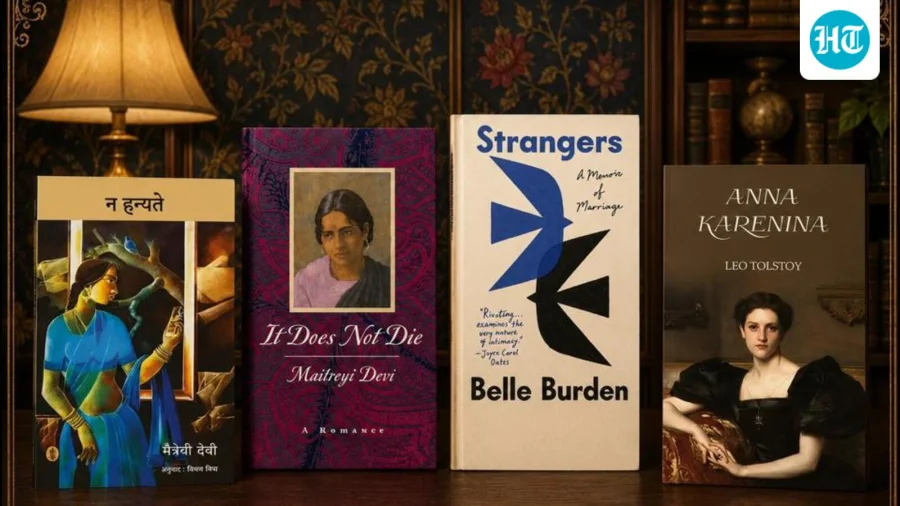
For over a century, the story of a woman trapped in a loveless marriage, driven to despair, has been told through the eyes of a man. Tolstoy’s *Anna Karenina* is a masterpiece — but whose truth does it serve? Now, a quieter, more defiant voice from Bengal offers a different answer. Maitreyi Devi’s *Na Hanyate* (It Is Not Lost) reclaims the narrative, asking a question that still haunts literature and life: who gets to tell a marriage story?
Two Novels, One Question: Whose Truth Matters?
Tolstoy’s *Anna Karenina* (1878) follows Anna’s tragic affair and societal ruin, narrated largely through a male lens. Her inner world is filtered through judgment, pity, and moral consequence. In contrast, *Na Hanyate* (1974) by Maitreyi Devi is a semi-autobiographical novel told from a woman’s perspective, exploring betrayal, love, and the struggle for selfhood within marriage. The difference is not just in plot — it is in who holds the pen.
Why This Comparison Matters Right Now
In an era of #MeToo, literary reckonings, and debates over whose stories get published, this comparison feels urgent. Marriage, as an institution, has long been a battleground for voice and agency. When a man writes a woman’s story, it often becomes a cautionary tale. When a woman writes her own, it becomes an act of survival. The gap between these two novels mirrors a wider cultural silence.
The Male Gaze and the Female Silence
Tolstoy’s Anna is punished for her desires. Her tragedy is inevitable, almost biblical. But readers rarely hear her speak without mediation. Maitreyi Devi, writing nearly a century later, refuses that fate. *Na Hanyate* is not a rebuttal to Tolstoy but a parallel universe — one where the woman’s interiority is not a spectacle but a sanctuary. The novel’s title itself, meaning “it is not lost,” suggests that something precious — a woman’s truth — survives despite erasure.
Who Is Affected by This Narrative Struggle?
Every reader who has ever wondered why female characters in classic literature often die or suffer for their autonomy. Every woman who has felt her story told back to her in someone else’s words. Every student of literature who questions canon. This is not just an academic exercise — it is a reflection of real-world power dynamics in storytelling, publishing, and memory.
Literary Authority: Who Decides What Endures?
Tolstoy’s work is canonized, taught worldwide, adapted endlessly. *Na Hanyate* remains relatively obscure outside Bengal, though it has been translated and rediscovered by feminist scholars. The disparity in recognition is itself a statement: whose stories get remembered? The answer often depends on who holds institutional power — publishers, critics, universities. Devi’s novel challenges that hierarchy simply by existing.
What This Tells Us About Patriarchy and Betrayal
Both novels deal with betrayal — Anna by her lover Vronsky, and Devi’s protagonist by a man who claims to love her. But the emotional weight shifts. In Tolstoy, betrayal is a plot device leading to downfall. In Devi, betrayal is a wound that the protagonist must heal from within. The difference is the difference between being a character in someone else’s story and being the author of your own.
Confirmed Facts vs What Remains Unclear
Confirmed: *Anna Karenina* was published in 1878; *Na Hanyate* was published in 1974. Both novels center on marriage and betrayal. Maitreyi Devi was a Bengali poet and novelist, and her work is autobiographical in nature. Tolstoy’s novel is a cornerstone of Western literature.
Unclear: Whether Devi directly intended *Na Hanyate* as a response to Tolstoy. The comparison is interpretive, not explicitly stated in the source material. The extent of *Na Hanyate*’s readership outside South Asia is also not fully documented.
Wider Trend: Reclaiming the Female Narrative in Literature
This comparison is part of a broader movement to recover women’s voices in literary history. From Jean Rhys’s *Wide Sargasso Sea* (a response to *Jane Eyre*) to modern retellings of myths from female perspectives, writers are challenging who gets to tell the story. *Na Hanyate* belongs to this tradition — a quiet but powerful assertion that a woman’s truth is not lost, only waiting to be heard.
Practical Reader Guidance: How to Approach These Novels
For readers interested in this question, read *Anna Karenina* first — understand the classic male gaze. Then read *Na Hanyate* as a counterpoint. Pay attention to narrative voice, emotional tone, and who is allowed to speak. Discuss with others: does the gender of the author change how you receive the story? For students, compare the treatment of the female protagonist in both works as an exercise in literary criticism.
Future Outlook: Will More Marriage Stories Be Told by Women?
The literary landscape is shifting. More women are publishing memoirs, novels, and essays about marriage, divorce, and betrayal. Yet the canon remains slow to change. *Na Hanyate* may never achieve the global fame of *Anna Karenina*, but its existence is a reminder that the question — who gets to tell a marriage story? — is far from settled. The answer may lie in the next generation of writers who refuse to let their truths be lost.
Our Take
This comparison is not about declaring one novel superior. It is about recognizing that every story is told from a perspective, and that perspective carries power. Tolstoy gave us a tragedy. Maitreyi Devi gave us a testimony. Both are necessary. But the fact that Devi’s voice is less heard tells us something about whose stories we value. In a world still grappling with gender inequality in every sphere, literature remains a mirror. And the mirror, finally, is beginning to reflect more than one face.
Frequently Asked Questions
What is *Na Hanyate* about?
*Na Hanyate* (It Is Not Lost) is a semi-autobiographical novel by Bengali writer Maitreyi Devi, exploring a woman’s experience of love, betrayal, and self-discovery within marriage. It challenges patriarchal narratives by centering the female voice.
How does *Anna Karenina* differ from *Na Hanyate* in perspective?
*Anna Karenina* is told largely through a male gaze, with Anna’s tragedy framed as a moral lesson. *Na Hanyate* is told from a woman’s perspective, focusing on interiority and survival rather than punishment.
Why is the question “who gets to tell a marriage story” important?
Because narrative authority shapes how we understand relationships, gender roles, and power. When women’s voices are absent or overwritten, their experiences are often distorted or silenced.
Is *Na Hanyate* a direct response to *Anna Karenina*?
Not explicitly, but the comparison is valid as both novels deal with marriage and betrayal from opposite gender perspectives. The contrast highlights how perspective changes meaning.