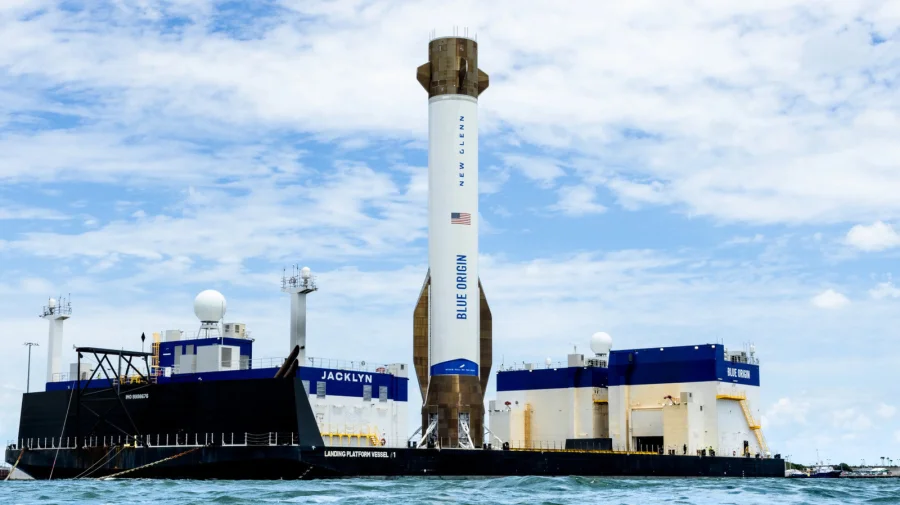
Just over a month after an unsuccessful launch grounded the massive New Glenn rocket, Blue Origin has received the all-clear from the Federal Aviation Administration (FAA). The decision, announced on May 22, 2026, lifts the grounding order and allows the company to prepare for its fourth flight — a crucial step in proving the rocket’s reliability and meeting an ambitious launch schedule for the year.
For Blue Origin, this isn’t just a procedural win. It’s a chance to get back on track after a setback that could have derailed momentum. For the space industry, it’s a reminder that even the most advanced rockets face hurdles — and that regulatory oversight is part of the journey.
What Happened: The Mishap That Grounded New Glenn
On April 19, 2026, Blue Origin’s New Glenn rocket launched from Cape Canaveral but did not complete its mission successfully. The FAA quickly stepped in, labeling the event a “mishap” and grounding the rocket pending an investigation. The agency’s move was standard procedure — any launch that deviates from its planned trajectory or fails to meet objectives triggers a formal review.
The grounding effectively paused all New Glenn operations, leaving Blue Origin’s launch manifest in limbo. The company had been building toward a busy year, with multiple commercial and government contracts on the line.
Why This Matters Right Now
The FAA’s clearance is more than just a green light — it’s a signal of confidence. For Blue Origin, it means the investigation found no fundamental design flaw or systemic issue that would prevent future flights. For customers waiting to launch payloads on New Glenn, it’s a reassurance that the rocket is still viable.
But the stakes are high. Blue Origin is competing directly with SpaceX’s Falcon 9 and Falcon Heavy, as well as United Launch Alliance’s Vulcan Centaur. Every delay risks losing customers to rivals. The clearance allows Blue Origin to demonstrate that New Glenn can fly reliably — and that the company can recover from setbacks quickly.
How the Investigation Unfolded
According to reports, Blue Origin worked closely with the FAA throughout the investigation. The company conducted its own internal review, analyzing data from the April 19 launch to identify the root cause of the failure. The FAA then reviewed Blue Origin’s findings and corrective actions before clearing the rocket for flight.
The exact details of what went wrong have not been fully disclosed, but the fact that the FAA approved the return to flight suggests that the issue was isolated and fixable. This is a common pattern in aerospace: a mishap leads to a grounding, an investigation identifies the problem, corrective measures are implemented, and the vehicle is cleared to fly again.
Who Is Affected and What Officials Are Saying
The clearance directly impacts Blue Origin’s launch customers, including commercial satellite operators and government agencies like NASA. The company had been preparing for its fourth New Glenn flight, which was expected to carry a mix of payloads. With the grounding lifted, those plans can resume.
“The FAA has cleared the New Glenn rocket for flight following a thorough investigation,” an FAA spokesperson said in a statement. “Blue Origin has demonstrated that the necessary corrective actions have been taken to ensure the safety of future launches.”
Blue Origin itself has not yet announced a specific date for the next launch, but the company has indicated that it aims to fly “as soon as late spring” — meaning the window could open within weeks.
What We Know So Far — and What Remains Unclear
What we know:
- The FAA grounded New Glenn on April 19, 2026, after an unsuccessful launch.
- The investigation concluded on May 22, 2026, and the rocket was cleared for flight.
- Blue Origin can now prepare for its fourth New Glenn mission.
What remains unclear:
- The exact cause of the April 19 mishap has not been publicly detailed.
- Whether the corrective actions involved hardware changes, software updates, or procedural adjustments.
- The precise launch date for the fourth flight.
This transparency gap is typical in aerospace investigations, where proprietary information is often kept confidential. However, it leaves the public and potential customers with unanswered questions about the rocket’s reliability.
Risks, Concerns, and the Balanced View
While the FAA clearance is positive news, it doesn’t erase the underlying risks. New Glenn is still a relatively new rocket — it has only flown three times before the April mishap. Each flight is a learning experience, and failures are part of the development process. But for a company trying to compete with SpaceX’s proven track record, every setback matters.
Bullish view: Blue Origin has a strong engineering team, a clear corrective action plan, and the backing of Jeff Bezos. The FAA clearance shows that the issue was manageable, and the company can now focus on executing its launch manifest.
Bearish view: The mishap could erode customer confidence, especially if the root cause turns out to be a design flaw that requires more extensive fixes. The delay also gives competitors more time to capture market share.
The truth likely lies somewhere in between. Blue Origin has the resources to recover, but it needs to demonstrate consistent reliability over multiple flights to build trust.
Why Similar Trends Are Growing in the Space Industry
The New Glenn grounding is part of a broader pattern in the commercial space industry: as launch vehicles become more complex and ambitious, mishaps are becoming more common — and regulatory scrutiny is intensifying. SpaceX has faced its own groundings, as have Rocket Lab, Astra, and others.
This trend reflects the reality of pushing technological boundaries. Every new rocket design involves trade-offs between performance, cost, and safety. The FAA’s role is to ensure that those trade-offs don’t compromise public safety. For companies like Blue Origin, navigating this regulatory landscape is as important as the engineering itself.
“The FAA’s clearance is a vote of confidence in Blue Origin’s ability to identify and fix problems. But the real test will come on the next launch.” — Industry analyst
What Readers, Investors, and Space Enthusiasts Should Know Now
For those following Blue Origin’s progress, the key takeaway is that the company is back in the game. The next launch will be closely watched — not just for its success, but for how Blue Origin handles the post-mishap narrative.
Investors should note that while the grounding was a short-term setback, the long-term outlook for New Glenn remains positive — provided the next few flights go smoothly. Space enthusiasts can expect launch announcements in the coming weeks, with the fourth flight likely to carry a mix of commercial and government payloads.
What Could Happen Next
Blue Origin is expected to announce a launch date for New Glenn’s fourth flight within the next few weeks. The company will likely prioritize missions that were delayed by the grounding, including those for key customers.
Looking further ahead, a successful fourth flight would pave the way for a more aggressive launch cadence in the second half of 2026. Blue Origin has ambitions to fly New Glenn multiple times per year, and each successful mission builds the data and confidence needed to scale up.
However, if the next launch encounters another issue, the FAA could impose more stringent conditions — or even ground the rocket again. The pressure is on Blue Origin to deliver a flawless performance.
Our Take: Why This Story Matters Beyond One Incident
The New Glenn grounding and subsequent clearance is a microcosm of the challenges facing the commercial space industry. It’s a story about resilience, regulation, and the relentless pursuit of reliability. For Blue Origin, it’s a chance to prove that it can learn from failure and come back stronger.
But more broadly, it’s a reminder that spaceflight is hard — and that every launch is a test of engineering, teamwork, and trust. The FAA’s clearance is a step forward, but the real journey is just beginning.
FAQs
Why was the Blue Origin New Glenn rocket grounded by the FAA?
The FAA grounded the New Glenn rocket after an unsuccessful launch on April 19, 2026, which was classified as a “mishap.” The grounding allowed for a formal investigation into what went wrong.
When was Blue Origin cleared to launch New Glenn again?
The FAA cleared Blue Origin to resume New Glenn launches on May 22, 2026, after the investigation was completed and corrective actions were verified.
What caused the New Glenn launch failure in April 2026?
The exact cause of the failure has not been publicly disclosed. However, the FAA’s clearance indicates that Blue Origin identified the issue and implemented corrective measures to prevent a recurrence.
When is the next Blue Origin New Glenn launch expected?
Blue Origin has not announced a specific date, but the company has indicated it aims to launch “as soon as late spring” 2026, which could mean a window opening within weeks of the FAA clearance.