The political temperature in Kerala shot up on Wednesday after the BJP launched a blistering attack on Chief Minister Pinarayi Vijayan for questioning university vice-chancellors who shared a stage with RSS chief Mohan Bhagwat. The sharp exchange has reopened a familiar fault line in Indian politics — the battle over secularism, academic freedom, and the influence of ideological organisations.
The flashpoint: VCs on stage with RSS chief
The controversy began when Mohan Bhagwat, the chief of the Rashtriya Swayamsevak Sangh (RSS), addressed an event in Kerala that was attended by several vice-chancellors from state universities. Vijayan, who leads the Left Democratic Front (LDF) government, publicly questioned the VCs’ decision, suggesting it compromised the secular character of academic institutions.
BJP’s counter: ‘No moral authority to lecture’
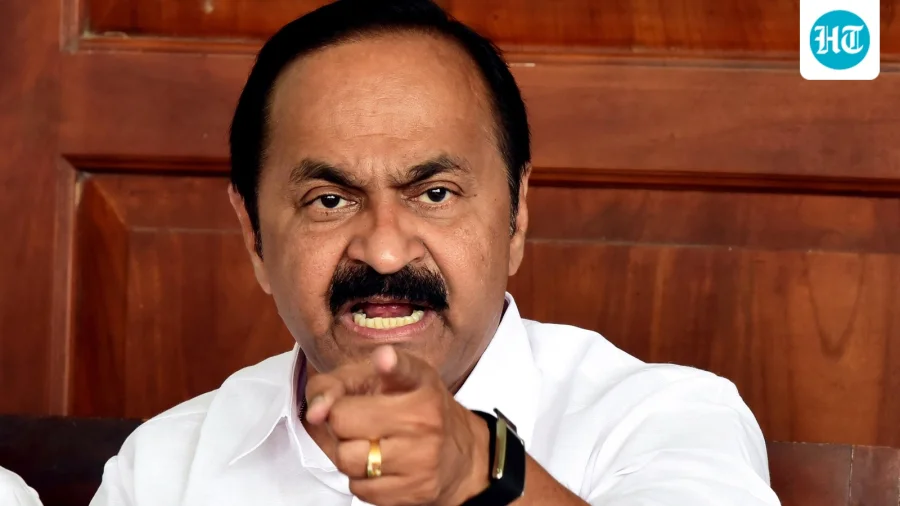
BJP leader and former Union minister Rajeev Chandrasekhar responded sharply on social media, accusing Vijayan of hypocrisy. “The Kerala CM must not talk about secularism. He has no moral authority to lecture others on secularism or constitutional values,” Chandrasekhar posted, according to the original story. The BJP leader argued that Vijayan’s own government had failed to uphold secular principles in its actions.
Why this matters beyond Kerala
The row is not just a regional spat. It reflects a deeper national debate about the role of the RSS — the ideological parent of the ruling BJP — in public life. Critics argue that RSS presence in academic spaces blurs the line between education and political indoctrination. Supporters counter that the RSS is a legitimate cultural organisation and that VCs have the right to attend any event.
Timeline of the escalating row
The exchange follows a pattern of escalating rhetoric between the Kerala government and the BJP. In recent months, Vijayan has repeatedly criticised the central government over issues ranging from financial devolution to the Enforcement Directorate’s actions in the state. Bhagwat’s Kerala visit and his remarks on minorities had already drawn sharp responses from the chief minister before this latest flare-up.
Who is affected: Students, academics, and voters
For students and faculty in Kerala’s universities, the controversy raises uncomfortable questions about academic independence. Are VCs free to attend events of any organisation without political backlash? Or does such attendance signal endorsement of an ideology that many in Kerala view as divisive? For voters, the issue is a litmus test of where parties stand on secularism and institutional autonomy.
Official response from both sides
Rajeev Chandrasekhar’s social media post was the BJP’s most direct response so far. The Kerala CM’s office has not issued a fresh statement, but Vijayan’s earlier remarks made clear his displeasure. The RSS has not officially commented on the VC controversy, though Bhagwat’s speech in Kerala had already stirred debate over his comments on minorities and nationalism.
What this really means: Ideology vs. institutional freedom
At its core, the dispute is about where the line falls between an individual’s right to associate and an institution’s obligation to remain politically neutral. VCs are public servants, but they are also academics with personal freedoms. The BJP’s attack on Vijayan frames the issue as one of double standards — accusing the CM of selectively applying secularism when it suits his political narrative.
Confirmed facts vs. what remains unclear
What is confirmed: Mohan Bhagwat addressed an event in Kerala; several VCs attended; Vijayan criticised them; Chandrasekhar responded. What remains unclear: whether any VC faced formal action or pressure from the state government; whether the event was officially sponsored or private; and whether the VCs attended in their personal or official capacity. These details are still emerging.
Risks and balanced view
Critics of Vijayan argue that his government has itself been accused of sidelining dissent and using state machinery against political opponents. Supporters of the CM say his secular credentials are well-established and that questioning RSS presence in universities is a legitimate defence of constitutional values. The BJP’s counter-attack risks being seen as defensive, while Vijayan’s stance could alienate moderate voters who value institutional independence over ideological purity.
Wider trend: RSS in academic spaces
This is not an isolated incident. In recent years, RSS-affiliated organisations have expanded their presence on university campuses across India, from guest lectures to student outreach programmes. This has sparked resistance from left-leaning student groups and state governments, particularly in Kerala, West Bengal, and Tamil Nadu. The trend reflects a broader polarisation of India’s higher education landscape.
What students and academics should know
For those in Kerala’s universities, the immediate takeaway is caution. VCs may now face greater scrutiny over their public appearances. Academics should be aware that attending politically charged events could invite backlash, regardless of intent. Students watching this row should understand that the debate is as much about power as it is about principles — and that institutional autonomy is often the first casualty in such battles.
What happens next
The political fallout is likely to continue, with both the BJP and the LDF using the issue to mobilise their bases. The Kerala government may issue a formal clarification or directive regarding VCs’ participation in RSS events. The BJP, for its part, will likely keep up the pressure, framing the row as evidence of the Left’s intolerance. The next round of state elections could see this issue resurface as a campaign talking point.
Our Take
This controversy is a textbook example of how secularism has become a weaponised term in Indian politics. Both sides have valid points — VCs should have the freedom to attend events, but public officials also bear responsibility for the signals they send. What is lost in the noise is the real question: how do we protect academic institutions from becoming battlegrounds for ideological warfare? Until that question is answered, rows like this will keep erupting, and the real losers will be students and the idea of education itself.
Frequently Asked Questions
Why did the BJP attack Kerala CM Pinarayi Vijayan?
The BJP’s Rajeev Chandrasekhar criticised Vijayan for questioning VCs who shared a stage with RSS chief Mohan Bhagwat, saying the CM had no moral authority to lecture on secularism.
What did the Kerala CM say about the VCs?
Pinarayi Vijayan publicly questioned the decision of vice-chancellors to attend an event addressed by RSS chief Mohan Bhagwat, implying it compromised the secular character of academic institutions.
Is it wrong for VCs to attend RSS events?
There is no legal bar on VCs attending RSS events. The controversy is about whether such attendance signals endorsement of an ideological organisation, which critics say conflicts with the secular role of public academic officials.
What does this mean for academic freedom in Kerala?
The row highlights the tension between individual academic freedom and institutional neutrality. VCs may now face greater political scrutiny over their public appearances, potentially chilling open discourse on campus.