For more than three decades, 21 July in West Bengal has been synonymous with Mamata Banerjee’s political journey — a day of remembrance, defiance, and political mobilization. But this year, the Congress party is quietly attempting to reclaim the legacy of that day, challenging the Trinamool Congress’s long-held ownership of the Martyrs’ Day narrative.
The 1993 police firing that shaped Bengal’s opposition politics
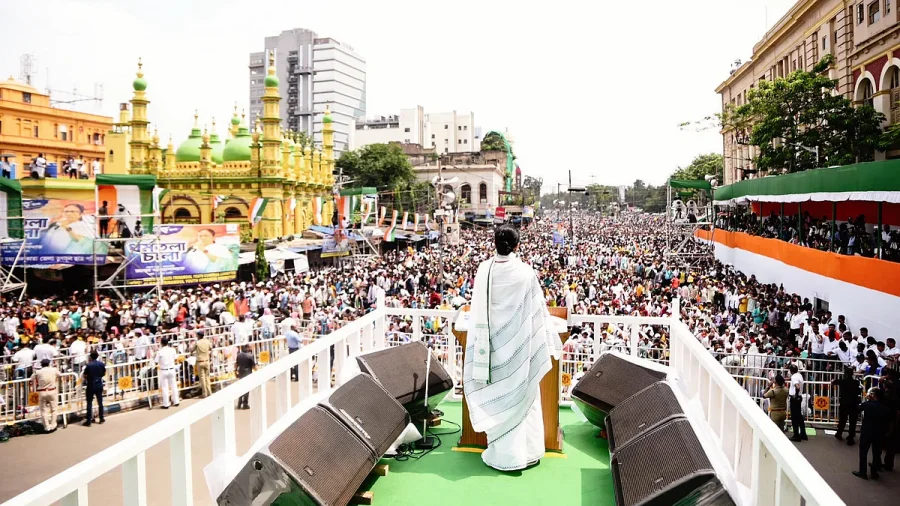
On 21 July 1993, a Youth Congress rally led by then Youth Congress president Mamata Banerjee marched through Kolkata demanding photo voter identity cards and electoral reforms. The protest was aimed at countering what the Congress — then West Bengal’s principal Opposition party — alleged was the Left Front’s ‘scientific rigging’ of elections. Police opened fire, killing 13 activists. The day became a defining moment in Bengal’s opposition politics, and Banerjee’s political career was forged in its aftermath.
Why Congress is reasserting its claim now
Thirty-three years later, the politics of electoral integrity has returned to the centre of Bengal’s discourse. Mamata Banerjee, now chief minister, has alleged that the 2026 Assembly election was manipulated through the Election Commission’s Special Intensive Revision (SIR) of voter rolls. Congress leaders see an opening: by reasserting its historical role in the 1993 protest, the party hopes to reclaim a legacy that it believes was appropriated by Banerjee after she broke away to form the Trinamool Congress in 1998.
TMC factionalism adds a new layer to the battle
The Congress’s move comes at a time when internal TMC factions are themselves battling over the 21 July legacy. With Banerjee’s health and succession questions looming, different camps within the ruling party are jostling to associate themselves with the Martyrs’ Day narrative. This internal fragmentation gives Congress an opportunity to position itself as the original custodian of the day’s political meaning.
Who is affected by this political tug-of-war
For ordinary Bengalis, 21 July is not just a political date — it is a day of mourning and remembrance for the families of the 13 activists killed. The families have often expressed frustration at how the day has been politicized over the years. As Congress and TMC factions compete for ownership, the human cost of the 1993 tragedy risks being overshadowed by political maneuvering.
Congress leaders speak out on the legacy
Senior Congress leaders in West Bengal have argued that the party’s role in the 1993 protest has been systematically erased from public memory. “The 21 July legacy belongs to the Congress party and the families of the martyrs. It is not the property of any one individual or party,” a state Congress spokesperson said, speaking on condition of anonymity. The party plans to hold its own commemorative events this year, separate from the TMC’s official observance.
What the battle over 21 July really means for Bengal politics
The struggle over 21 July is not just about history — it is about political legitimacy in the run-up to the 2026 Assembly elections. By reclaiming the day, Congress hopes to remind voters of its role as the original opposition force in Bengal, before the TMC’s rise. It also allows Congress to link the 1993 demand for electoral integrity to current allegations of voter roll manipulation, creating a narrative of continuity.
Confirmed facts vs what remains unclear
What is confirmed: 13 Youth Congress activists were killed in police firing on 21 July 1993 during a rally led by Mamata Banerjee demanding voter ID cards and electoral reforms. The Congress party was then the principal opposition in West Bengal. What remains unclear: the extent to which Congress can reclaim the day’s legacy given Banerjee’s deep emotional and political association with it. It is also unclear whether TMC factionalism will create a genuine opening for Congress or merely consolidate Banerjee’s base.
How Congress’s strategy differs from TMC’s narrative
Congress’s approach is to frame 21 July as a party-led movement for democratic rights, rather than a personal political milestone for Banerjee. The TMC, by contrast, has long presented the day as the birth of Banerjee’s political martyrdom and her eventual rise to power. This difference in framing — collective vs individual — is central to the current battle over the day’s meaning.
Risks and balanced view of Congress’s move
Political analysts caution that Congress’s attempt to reclaim 21 July could backfire. Banerjee’s emotional connect with the day is deeply personal, and many voters — even those critical of the TMC — associate 21 July with her leadership. Congress risks being seen as opportunistic rather than principled. Additionally, the party’s diminished electoral presence in Bengal means it may lack the organizational strength to make its commemoration events impactful.
Wider trend: Opposition parties reclaiming historical narratives
This battle over 21 July is part of a broader trend in Indian politics where opposition parties are attempting to reclaim historical events and symbols that have been appropriated by ruling parties. From the Congress’s efforts to reclaim the legacy of Jawaharlal Nehru to regional parties asserting their role in freedom struggles, the politics of historical memory is becoming a key electoral battleground.
What voters and activists should watch for
For voters and activists in West Bengal, the key question is whether Congress’s 21 July events will attract significant public participation. If the party can mobilize families of the martyrs and local communities, it could dent the TMC’s monopoly over the day. If the events remain low-key, the TMC’s narrative will likely prevail. Observers should also watch for any statements from the families of the 13 activists, who have often stayed away from partisan politics.
What could happen next
As 21 July approaches, both Congress and TMC factions are expected to intensify their commemorative plans. The Congress may also seek to raise the issue of electoral integrity in Parliament, linking it to the 1993 protest. The TMC, in response, is likely to double down on Banerjee’s personal association with the day, possibly featuring her prominently in the official observance. The battle over 21 July’s legacy is far from over.
Our Take
The Congress party’s attempt to reclaim the 21 July legacy is a politically significant but high-risk move. While it is factually correct that the 1993 protest was a Congress-led Youth Congress rally, the day has been emotionally and symbolically owned by Mamata Banerjee for over three decades. For Congress to succeed, it will need more than historical arguments — it will need grassroots mobilization and a clear message that resonates with voters beyond party loyalists. The families of the martyrs deserve to have their loss remembered with dignity, not as a pawn in political games. This story matters because it shows how political parties use historical memory to shape present-day electoral narratives — and how the human cost of that history can be forgotten in the process.
Frequently Asked Questions
What happened on 21 July 1993 in Kolkata?
On 21 July 1993, a Youth Congress rally led by Mamata Banerjee, then Youth Congress president, marched in Kolkata demanding photo voter identity cards and electoral reforms. Police opened fire on the protesters, killing 13 activists. The day is now observed as Martyrs’ Day in West Bengal.
Why is Congress trying to reclaim the 21 July legacy?
Congress believes that its role in the 1993 protest has been overshadowed by Mamata Banerjee’s later political rise and the Trinamool Congress’s appropriation of the day. The party sees an opportunity to reassert its historical position as the original opposition force in Bengal, especially ahead of the 2026 Assembly elections.
How does TMC factionalism affect the 21 July narrative?
Internal TMC factions are competing to associate themselves with the 21 July legacy, especially as questions about Banerjee’s succession arise. This fragmentation gives Congress an opening to position itself as the original custodian of the day’s political meaning.
What is the connection between 1993 and current electoral integrity allegations?
In 1993, the Congress alleged that the Left Front government was rigging elections through manipulation of voter rolls. Today, Mamata Banerjee has alleged that the 2026 Assembly election is being manipulated through the Election Commission’s Special Intensive Revision (SIR). Congress is using this parallel to link its historical demand for electoral reforms to current concerns.