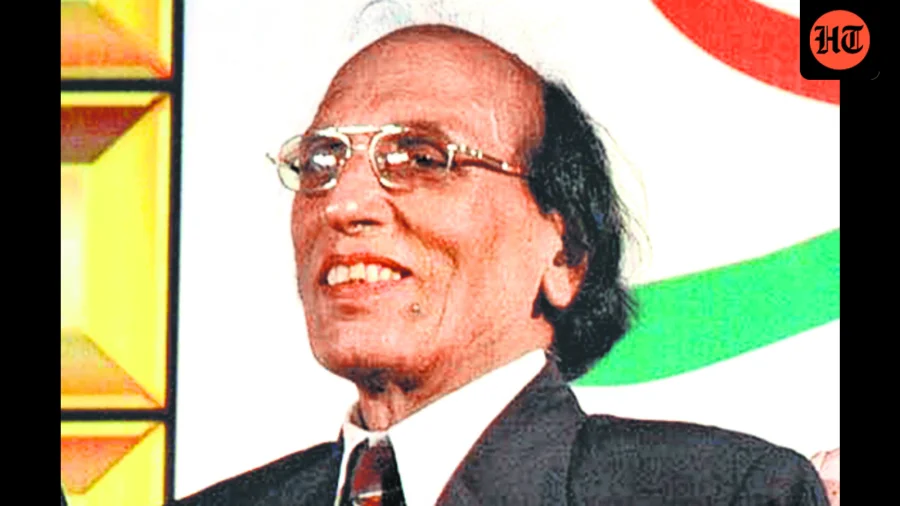
There are poets who write for the elite, and then there are poets who write for everyone. Bashir Badr belonged firmly to the second category. In a world where Urdu poetry was often seen as a playground for complex metaphors and highbrow vocabulary, Badr chose a different path. He spoke the language of the streets, the bazaars, and the heart. His verses didn't require a dictionary. They required only a listener.
This choice — to write in an easy, conversational style — is what made him a poet of the masses. It wasn't just about being understood. It was about being felt. And that emotional connection turned his ghazals into anthems for millions.
Why Bashir Badr’s Conversational Style Mattered
Unlike traditional poets who often relied on complex, ornate words, Bashir Badr wrote in a way that felt like a friend speaking to you. His ghazals didn't feel like performances. They felt like confessions. This approach broke down the wall between the poet and the audience.
His popularity wasn't accidental. By using everyday language, he ensured that his verses spoke directly to the listener. A rickshaw puller in Lucknow could hum his ghazal just as easily as a professor in Delhi. That is the mark of a true poet of the masses.
Why This Matters Right Now
In an age where art is often gatekept by jargon and exclusivity, Bashir Badr's legacy is a powerful reminder. Poetry doesn't have to be inaccessible to be profound. His work proves that emotional depth and simplicity can coexist. For a generation searching for authentic voices, Badr's approach feels more relevant than ever.
His popularity through mushairas and Urdu literature platforms also highlights a crucial point: the hunger for real, relatable art is timeless. People don't just want to hear poetry. They want to feel that the poet understands them.
How the Poet’s Journey Began
Born in Ayodhya, India, Bashir Badr's roots were deeply embedded in the cultural heartland of the country. Ayodhya, a city known for its historical and spiritual significance, shaped his worldview. But it was his choice of language — simple, direct, and emotionally charged — that set him apart.
His ghazals gained immense popularity not through academic journals, but through live performances. Mushairas became his stage, and the common listener became his critic. This direct feedback loop refined his style, making it even more accessible over time.
Who Was Affected by His Poetry
The answer is simple: almost everyone who heard it. Literary circles respected his craft. But the real magic happened outside those circles. His poetry became a staple at gatherings, on radio programs, and in the hearts of people who didn't consider themselves poetry experts.
He gave the common person a voice. His ghazals spoke about love, loss, longing, and the everyday struggles of life — all in a language that felt personal. That is why his audience was not just vast; it was deeply loyal.
What We Know So Far — and What Remains Unclear
What is clear is that Bashir Badr's legacy is built on accessibility. His use of conversational language was a deliberate artistic choice that paid off immensely. His work continues to be celebrated on Urdu literature platforms and in mushairas.
What remains less documented is the full extent of his influence on younger poets. While his style is widely admired, a deeper analysis of how his conversational approach shaped modern Urdu poetry is still emerging. His story, however, is a masterclass in why art must speak to the people, not just about them.
Risks, Concerns, and the Balanced View
Some critics might argue that simplicity in poetry can sometimes border on the simplistic. The concern is that by avoiding complex language, a poet might sacrifice depth. However, Bashir Badr's work stands as a counter-argument. His verses are simple, but they are never shallow. The emotional weight he carries is immense, proving that clarity and profundity are not opposites.
The real risk for any poet following his path is being misunderstood as "lightweight." But Badr's enduring popularity shows that the audience is the ultimate judge. And the audience has spoken.
Why Similar Trends Are Increasing
Across the world, audiences are gravitating toward authentic, unfiltered voices. The rise of spoken word poetry, open mic nights, and digital poetry platforms mirrors exactly what Bashir Badr did decades ago. People are tired of art that feels exclusive. They want connection.
Badr's approach was ahead of its time. Today, it is the blueprint.
- His conversational style is now a benchmark for modern Urdu poets.
- Mushairas continue to be a vital platform for poets who want to reach the masses.
- Digital platforms have amplified the demand for poetry that feels personal and relatable.
"Unlike traditional poets who used complex words, Bashir Badr wrote in an easy, conversational style, which made his poetry popular among common people as well as literary circles." — Google Featured Snippet
What Readers and Poetry Lovers Should Know Now
If you are discovering Bashir Badr for the first time, start with his ghazals. Listen to them, don't just read them. His poetry was meant to be heard. The rhythm, the pauses, the emotion — it all comes alive when spoken.
For aspiring poets, his lesson is invaluable: don't try to impress with vocabulary. Try to connect with emotion. The most powerful words are often the simplest ones.
What Could Happen Next
As interest in accessible poetry grows, Bashir Badr's work is likely to see a resurgence. New translations, digital archives, and tributes from contemporary artists could introduce his ghazals to a global audience. His legacy as a poet of the masses is secure, but its reach may expand even further.
The conversation he started — about who poetry is for — is far from over.
Our Take: Why This Story Matters Beyond One Poet
Bashir Badr's story is not just about one man's success. It is a lesson in artistic democracy. He proved that the highest form of art is the one that includes everyone. In a world that often rewards exclusivity, his choice to be simple was a radical act of love for his audience.
His poetry reminds us that the most profound truths are often the simplest ones. And that the best way to reach the masses is not to talk down to them, but to speak their language — literally and emotionally.
FAQs
Why is Bashir Badr called a poet of the masses?
Because he wrote in an easy, conversational style that made his poetry accessible to common people, not just literary experts. His ghazals spoke directly to the listener's heart.
What made Bashir Badr's poetry different from traditional Urdu poets?
Unlike traditional poets who used complex and ornate words, Badr used everyday language. This made his verses feel personal and relatable, breaking down barriers between the poet and the audience.
Where did Bashir Badr gain his popularity?
He gained immense popularity through mushairas (poetry gatherings) and Urdu literature platforms. His live performances connected deeply with audiences across India.
What is the lasting legacy of Bashir Badr's conversational style?
His legacy is that poetry can be both simple and profound. He proved that emotional depth does not require complex vocabulary, and his approach continues to inspire modern poets and spoken word artists.