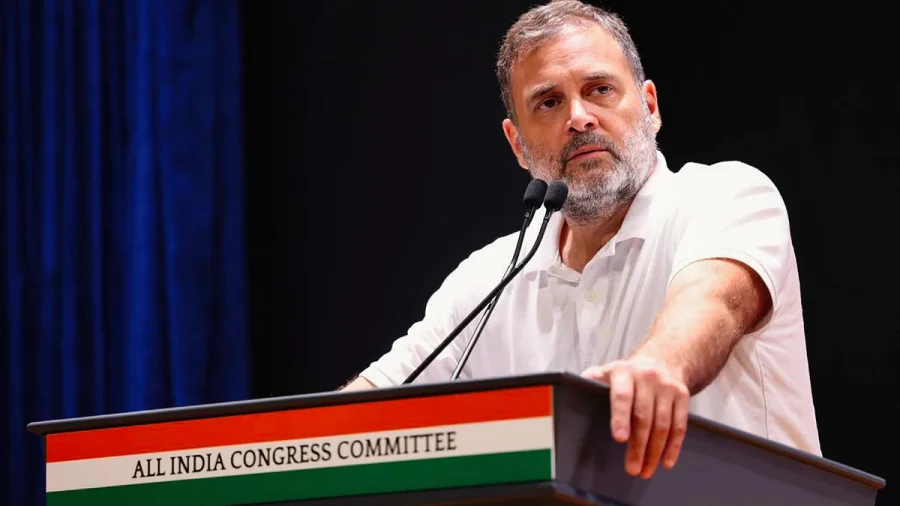
The political battle over the NEET-CBSE controversy has escalated sharply. Congress MP and Lok Sabha Leader of Opposition Rahul Gandhi has hit back at Union education minister Dharmendra Pradhan, making it clear that personal attacks will not stop him from demanding answers.
In a direct and sharp response, Gandhi said that targeting him personally would neither absolve Pradhan of responsibility nor silence the questions surrounding the future of 18.5 lakh students.
Rahul Gandhi hits back at Pradhan with a blunt warning
The exchange began after Pradhan accused Gandhi of politicising the NEET-CBSE issue. The Union minister described the LoP as "frustrated" and claimed he was opposed to India's technological and scientific progress.
Gandhi did not hold back in his reply. In a post on X, he wrote: "Dharmendra Pradhan ji, you can attack me all you want, but it won't absolve you of your crimes. Nor will it stop me from demanding answers for 18.5 lakh children."
The Congress leader then raised a series of pointed questions about the CBSE's On-Screen Marking (OSM) system, demanding clarity on why the controversy had erupted in the first place.
Why This Matters Right Now
This is not just a political slugfest. At the heart of this confrontation are 18.5 lakh students whose academic futures hang in the balance. The NEET-CBSE controversy has raised serious concerns about transparency, fairness, and the credibility of the examination system.
For parents and students across India, this is deeply personal. The outcome of this political battle could directly affect how results are processed, how marks are awarded, and whether the system can be trusted going forward.
The emotional weight of this issue cannot be overstated. Every day of uncertainty adds to the anxiety of lakhs of families waiting for clarity.
How the Situation Developed
The controversy centres on the CBSE's On-Screen Marking (OSM) system, which has come under intense scrutiny. Gandhi has been pressing for answers on why the system was implemented and what safeguards were in place to protect student interests.
Pradhan, in response, accused Gandhi of playing "cheap politics" and trying to derail the government's education reforms. The minister's remarks appeared to dismiss Gandhi's concerns as politically motivated rather than genuine questions about student welfare.
Gandhi's latest response signals that he is not backing down. By framing the issue as a matter of "crimes" against children, he has raised the political stakes significantly.
Who Is Affected and What Officials Are Saying
The primary victims in this controversy are the 18.5 lakh students who appeared for CBSE exams and are now waiting for clarity on their results. Their parents, teachers, and schools are also caught in the crossfire.
Gandhi has positioned himself as the voice of these students, demanding accountability from the education ministry. His sharp language suggests he believes the government has failed in its duty to protect student interests.
Pradhan, on the other hand, has dismissed the criticism as political grandstanding. The minister has not yet addressed the specific questions raised by Gandhi about the OSM system.
What We Know So Far — and What Remains Unclear
What is clear is that Gandhi is not willing to let the issue fade. His direct accusation of "crimes" indicates he believes there is a deeper problem that needs investigation.
What remains unclear is whether the government will provide a detailed response to the specific questions raised. The CBSE has not yet issued a comprehensive clarification on the OSM system's implementation or its impact on student results.
Also uncertain is how this political confrontation will affect the resolution of the actual problem — the fate of 18.5 lakh students waiting for answers.
Risks, Concerns, and the Balanced View
There are risks on both sides. For Gandhi, the accusation of "crimes" is a strong word that could backfire if not backed by concrete evidence. Critics may see it as political overreach.
For Pradhan, dismissing legitimate questions as "cheap politics" risks alienating students and parents who are genuinely worried. The minister's refusal to engage with the specifics could be seen as evasion.
The real concern is that students remain stuck in the middle of a political battle. Their futures should not be collateral damage in a war between two political heavyweights.
A balanced view would acknowledge that both sides have a responsibility — the opposition to ask tough questions, and the government to provide transparent answers.
Why Similar Political Confrontations Are Increasing
This is not an isolated incident. Political confrontations over education policy have become increasingly common in India. The NEET controversy, the CBSE exam row, and now this personal clash reflect a deeper trend.
Education has become a major political battleground. With lakhs of students and families directly affected, any controversy in this sector quickly becomes a national issue.
Both parties are using these issues to mobilise support and attack each other. But the risk is that the actual problems — flawed systems, lack of transparency, student anxiety — get lost in the noise.
- 18.5 lakh students are directly affected by the CBSE On-Screen Marking system controversy
- Rahul Gandhi has demanded answers on why the system was implemented without proper safeguards
- Dharmendra Pradhan has accused Gandhi of politicising the issue and playing "cheap politics"
- The political confrontation has escalated with Gandhi accusing Pradhan of "crimes" against students
"Dharmendra Pradhan ji, you can attack me all you want, but it won't absolve you of your crimes. Nor will it stop me from demanding answers for 18.5 lakh children." — Rahul Gandhi, in a post on X
What Readers, Users, or Investors Should Know Now
For students and parents, the key takeaway is that this issue is not going away. Both sides are digging in, which means a resolution may take time.
If you are directly affected, stay updated through official CBSE channels and reliable news sources. Do not rely on social media speculation for critical information about your results.
For those following the political angle, watch for the government's next move. If Pradhan provides a detailed response to Gandhi's questions, the tone of the debate could shift. If he continues to dismiss the concerns, the confrontation will likely intensify.
What Could Happen Next
The most likely scenario is that this political battle will continue for several more days. Gandhi has shown no intention of backing down, and Pradhan appears equally determined to defend his position.
There is a possibility that the issue could escalate further, with Gandhi demanding a parliamentary debate or a formal investigation into the CBSE's OSM system.
Alternatively, the government could try to defuse the situation by issuing a detailed clarification or announcing a review of the system. That would take the wind out of Gandhi's sails and address the genuine concerns of students.
The next few days will be crucial in determining which direction this confrontation takes.
Our Take: Why This Story Matters Beyond One Incident
This is more than just a political spat. It is a test of how seriously the government takes accountability for systems that affect millions of young lives.
When a senior minister dismisses legitimate questions as "cheap politics," it sets a dangerous precedent. It suggests that questioning authority is itself a crime — which is the opposite of what democracy stands for.
At the same time, opposition leaders must ensure their criticism is constructive and backed by facts. Accusations of "crimes" are serious and require evidence.
Ultimately, the real winners or losers in this battle will be the 18.5 lakh students. They deserve transparency, fairness, and a system that puts their interests first. Everything else is just noise.
FAQs
What did Rahul Gandhi say to Dharmendra Pradhan?
Rahul Gandhi said that personal attacks against him will not absolve Dharmendra Pradhan of his "crimes" or stop him from demanding answers for 18.5 lakh students affected by the NEET-CBSE controversy.
Why is Rahul Gandhi attacking Dharmendra Pradhan over the NEET-CBSE issue?
Gandhi is demanding accountability over the CBSE's On-Screen Marking (OSM) system, which he says has created uncertainty for 18.5 lakh students. He has raised specific questions about why the system was implemented and what safeguards were in place.
How did Dharmendra Pradhan respond to Rahul Gandhi's criticism?
Pradhan accused Gandhi of politicising the issue and playing "cheap politics." He described the LoP as "frustrated" and claimed he was opposed to India's technological and scientific progress.
How many students are affected by the NEET-CBSE controversy?
Approximately 18.5 lakh students are directly affected by the CBSE's On-Screen Marking system controversy, which has raised concerns about transparency and fairness in the examination process.