The news lands quietly, but its ripple effect is loud. Apple has reportedly cut more than 200 jobs across its Vision Pro and Siri software teams — a move that signals a deliberate recalibration inside one of the world's most valuable companies. For the employees affected, it's a sudden disruption. For the tech industry, it's a clear reading of where Apple believes its future lies: not in the headset of yesterday, but in the AI and smart glasses of tomorrow.
A strategic pivot away from Vision Pro's early promise
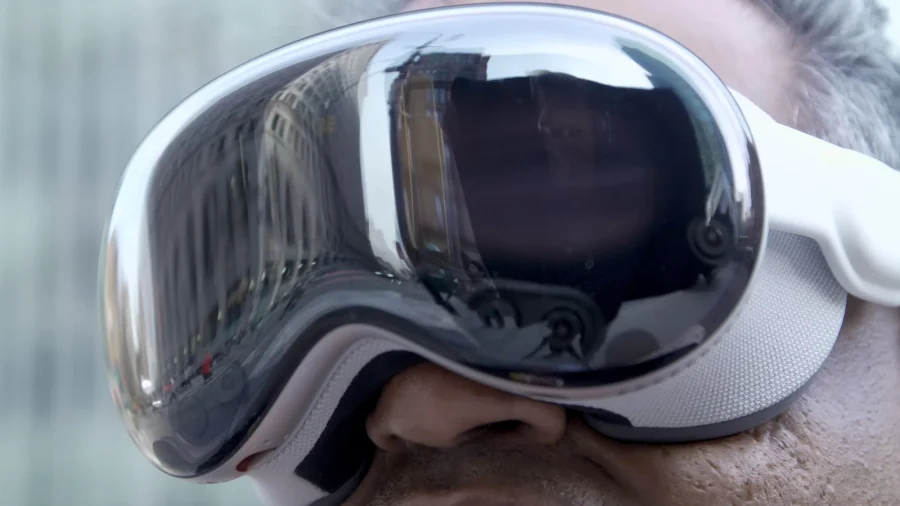
According to reports, the layoffs target software teams behind the Vision Pro headset and the Siri voice assistant. The Vision Pro, launched with considerable fanfare as Apple's entry into spatial computing, has faced a slower-than-expected consumer uptake. Its premium price point and niche use cases have limited its reach beyond early adopters and developers.
By trimming these teams, Apple appears to be acknowledging that the initial vision for the headset needs refinement — or that resources are better deployed elsewhere. The company has not publicly confirmed the exact numbers, but the reported scale of over 200 roles suggests a meaningful restructuring rather than routine performance-based exits.
Why Apple's shift to smart glasses and AI matters for users
For everyday consumers, this internal shift may feel distant — until the next product launch. Apple's reported focus on smart glasses and next-generation AI suggests the company is betting on lighter, more integrated wearable technology that fits seamlessly into daily life. Unlike the bulky Vision Pro, smart glasses could offer augmented reality experiences in a form factor people already wear.
Simultaneously, the Siri team cuts point to a broader overhaul of Apple's voice assistant strategy. As competitors like Google and OpenAI push conversational AI forward, Apple faces mounting pressure to make Siri smarter, more contextual, and genuinely useful. The restructuring may be painful internally, but it could lead to a more competitive assistant in the long run.
Timeline of Apple's evolving hardware and AI strategy
The Vision Pro was unveiled in June 2023 and hit shelves in early 2024, generating excitement for its immersive display and hand-tracking technology. However, reports of lukewarm sales and developer hesitation followed within months. By late 2024 and into 2025, speculation grew that Apple was quietly shifting resources toward more accessible AR wearables.
Meanwhile, Siri has faced years of criticism for lagging behind rivals in natural language understanding. Apple's reported job cuts in this area suggest a recognition that incremental updates are no longer enough — a more fundamental rethinking is underway.
Who feels the impact of Apple's reported layoffs
The most immediate impact falls on the employees whose roles were eliminated. Software engineers, project managers, and designers working on Vision Pro and Siri features now face an uncertain job market, even as the broader tech sector shows signs of recovery.
Beyond the affected staff, developers who built apps for Vision Pro may feel the chill. A reduced internal team could mean slower platform updates, fewer new features, and less support for third-party innovation. For Siri users, the changes may not be visible right away, but the long-term trajectory of the assistant's capabilities will be shaped by this restructuring.
Apple's reported response and the silence that follows
As of now, Apple has not issued a formal statement regarding the reported job cuts. This silence is typical for the company, which rarely comments on internal staffing matters. However, the lack of confirmation leaves room for speculation — and for affected employees, a period of uncertainty.
Industry analysts are watching closely. Some interpret the move as a necessary correction after over-hiring during the Vision Pro's development phase. Others see it as a signal that Apple is doubling down on AI, where the competitive stakes are higher and the potential rewards greater.
Reading between the lines of Apple's restructuring
This is not just about cutting costs. The reported layoffs reflect a strategic judgment about where Apple can win. The Vision Pro, while technically impressive, has not proven itself as a mass-market product. Smart glasses, by contrast, align with Apple's strength in creating wearable devices that integrate deeply with the iPhone ecosystem.
Similarly, the Siri team cuts suggest a move toward a more ambitious AI architecture — possibly one that leverages large language models and on-device processing. Apple's privacy-focused approach could become a differentiator if it can match the conversational abilities of its competitors.
What is confirmed versus what remains unclear
What is clear from reports is that Apple has reduced headcount in its Vision Pro and Siri software divisions, with the total reportedly exceeding 200 positions. What remains unclear is the exact breakdown of roles, the timeline of the departures, and whether any of these employees will be reassigned within Apple rather than leaving the company entirely.
It is also uncertain how this restructuring will affect upcoming product launches. Apple has not announced a timeline for smart glasses, and the future roadmap for Vision Pro hardware updates is similarly opaque. Until Apple speaks publicly, these details remain speculative.
Apple's competitive edge in the wearable and AI race
Apple's long-term advantage lies in its ecosystem. The iPhone, Apple Watch, and AirPods create a connected experience that competitors struggle to replicate. Smart glasses that leverage this ecosystem — with seamless pairing, health tracking, and AI-powered assistance — could strengthen Apple's moat significantly.
In AI, Apple's challenge is different. The company has the hardware, the user base, and the privacy reputation, but it has lagged in conversational intelligence. The reported restructuring of the Siri team may be an attempt to close that gap by building a more capable, deeply integrated assistant.
Risks and the balanced view on Apple's reported cuts
Not everyone sees this as a positive development. Critics argue that cutting Vision Pro software teams could stall the platform's evolution, leaving early adopters and developers with a product that feels abandoned. There are also concerns that Apple's AI efforts, despite the restructuring, may still trail more aggressive competitors.
Supporters counter that Apple is making a disciplined choice — reallocating resources from a promising but underperforming product to areas with higher growth potential. The risk, they acknowledge, is execution. If the smart glasses and AI initiatives fail to deliver, Apple could find itself without a strong presence in either category.
A broader pattern in tech's shifting priorities
Apple's reported move fits a wider industry trend. Across Silicon Valley, companies are reallocating talent from hardware experiments to AI development. Meta, Google, and Microsoft have all made similar adjustments, prioritizing generative AI and assistant technologies over speculative hardware bets.
This pattern suggests that the next wave of consumer technology will be defined not by standalone devices, but by intelligent software that enhances existing hardware. Apple's restructuring is an acknowledgment of that reality.
What employees, developers, and users should watch next
For affected employees, the immediate step is to understand severance packages and explore opportunities within Apple's broader AI and hardware divisions. For developers, the key is to monitor Apple's developer communications for signals about Vision Pro's future and any new smart glasses SDK.
For consumers, patience is advised. The benefits of this restructuring will not appear overnight. The real test will come with Apple's next major product announcement — whether it introduces a compelling AI assistant experience or a wearable that feels essential.
What could come next for Apple's product roadmap
Looking ahead, Apple is likely to accelerate work on smart glasses, potentially integrating them with the iPhone and Apple Watch in ways that feel natural and useful. The company may also unveil a more capable Siri, possibly powered by on-device AI models that prioritize privacy without sacrificing intelligence.
There is also the possibility of a refreshed Vision Pro — lighter, cheaper, and more focused on specific use cases like productivity or entertainment. Apple's history suggests it does not abandon categories easily, but it is willing to iterate until it finds the right formula.
Our Take
Apple's reported job cuts are more than a cost-saving measure — they are a strategic signal. The company is choosing to invest in the future it believes in: AI that works seamlessly and wearables that people actually want to wear. The Vision Pro was a bold experiment, but the market has spoken. Apple is listening.
For the employees affected, this is a difficult moment. For the industry, it is a reminder that even the most successful companies must adapt or risk irrelevance. The coming months will reveal whether Apple's bet on smart glasses and next-gen AI pays off — and whether this restructuring was a necessary step toward a stronger, more focused product lineup.
Frequently Asked Questions
How many jobs did Apple cut in the Vision Pro and Siri teams?
Apple reportedly cut more than 200 jobs across its Vision Pro and Siri software teams, according to recent reports. The company has not officially confirmed the exact number.
Why is Apple laying off employees from Vision Pro and Siri teams?
The reported layoffs are part of a strategic shift toward smart glasses and next-generation AI technologies. Apple appears to be reallocating resources from the Vision Pro headset and Siri to areas with higher growth potential.
Will the Vision Pro still receive updates after the job cuts?
It is unclear. Apple has not announced plans to discontinue the Vision Pro, but the reduced team size may slow the pace of software updates and new feature development.
What does this mean for the future of Siri?
The restructuring of the Siri team suggests Apple is rethinking its voice assistant strategy, likely aiming for a more capable, AI-powered assistant that can compete with rivals like Google Assistant and ChatGPT.