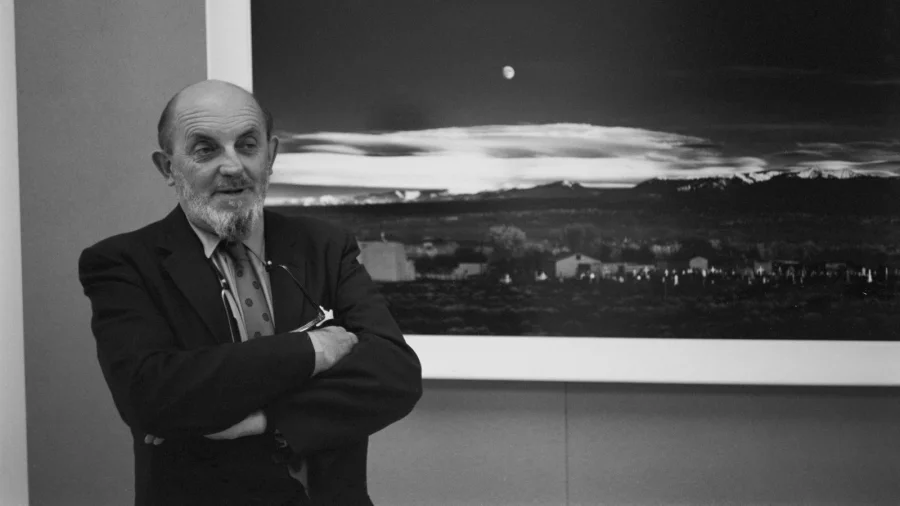
Imagine walking into a prestigious photography show, expecting to see the timeless, black-and-white mastery of Ansel Adams. Instead, you're confronted with a garish, AI-colorized version of his most famous work — and the people who own the rights to his legacy had no idea it was even there. That's exactly what happened at the AIPAD Photography Show, and the Ansel Adams Publishing Rights Trust is furious.
The Unauthorized Exhibition of an AI-Colorized 'Moonrise'
The controversy centers on a piece displayed by Danziger Gallery at the AIPAD (Association of International Photography Art Dealers) Photography Show. The work in question was an "AI-generated color version" of Adams' legendary 1941 photograph, Moonrise, Hernandez, New Mexico. The original is a stark, dramatic black-and-white image of a moon rising over a small New Mexican town, celebrated for its perfect tonal range and composition. The AI version, however, added color — a move that the Trust says fundamentally alters the artist's intent.
Why This Matters Right Now
This isn't just a squabble over one photograph. It's a flashpoint in a much larger, more urgent debate. As AI tools become more powerful and accessible, the line between inspiration, transformation, and outright theft is blurring. For artists, photographers, and their estates, this case is a stark warning: your life's work can be digitally altered and presented without your consent, and the legal framework to stop it is still catching up. For the public, it raises a deeply uncomfortable question: in the age of AI, what does it mean to own an image?
How the Incident Unfolded
The Ansel Adams Publishing Rights Trust, which manages the copyright and legacy of the late photographer, released a statement on Instagram to clarify its position. The statement was direct and unequivocal. It said, "The Trust did not authorize, endorse, consent to, or acquiesce in the 'AI-generated color version' of 'Moonrise, Hernandez, New Mexico' that was exhibited by Danziger Gallery at the AIPAD Photography Show." The Trust further emphasized that it had not granted any license for the creation or display of the AI-colorized work.
Who Is Affected and What Officials Are Saying
The immediate parties are the Ansel Adams Trust and Danziger Gallery. The Trust, acting as the guardian of Adams' artistic legacy, feels its rights have been violated. Danziger Gallery, which specializes in photography, has not yet issued a public response to the Trust's statement. But the ripple effects are far wider. Every photographer, artist, and estate that licenses their work is watching. If an AI can "reimagine" a copyrighted work and it can be shown at a major art fair, what protections remain? The AIPAD show itself, a premier event for photography dealers, is now at the center of a controversy about the boundaries of acceptable practice in the art market.
What We Know So Far — and What Remains Unclear
What we know: The Ansel Adams Trust has publicly stated it did not authorize the AI-colorized version. The work was displayed at the AIPAD show by Danziger Gallery. The Trust has not taken legal action yet, but its statement is a clear shot across the bow.
What remains unclear: How was the AI-colorized image created? Was it trained on Adams' original photograph? Did Danziger Gallery believe it had some legal basis to show the work, perhaps under a "fair use" or "transformative work" argument? And crucially, what will happen next? Will the Trust pursue legal action, or is this a public shaming to set a precedent?
Risks, Concerns, and the Balanced View
The risks here are significant for all sides. For the Trust, there's a risk of setting a precedent if they don't act decisively. For Danziger Gallery, there's a risk of reputational damage and potential legal liability. For the art world, the risk is a chilling effect on experimentation. Some might argue that AI colorization is a new form of artistic interpretation, a way to see a classic work in a new light. However, the Trust's position is clear: this is not interpretation; it's unauthorized alteration. The core concern is the erosion of an artist's control over their own creation. If anyone can use AI to "colorize" or "reimagine" a copyrighted work and exhibit it, the very concept of copyright becomes fragile.
Why Similar Trends and Concerns Are Growing
This incident is not an isolated one. We've seen lawsuits from artists against AI image generators like Stable Diffusion and Midjourney, alleging that these tools were trained on copyrighted work without permission. We've seen musicians object to AI-generated songs that mimic their voices. The pattern is clear: AI is forcing a reckoning with intellectual property law. The Ansel Adams case is particularly potent because it involves a canonical figure in American art. If the Trust can't protect Adams' work, what hope is there for a living artist with fewer resources?
- The case highlights the growing tension between AI innovation and traditional copyright law.
- It underscores the need for clearer legal guidelines on what constitutes a "transformative" AI-generated work.
- It serves as a cautionary tale for galleries and dealers about the provenance and rights associated with AI art.
"The Trust did not authorize, endorse, consent to, or acquiesce in the 'AI-generated color version' of 'Moonrise, Hernandez, New Mexico'." — The Ansel Adams Publishing Rights Trust
What Photographers, Artists, and Collectors Should Know Now
For photographers and artists, the lesson is to be vigilant. Register your copyrights. Monitor how your work is being used online. Consider adding clear terms of use that explicitly forbid AI training or derivative works. For collectors and galleries, this is a due diligence issue. When acquiring or exhibiting a piece, especially one that involves AI, you must verify that all rights have been cleared. The Ansel Adams Trust has made its position unmistakable: unauthorized AI colorization is not acceptable.
What Could Happen Next
The most likely next step is a formal legal demand from the Trust to Danziger Gallery, demanding the removal of the work from any future exhibitions and possibly seeking damages. This could escalate into a lawsuit that would test the boundaries of copyright law in the age of AI. Such a case would be closely watched by the art world, the tech industry, and legal scholars. It could set a landmark precedent for how AI-generated derivatives of classic works are treated. Alternatively, the gallery might issue an apology and remove the work, hoping to avoid a protracted legal battle.
Our Take: Why This Story Matters Beyond One Incident
This is more than a story about a gallery and a trust. It's a story about control. Ansel Adams spent a lifetime perfecting his craft, making deliberate choices about light, composition, and tonality. To have an algorithm arbitrarily add color to his most famous image is to erase those choices. The Trust's strong response is a defense not just of a photograph, but of the very idea that an artist's vision should be respected. In a world where AI can mimic, alter, and reproduce anything, this case reminds us that some things still require permission. And that the legacy of a master like Ansel Adams is not a playground for algorithms.
FAQs
What exactly happened with the Ansel Adams AI-colorized photo?
An AI-generated color version of Ansel Adams' famous black-and-white photograph 'Moonrise, Hernandez, New Mexico' was displayed at the AIPAD Photography Show by Danziger Gallery. The Ansel Adams Publishing Rights Trust has stated that it did not authorize this exhibition.
Why is the Ansel Adams Trust upset about the AI colorization?
The Trust believes the AI-colorized version was created and shown without permission, violating the copyright and artistic integrity of Adams' original work. They argue that it fundamentally alters the photographer's intended vision.
Could the gallery face legal consequences for showing the AI artwork?
Yes, potentially. If the Trust decides to pursue legal action, it could lead to a copyright infringement lawsuit. The outcome would depend on whether a court considers the AI-colorized version a "transformative" work or an unauthorized derivative.
What does this mean for the future of AI art and copyright?
This case highlights the urgent need for clearer laws around AI-generated content. It sets a precedent that major estates are willing to fight to protect an artist's legacy, which could influence how galleries and AI companies approach copyrighted material in the future.