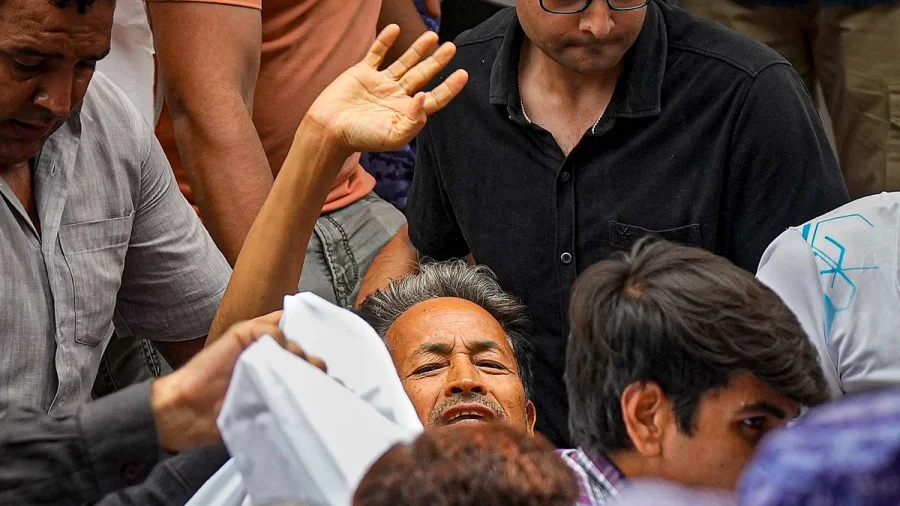
It was a scene of sudden, silent confusion. At Delhi’s Jantar Mantar early Saturday morning, activists who had been supporting Sonam Wangchuk’s 20-day hunger strike say they saw something they did not expect — police personnel surrounding the activist with white bedsheets, blocking every line of sight before carrying him away.
How the operation unfolded at Jantar Mantar
According to protesters present at the site, the removal began between 7 am and 8 am. Several Delhi Police personnel, including some in plain clothes, entered the protest area. Within minutes, paramilitary forces formed an outer security cordon, while officers surrounded Wangchuk’s mattress.
Then came the bedsheets. Protesters allege that large white sheets were held up by police to block the view of those present, preventing anyone from seeing or recording what was happening. Wangchuk was then carried to a waiting ambulance.
‘It happened so fast’ — witness accounts
Talha, a protester at the scene, described the moment: "It happened so fast that nobody could understand what was going on." Other activists echoed similar sentiments, saying they were left in shock as the activist they had been supporting for weeks was removed within minutes, hidden from view.
The use of bedsheets as a visual barrier has drawn particular criticism, with protesters calling it a tactic to avoid public scrutiny and media documentation.
Why Wangchuk was on hunger strike
Sonam Wangchuk, a well-known climate activist and education reform advocate from Ladakh, had been on an indefinite hunger strike at Jantar Mantar for 20 days. His demand: action against the alleged NEET paper leak, which he and supporters say has compromised the integrity of the medical entrance exam and affected thousands of students across India.
The protest had drawn attention from student groups and civil society, with supporters gathering daily at the site.
Who is affected and what it means
The removal has left Wangchuk’s supporters uncertain about his health and whereabouts. For students and activists who saw the hunger strike as a stand against exam irregularities, the incident raises questions about the right to peaceful protest in Delhi. The use of bedsheets to block visibility has also sparked concerns about transparency in police operations.
Official response and what remains unclear
As of now, there has been no official statement from Delhi Police or the administration regarding the operation. It is unclear where Wangchuk was taken, his medical condition, or whether any charges have been filed. The activist’s family and legal team have not yet issued a statement.
Confirmed facts vs what remains unclear
Confirmed: Wangchuk was on hunger strike at Jantar Mantar for 20 days. He was removed by police personnel early Saturday morning. Protesters report the use of white bedsheets to block view. Unclear: Wangchuk’s current location and health status. Whether any legal action has been taken. The official reason for the removal. All witness accounts remain unverified by independent sources.
Risks and concerns emerging
The incident has raised concerns about the handling of peaceful protests in India. Critics argue that the use of visual barriers during a removal undermines transparency and could be seen as an attempt to avoid accountability. Supporters of the activist have called for his immediate release and medical attention.
Wider pattern of protest management
This is not the first time authorities have used unconventional methods to end protests in Delhi. Previous incidents have involved late-night or early-morning operations, cordoning off areas, and limiting media access. The use of bedsheets, however, appears to be a new tactic that has drawn particular attention.
What supporters and observers should know
For those following the case, the immediate priority is to confirm Wangchuk’s safety and medical condition. Supporters are advised to seek official updates from his legal team or family. Media and human rights groups may seek clarification from Delhi Police on the procedure followed.
What could happen next
Wangchuk may be produced before a magistrate or taken to a medical facility. His legal team could challenge the removal in court. The incident may also spark renewed debate over the right to protest and the methods used by law enforcement. Further statements from police or the administration are expected.
Our Take
The removal of Sonam Wangchuk from Jantar Mantar, as described by protesters, raises serious questions about transparency and the right to peaceful protest. Whether or not the operation was legally justified, the use of bedsheets to block public view creates an impression of secrecy that undermines trust in law enforcement. In a democracy, even the end of a protest should be visible to the people it serves.
Frequently Asked Questions
Why was Sonam Wangchuk on hunger strike at Jantar Mantar?
Wangchuk was protesting the alleged NEET paper leak, demanding accountability and action from authorities. His hunger strike lasted 20 days.
What happened during the police operation?
Protesters say police used white bedsheets to surround Wangchuk and block the view of supporters and media before carrying him to an ambulance.
Where is Sonam Wangchuk now?
His current location and medical condition have not been officially confirmed. No statement has been issued by police or his family.
Is there any official statement from Delhi Police?
As of now, no official statement has been released regarding the operation or the reasons for Wangchuk’s removal.