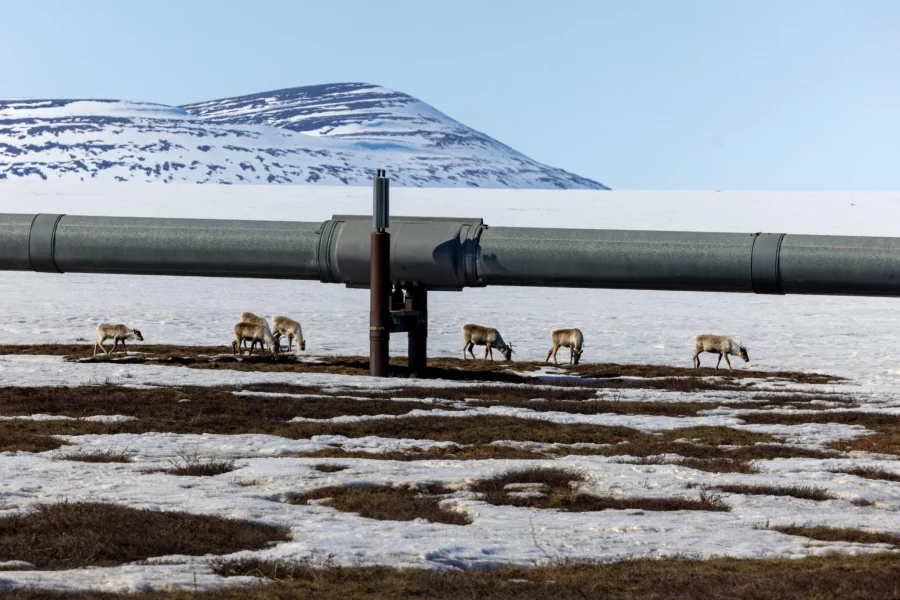
For years, the story of Alaska’s oil industry was one of slow, painful decline. Production had fallen so low that engineers feared the Trans Alaska Pipeline System (TAPS) — the 800-mile artery carrying the state’s crude to the rest of America — would become a giant, frozen tube of wax. The industry, many believed, was dying.
But something unexpected is happening. A new energy rush is sweeping across the Arctic. Major oil companies, the same ones that once walked away, are returning. They are driven by a desperate need to replenish reserves and a belief that Alaska’s crude potential is far greater than anyone had imagined.
Why This Matters Right Now
This isn’t just a story about oil. It’s a story about America’s energy future. For decades, the U.S. has relied on a steady flow of domestic oil. The decline of Alaska’s North Slope threatened that stability. Now, a revival could reshape the country’s energy landscape, create thousands of jobs, and reignite a fierce debate about drilling in one of the world’s most fragile environments. For investors, it’s a potential gold rush. For environmentalists, it’s a looming disaster. For the average American, it’s a question of energy security versus climate change.
How the Decline Unfolded — and Why It Felt Like the End
When John Kurz left Alaska’s North Slope in 2009, he was staring at a grim future. Crude production had plummeted to 567,000 barrels per day — barely a quarter of the roughly 2 million barrels pumped daily at the field’s peak two decades earlier. The decline stoked fears that TAPS might stop operating. Engineers worried that slow-moving crude would congeal inside the pipeline, creating waxy buildup that could turn the system into the world’s biggest tube of ChapStick.
“The industry was dying,” said Kurz, who at the time was BP Plc’s senior operations manager for Greater Prudhoe Bay. “We could see the end.”
Who Is Affected and What Officials Are Saying
The revival is already having a tangible impact. Oil companies are hiring again. Local businesses in Anchorage and Fairbanks are seeing a surge in demand for services. State officials, long worried about a budget crisis fueled by declining oil revenue, are cautiously optimistic.
“This is a game-changer for Alaska,” said a state energy official, speaking on condition of anonymity. “We’re not out of the woods yet, but the momentum is real.”
However, the return of big oil is also drawing sharp criticism. Environmental groups argue that new drilling in the Arctic would be catastrophic for wildlife and the climate. “We cannot afford to open new frontiers for fossil fuels,” said a spokesperson for the Sierra Club. “This is a step in the wrong direction.”
What We Know So Far — and What Remains Unclear
What we know: Major oil companies, including ConocoPhillips and others, are actively exploring new fields in the National Petroleum Reserve-Alaska (NPRA) and other areas. New discoveries suggest the region’s crude potential is far greater than previously estimated. The Biden administration has approved some new drilling permits, signaling a pragmatic shift in energy policy.
What remains unclear: The full scale of the revival is still uncertain. How much oil is actually recoverable? Will the economics work at current oil prices? And most importantly, can the industry navigate the growing legal and regulatory challenges from environmental groups? The answers will determine whether this is a genuine renaissance or just a temporary boom.
Risks, Concerns, and the Balanced View
The Bull Case: Proponents argue that Alaska’s oil is essential for U.S. energy independence. They point to the jobs, the tax revenue, and the strategic importance of domestic production. New technology, they say, allows for safer, more efficient drilling than ever before.
The Bear Case: Critics warn that the revival is a dangerous gamble. The Arctic is one of the most sensitive ecosystems on Earth. A major spill could be catastrophic. Moreover, investing in new oil infrastructure locks in decades of carbon emissions, undermining global climate goals. The financial risks are also high — oil prices are volatile, and the cost of Arctic drilling is enormous.
The Balanced View: The truth likely lies somewhere in between. The revival will probably happen, but at a slower pace than optimists hope. It will create jobs and revenue, but it will also face fierce opposition. The long-term impact on the environment and the climate remains a deeply uncertain and troubling question.
Why Similar Trends Are Growing
Alaska is not alone. Across the globe, oil companies are returning to frontier regions — from the deep waters of the Gulf of Mexico to the shale fields of the Permian Basin. The driving force is the same: the world still needs oil, and the easy-to-reach reserves are running out. The Arctic, once considered too difficult and too expensive, is now looking increasingly attractive.
- Global oil demand is still rising, driven by developing economies.
- Existing oil fields are aging and declining.
- New technology is making Arctic drilling more feasible.
- Geopolitical instability is pushing countries to secure domestic supply.
“The industry was dying. We could see the end.” — John Kurz, former BP operations manager, on the state of Alaska’s oil industry in 2009.
What Readers, Users, or Investors Should Know Now
For investors, the Alaska revival is a high-risk, high-reward opportunity. The key is to watch the regulatory environment and the price of oil. For residents of Alaska, the revival offers hope for a stronger economy, but also raises questions about the state’s long-term dependence on a volatile industry. For everyone else, this story is a reminder that the energy transition is not a straight line — and that the world’s appetite for oil is far from over.
What Could Happen Next
In the near term, expect more drilling permits, more exploration, and more legal battles. In the medium term, if oil prices remain high, production could begin to rise significantly. In the long term, the fate of Alaska’s oil revival will be decided by a combination of technology, politics, and the global push for cleaner energy. One thing is certain: the Arctic is once again a battleground for the world’s energy future.
Our Take: Why This Story Matters Beyond One Incident
The Alaska oil revival is a microcosm of a much larger global struggle. It pits the immediate need for energy and economic growth against the long-term imperative of climate action. It shows that even in a world racing toward renewables, the old economy of oil is far from dead. The decisions made in Alaska over the next few years will have ripple effects far beyond the Arctic Circle. They will shape the future of American energy, the health of the planet, and the lives of millions of people.
FAQs
Why is Alaska’s oil industry suddenly reviving after years of decline?
The revival is driven by new discoveries suggesting the region’s crude potential is far greater than previously thought, combined with a global need for oil companies to replenish their reserves. Higher oil prices and improved drilling technology have also made Arctic exploration more economically viable.
What is the Trans Alaska Pipeline System (TAPS) and why was it at risk?
TAPS is an 800-mile pipeline that carries crude oil from Alaska’s North Slope to the port of Valdez. As production declined, the pipeline was at risk of shutting down because slow-moving oil could congeal and create waxy blockages, effectively turning it into a giant tube of ChapStick.
What are the main environmental concerns about the new Arctic oil rush?
Environmentalists warn that drilling in the fragile Arctic ecosystem could lead to catastrophic oil spills, harm wildlife like caribou and polar bears, and lock in decades of carbon emissions that undermine global climate goals. The region is also extremely difficult to clean up in the event of an accident.
How will this revival affect the average American?
If successful, the revival could increase domestic oil supply, potentially stabilizing or lowering gasoline prices. It could also create thousands of jobs in Alaska and generate tax revenue for the state. However, it also means continued reliance on fossil fuels, which contributes to climate change and its associated costs for everyone.