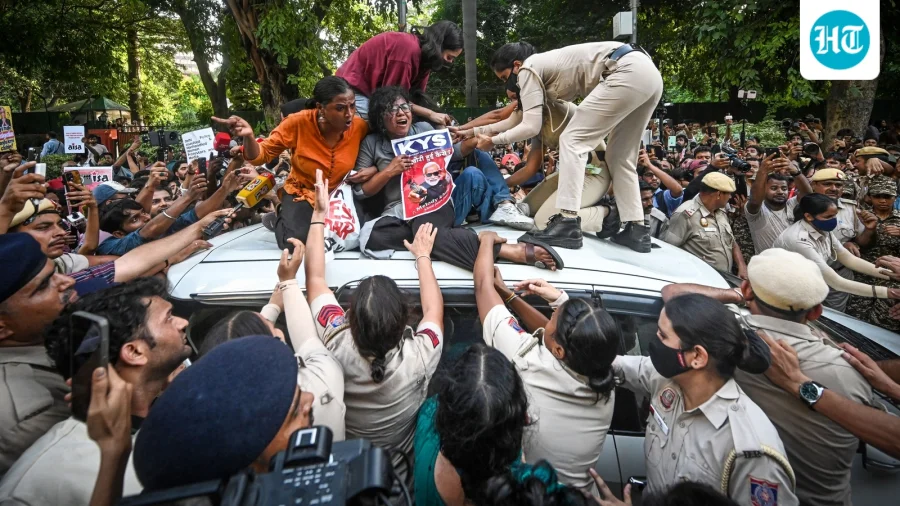
Two accounts of the same Sunday afternoon near Jantar Mantar now stand side by side — and they do not match. AISA says its national president, Neha Bora, was picked up by police in what it described as a "private vehicle" during a protest march. Delhi Police say no such thing happened.
The protest was organised to demand the resignation of Chief Election Commissioner Gyanesh Kumar. What followed has turned a routine demonstration into a dispute over who did what, and how.
The Detention Claim That Delhi Police Reject
According to AISA, Bora was detained while participating in the march near Jantar Mantar. The students' organisation specifically alleged that she was taken away in a private vehicle rather than an official police van — a detail that carries its own significance in protest detention procedures.
Delhi Police, however, have denied the claim outright. They have not confirmed any detention of Bora in connection with the march.
Why the "Private Vehicle" Detail Matters
When police detain a protester, the standard practice involves official vehicles, documented custody, and a clear paper trail. A detention in an unmarked private vehicle raises procedural questions — about who is holding the person, where they are being taken, and under what legal provision.
That is precisely why AISA's phrasing matters. It is not just a claim about detention. It is a claim about the manner of detention.
What the Protest Was About
The march near Jantar Mantar was part of a broader demand for the resignation of Chief Election Commissioner Gyanesh Kumar. AISA has been among the organisations pressing this demand publicly.
Jantar Mantar is a designated protest site in central Delhi, regularly used by political parties, student groups, and civil society organisations. Marches there are common — and so are police detentions when protesters attempt to move beyond permitted areas.
Who Is Neha Bora
Neha Bora is the national president of the All India Students' Association (AISA), a left-affiliated students' organisation active across several Indian universities. As national president, her detention — if confirmed — would be a significant development for the organisation and its ongoing campaigns.
AISA has historically been involved in student movements on campuses and in street protests on national political issues.
Confirmed Facts vs What Remains Unclear
Confirmed: A protest march was held near Jantar Mantar on Sunday demanding CEC Gyanesh Kumar's resignation. AISA says Neha Bora was detained. Delhi Police deny the claim.
Unclear: Whether Bora was actually detained. If she was, where she was taken, by whom, and under what provision. Whether any FIR or formal record exists. Whether other protesters were also detained.
Until either side provides documentation — custody records, video evidence, or an official statement with specifics — the two accounts remain in direct conflict.
The Pattern of Conflicting Protest Accounts
Disputes between protest organisers and police over detentions are not new in Delhi. Student groups and political organisations have, in the past, alleged detentions without paperwork, while police have maintained that action was taken only against those violating Section 144 or attempting to breach barricades.
What makes this case notable is the specific allegation — a private vehicle — which, if true, would fall outside standard detention protocol.
What Readers Should Watch For
If you are following this story, the key things to track are: any official statement from AISA naming the officers or vehicle involved; any response from Delhi Police with specific details; and any visual evidence from the march.
For students and activists planning to participate in similar protests, it is worth knowing that detention procedures in Delhi are governed by established police protocol — and that demanding identification and documentation is a legitimate expectation.
What Could Happen Next
AISA is likely to escalate its public position if Delhi Police maintain their denial. The organisation may release additional details, eyewitness accounts, or footage. Delhi Police, in turn, may issue a more detailed clarification — or continue to deny the claim.
For now, the story rests on two contradictory statements, and neither side has produced documentation that settles the question.
Our Take
This is a small incident with a larger question inside it. When protest organisers and police give opposite accounts of the same event, the gap is usually closed by evidence — custody records, video, or independent witnesses. Until that gap closes, readers should treat both claims as unverified. The demand for CEC Gyanesh Kumar's resignation is a separate, ongoing political story. This detention dispute is a procedural one — and it deserves the same scrutiny.
Frequently Asked Questions
Who is Neha Bora?
Neha Bora is the national president of the All India Students' Association (AISA), a left-affiliated students' organisation in India.
Was Neha Bora actually detained?
AISA says she was detained during a protest march near Jantar Mantar on Sunday. Delhi Police have denied the claim. No independent verification is available at this time.
Why is the "private vehicle" detail important?
Standard police procedure involves official vehicles and documented custody. A detention in a private vehicle, if confirmed, would raise questions about protocol and legal procedure.
What was the protest about?
The march was held to demand the resignation of Chief Election Commissioner Gyanesh Kumar.
What should we expect next?
AISA may release more details or evidence. Delhi Police may issue a fuller response. Until then, the two accounts remain in conflict.