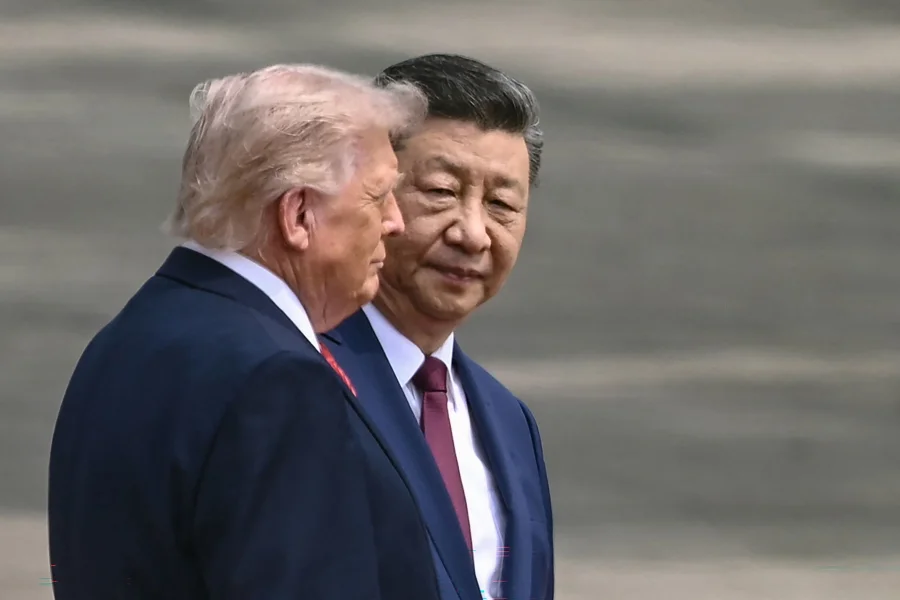
The next handshake between Washington and Beijing could determine the price of your next laptop and the pace of the global AI revolution. As President Donald Trump and President Xi Jinping prepare for a high-stakes summit, the world is watching to see if the two superpowers can find common ground on the very technologies that define their rivalry.
A High-Stakes Agenda: Chips, Tariffs, and Trade
At the heart of the anticipated meeting lies a complex web of economic and strategic interests. The AI boom has inextricably linked the US and Chinese economies, making hardware exports and technological restrictions powerful bargaining chips. The discussion is expected to center on the flow of advanced semiconductors, the tariffs that inflate their cost, and the rare earth minerals essential for their production.
Why This Summit Matters to Your Wallet and Your World
The outcome of this meeting will not be confined to diplomatic communiques. It will ripple through global supply chains, affecting everything from the availability of consumer electronics to the production of electric vehicles and advanced medical devices. A breakdown in talks could lead to higher prices and shortages, while a breakthrough could stabilize markets and accelerate innovation.
From Trade War to Tech War: The Road to the Summit
The path to this potential summit has been paved with years of escalating tensions. Successive rounds of tariffs on hundreds of billions of dollars of goods have been followed by targeted export controls on critical technologies like advanced AI chips. China has responded by highlighting its dominance in the production of rare earth minerals, a sector where it holds a near-monopoly. This summit represents a critical juncture in that ongoing economic and technological struggle.
The Human Impact: Jobs, Innovation, and National Security
Behind the policy debates are real people. Tech workers in Silicon Valley and Shenzhen worry about the stability of their industries. Manufacturers in the US and Europe are caught in the middle, facing higher costs and uncertain access to key components. For consumers, the stakes are simpler: the price and availability of the technology they rely on every day. National security concerns further complicate the picture, as both nations view leadership in AI as critical to their future military and economic power.
What Officials and Analysts Are Saying
While no official statements have been released regarding the specific agenda, the mood is one of cautious anticipation. Analysts suggest that both leaders have incentives to find areas of limited cooperation. According to trade experts, a complete decoupling of the two economies is unrealistic, making negotiation the only viable path forward. Officials from both sides have previously stated their desire to protect their respective national interests and technological advantages.
Decoding the Bargaining Chips: AI Hardware and Rare Minerals
The core of the negotiation revolves around two key assets. First, AI hardware, particularly the advanced semiconductors needed to train and run large language models. US restrictions on these exports are a major point of contention. Second, rare earth minerals, a group of 17 elements crucial for manufacturing everything from smartphones to fighter jets. China's control over the processing of these minerals gives it significant leverage. The summit will test whether these can be used as tools for agreement rather than weapons of conflict.
Confirmed Facts vs. What Remains Unclear
Confirmed: Both nations have implemented tariffs and export controls on strategic technologies. China is a dominant global supplier of rare earth minerals. The US has restricted the export of advanced AI chips to China.
Unclear: The exact date and location of the summit have not been officially confirmed. It is unknown what specific concessions, if any, either side is willing to make. The potential for a formal agreement or a joint statement is speculative.
The Moat of Nations: Why Tech Dominance is the Ultimate Leverage
For both the US and China, technological supremacy is not just an economic goal—it is a strategic moat. The US leverages its leadership in chip design and software ecosystems, while China leverages its manufacturing scale and control over critical raw materials. This summit is about testing the strength of those moats and finding a way to coexist without one side feeling completely boxed in.
Risks and the Roadblocks to a Deal
The risks of failure are high. A collapse in talks could lead to a further escalation of the tech war, with more severe export controls and retaliatory tariffs. This could fragment the global internet, slow AI development, and create a more volatile economic environment. Critics argue that any deal that eases restrictions on China could undermine US national security, while proponents of engagement warn that isolation will only accelerate China's push for self-sufficiency.
A New Era of Geopolitical Bargaining
This summit is a symptom of a broader global trend: the weaponization of economic interdependence. The era of unfettered globalization is giving way to a world where supply chains are scrutinized for national security risks. The Trump-Xi meeting is a pivotal moment in this transition, setting the tone for how the world's two largest economies will compete and cooperate in the decades to come.
What This Means for You: Practical Takeaways
For investors, the summit introduces significant volatility into tech and commodity markets. For students and professionals in tech, it underscores the importance of understanding the geopolitical landscape. For consumers, it is a reminder that the price of a new phone or car is tied to decisions made in a room thousands of miles away. The key is to watch for signals of de-escalation or further conflict.
The Future Outlook: A Thaw or a Deep Freeze?
The most likely outcome is not a grand resolution but a cautious, limited agreement that addresses a few specific issues while leaving the core conflicts unresolved. A full-scale trade war is in neither side's interest. However, a complete thaw in relations is equally unlikely. The summit will likely set the stage for continued, difficult negotiations, with the world watching to see if the two leaders can steer their nations away from a costly and dangerous collision.
Our Take
This is more than a diplomatic photo opportunity. It is a critical test of whether the world's two largest economies can manage their rivalry without derailing the global economy. The decisions made here will shape the future of technology, trade, and international relations for years to come. The stakes could not be higher.
Frequently Asked Questions
What is the main purpose of the Trump-Xi summit?
The summit is expected to address key economic and strategic issues, including tariffs, export controls on AI hardware, and access to rare earth minerals, in an effort to manage the US-China trade and tech rivalry.
Why are rare earth minerals so important in these talks?
Rare earth minerals are essential components in the manufacturing of advanced technologies, from smartphones to military equipment. China's dominant position in their production gives it significant leverage in trade negotiations.
How could the summit's outcome affect the average person?
The outcome could influence the cost and availability of consumer electronics, cars, and other goods, as well as impact jobs in the tech and manufacturing sectors. It also has implications for national security and the pace of technological innovation.
Is a major trade deal expected from this meeting?
Most analysts expect a limited agreement or a continuation of talks rather than a comprehensive deal. The core conflicts over technology and trade are deeply entrenched and unlikely to be resolved in a single summit.