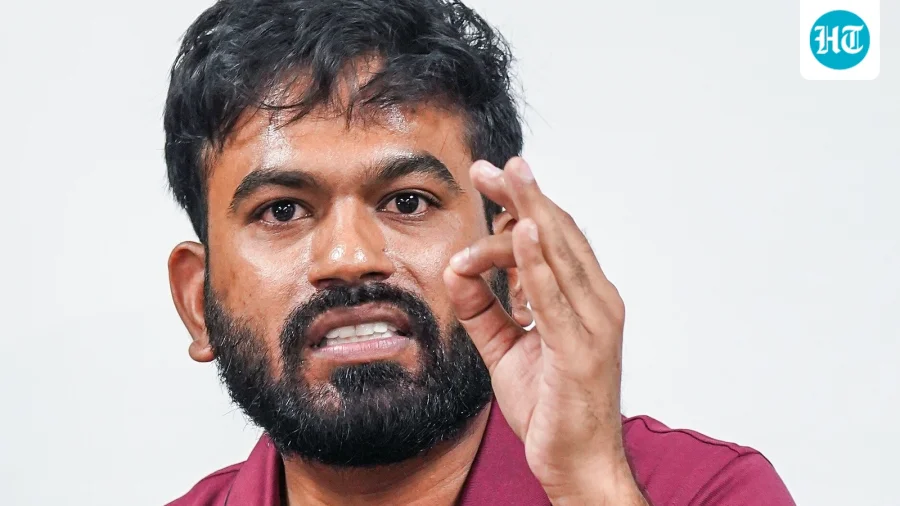
What if the game is rigged before the first ball is bowled? That's the uncomfortable question at the heart of Abhijeet Dipke's latest remarks — and it's one the Opposition may not want to answer.
Dipke, whose comments have added fresh fuel to the ongoing row over the Election Commission of India (ECI), has questioned why the Opposition continues to contest elections while simultaneously alleging that the electoral process is compromised. His argument, framed through a "fixed match" analogy, is blunt: if you believe the match is fixed, why step onto the field at all?
The 'Fixed Match' Logic That Has Politicos Talking
The analogy is simple. In a fixed match, the outcome is decided before the game begins. Players who participate — even with the best intentions — lend the contest a veneer of legitimacy. Dipke's point: by contesting elections they call rigged, the Opposition may be doing exactly that.
It's a provocative framing, and it cuts to the core of a dilemma that has haunted Opposition parties for years: boycott, or fight?
Why This Argument Lands Harder Than Usual
The ECI has faced mounting scrutiny over the past few years, with Opposition parties repeatedly raising concerns about voter roll discrepancies, EVM tampering allegations, and the timing of election announcements. Each time, the ECI has denied wrongdoing and asserted its independence.
But the question Dipke raises is different. It's not about whether the ECI is biased — it's about what the Opposition's participation signals to voters. If you call the referee corrupt but keep playing the game, what message does that send?
How the Opposition Has Responded So Far
There has been no formal response from major Opposition parties to Dipke's specific remarks. Historically, Opposition leaders have argued that boycotting elections would be a tactical error — it would hand uncontested victories to rivals and leave voters without a choice.
Their position: you fight from within the system, even while demanding reforms. Dipke's analogy challenges that logic directly.
What This Means for Voters and the ECI Debate
For ordinary voters, the debate can feel abstract. But it has real consequences. If Opposition parties are seen as legitimising a flawed process, public trust in elections could erode further. If they boycott, they risk ceding ground entirely.
Dipke's remarks don't offer a solution — they sharpen the question. And in doing so, they force a reckoning that neither the Opposition nor the ECI can easily ignore.
Confirmed Facts vs What Remains Unclear
Confirmed: Abhijeet Dipke made the "fixed match" analogy in the context of the Opposition's election participation and the ECI row.
Unclear: Whether Dipke's remarks represent a broader shift in strategy or are an isolated commentary. No official ECI or Opposition response has been reported.
Risks and Balanced View
Dipke's analogy is rhetorically powerful but raises its own questions. If the Opposition withdraws from elections, who fills the vacuum? Does boycott strengthen democracy or weaken it? Critics argue that disengagement is not a strategy — it's a surrender.
Supporters of Dipke's view counter that continued participation without meaningful reform is a slow surrender of a different kind. Both sides have a point, and that's what makes the debate so difficult.
The Wider Pattern: Trust Deficit in Electoral Systems
India is not alone in this. Across democracies, trust in electoral institutions is declining. From the US to Brazil, allegations of rigged systems have become a staple of political discourse. The difference in India is the scale — and the fact that the ECI's credibility is central to the world's largest democracy.
What Should Readers Take Away From This?
For voters, the key takeaway is this: the debate over election integrity is not just a political slugfest. It affects how your vote is counted, whether it matters, and whether the system responds to your concerns. Pay attention — not just to what leaders say, but to what they do.
What Could Happen Next
It's too early to say whether Dipke's remarks will shift the Opposition's strategy. But they have injected a new line of attack into the ECI debate — one that questions not just the referee, but the players who keep playing.
If the Opposition responds, expect a robust defence of participation as a democratic duty. If it doesn't, the analogy may linger — and that could be more damaging than any rebuttal.
Our Take
Dipke's "fixed match" analogy is uncomfortable because it forces a mirror in front of the Opposition. It doesn't offer a way out, but it does expose a contradiction that has been left unaddressed for too long. Whether you agree with him or not, the question he raises — why play a game you say is rigged? — is one that deserves an answer, not just a dismissal.
Frequently Asked Questions
What did Abhijeet Dipke say about the Opposition?
He used a "fixed match" analogy to question why the Opposition contests elections despite alleging electoral irregularities, suggesting their participation legitimises a flawed process.
What is the ECI row about?
The ECI row refers to ongoing allegations by Opposition parties about electoral irregularities, including voter roll issues and EVM concerns, which the ECI has denied.
Has the Opposition responded to Dipke's remarks?
No formal response has been reported yet. Historically, the Opposition has defended participation as a democratic necessity.
Why does this debate matter for voters?
It affects public trust in elections. If voters believe the system is rigged, they may disengage — which weakens democracy itself.