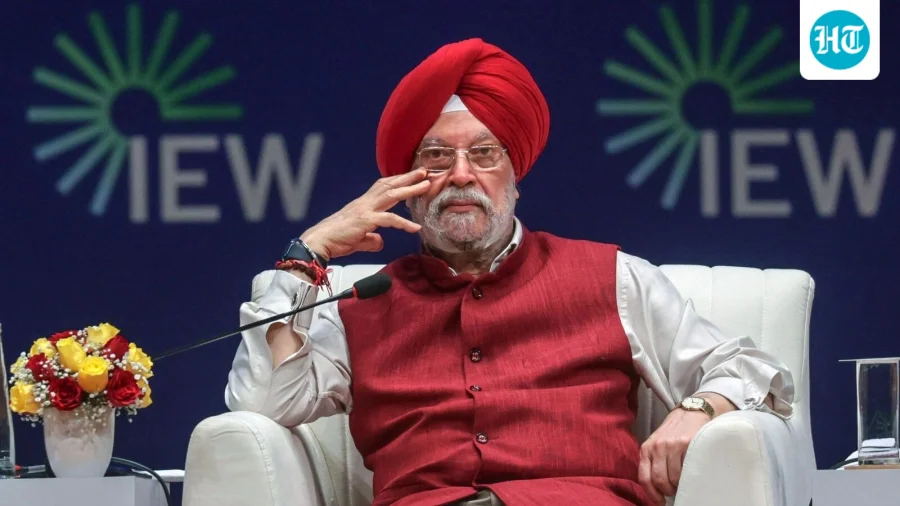
As global oil markets face unprecedented disruption, Union Petroleum Minister Hardeep Singh Puri has delivered a reassuring message to the nation: India is prepared. With 76 days of crude oil reserves in strategic storage and a diversified supply network, the government says there is no immediate risk of fuel shortage. “In the midst of all this crisis, you have no dry out taking place in any part of the country and you are still exporting,” Puri stated, highlighting the resilience of India’s energy infrastructure.
How India’s 76-Day Fuel Reserve Works
India maintains strategic petroleum reserves (SPR) at underground locations in Visakhapatnam (Andhra Pradesh), Mangaluru (Karnataka), and Padur (Karnataka). These facilities, managed by the Indian Strategic Petroleum Reserves Limited (ISPRL), hold crude oil that can be released during emergencies. The current 76-day cover includes both government-controlled SPR and stocks held by oil companies. This buffer is designed to protect against supply shocks, price spikes, and geopolitical disruptions.
Why This Matters for Every Indian
For the average citizen, the assurance of fuel availability means no immediate panic at petrol pumps or disruption to daily life. Industries reliant on diesel, aviation fuel, and LPG can continue operations without fear of sudden shortages. The minister’s statement also signals that fuel prices, though influenced by global crude rates, will not be compounded by supply scarcity. This stability is critical for households, transport, and the broader economy, especially amid inflationary pressures.
Timeline of India’s Energy Security Strategy
India’s push for energy security gained momentum after the 1991 Gulf War, which exposed vulnerabilities in crude supply. The first phase of SPR was approved in 2004, with construction completed by 2017. In 2021, the government announced plans to build a second phase of reserves at Chandikhol (Odisha) and Padur II, aiming to increase total cover to 90–100 days. The current 76-day figure reflects progress on this long-term strategy, which has been tested by recent global crises including the Russia-Ukraine war and Middle East tensions.
Who Benefits from India’s Fuel Reserves
The primary beneficiaries are sectors with high energy dependence: transportation, agriculture, manufacturing, and aviation. Farmers using diesel pumps, truckers moving goods, and airlines operating domestic routes all rely on uninterrupted fuel supply. Additionally, households using LPG for cooking and petrol for personal vehicles gain from price stability. The reserves also protect state-run oil marketing companies (OMCs) from being forced to hike prices abruptly, cushioning consumers from global volatility.
What the Oil Minister Said: Key Quotes and Context
Speaking to media, Puri emphasized that India’s diversified sourcing—including crude from Russia, Iraq, Saudi Arabia, and the UAE—reduces dependency on any single region. “We have around 76 days of reserves and no dry-out,” he said, adding that exports continue because domestic production and imports are managed efficiently. The minister also noted that the last fuel price increase by the central government was in 2022, reflecting a deliberate policy of shielding consumers from global price swings.
Why India Can Still Export Fuel During a Crisis
India’s ability to export fuel while maintaining domestic supply stems from its refining capacity, which exceeds local demand. The country is a net exporter of petroleum products like diesel and petrol, thanks to large refineries such as Reliance’s Jamnagar complex and public sector units. During global disruptions, these refineries process imported crude and sell finished products abroad, earning revenue while keeping domestic markets stable. Puri’s statement underscores that exports are a sign of strength, not a drain on local resources.
Confirmed Facts vs What Remains Unclear
Confirmed: India has 76 days of crude oil reserves. No dry-out has been reported in any state. Fuel exports continue. The government has not raised fuel prices since 2022.
Unclear: The exact breakdown of reserves between government SPR and company stocks. Whether the 76-day figure includes LNG reserves. The specific impact of ongoing global disruptions on future import costs. The timeline for completing the second phase of SPR to reach 90–100 days.
India’s Energy Moat: Why This Strategy Matters
India’s energy security rests on three pillars: strategic reserves, diversified imports, and domestic refining capacity. The SPR provides a physical buffer against supply cuts, while sourcing crude from multiple nations reduces geopolitical risk. India’s refineries, among the world’s largest, convert crude into high-demand products, creating a self-reinforcing cycle. This moat is rare among developing nations and gives India leverage in global energy markets, allowing it to negotiate better terms and maintain export competitiveness.
Risks and Balanced View
While the 76-day reserve is reassuring, experts caution that it is not a permanent solution. Global crude prices remain volatile, and any prolonged disruption—such as a blockade in the Strait of Hormuz—could strain supplies. India imports about 85% of its crude oil, making it vulnerable to price shocks. Additionally, the second phase of SPR has faced delays due to land acquisition and funding issues. Critics argue that the government should accelerate renewable energy adoption to reduce long-term dependence on fossil fuels.
Wider Trend: Global Energy Disruption and India’s Response
The current crisis is part of a broader pattern of energy market instability driven by geopolitical conflicts, OPEC+ production cuts, and sanctions. Countries like Japan, South Korea, and the US also maintain strategic reserves, but India’s approach stands out for its focus on both storage and export capacity. This dual strategy allows India to act as a stabilizer in regional markets, supplying fuel to neighbors like Nepal, Bangladesh, and Sri Lanka during shortages.
What You Should Do Now
For consumers, there is no need to panic-buy fuel. The government advises maintaining normal usage and relying on official updates. Businesses should review their fuel procurement contracts and consider hedging against price volatility. Investors in oil marketing companies (IOC, BPCL, HPCL) may find stability in the government’s commitment to price control. For policymakers, the focus should be on completing the second phase of SPR and accelerating renewable energy projects to reduce import dependence.
Future Outlook: What Could Happen Next
If global disruptions persist, India may tap into its SPR selectively to stabilize prices, as it did during the 2022 Russia-Ukraine crisis. The government is also exploring additional storage in caverns and salt domes. In the medium term, India aims to increase its reserve cover to 90–100 days by 2030. However, the ultimate goal remains reducing oil dependence through electric vehicles, biofuels, and green hydrogen. For now, the 76-day buffer provides a critical safety net.
Our Take
Puri’s statement is a timely reminder of India’s strategic foresight in energy planning. While the 76-day reserve is a strong buffer, it is not a license for complacency. The real test will come if global disruptions stretch beyond two months. India’s continued fuel exports during a crisis are a sign of confidence, but they also highlight the need for faster diversification into renewables. This story matters because energy security is not just about fuel—it is about economic stability, national security, and the daily lives of 1.4 billion people.
Frequently Asked Questions
How many days of fuel reserves does India have?
India currently has 76 days of crude oil reserves, including both strategic petroleum reserves and stocks held by oil companies.
Is there any fuel shortage in India right now?
No. Oil minister Hardeep Puri has confirmed that no part of the country has experienced a dry-out, and fuel supply remains stable.
Why is India still exporting fuel during a global crisis?
India has excess refining capacity that exceeds domestic demand. Exporting fuel helps earn revenue and maintains the efficiency of refineries without affecting local supply.
What should I do if fuel prices rise?
The government has not raised fuel prices since 2022. If global prices increase, the government may use reserves to stabilize markets. Consumers should avoid panic buying and follow official updates.