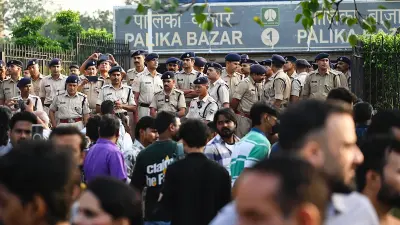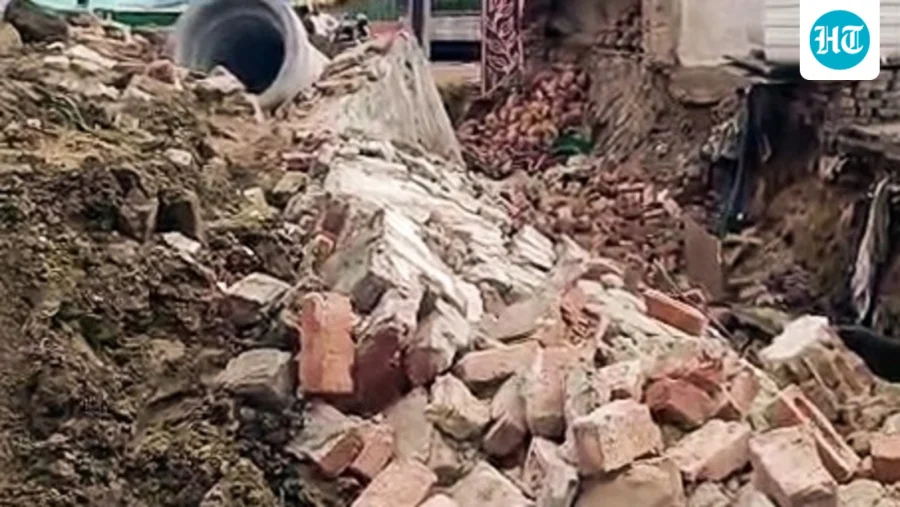
A 50-year-old contract labourer lost his life and two other workers were critically injured when a wall collapsed at the Dayanand Crematorium on Lodhi Road in Delhi during the early hours of Friday. The accident occurred around 1 am while a team of workers was digging and laying pipes for a rainwater drainage project commissioned by the Public Works Department (PWD).
How the wall collapse unfolded at Lodhi Road crematorium
The workers were excavating the ground near the boundary wall of the crematorium to install a new drain when a section of the wall suddenly gave way. The collapse buried the three labourers under debris. Rescue efforts were immediately launched by colleagues and local police. The 50-year-old worker was declared dead on arrival at a nearby hospital. The two injured workers are reported to be in critical condition and are undergoing treatment.
Why this construction accident matters for Delhi's workers
This incident highlights the persistent safety risks faced by contract labourers on infrastructure projects in Delhi. Night shifts, often used to minimise disruption to public spaces, can involve reduced supervision and lighting, increasing the danger of structural collapses. For the families of the victims, the loss is both personal and financial — contract workers typically lack the safety nets of permanent employees.
Timeline of the Lodhi Road crematorium collapse
The PWD had initiated the rainwater drain project at the crematorium to address waterlogging issues in the area. Excavation work had been underway for several days. On the night of the accident, the team was using a JCB and a Hydra machine to dig and lay pipes. The wall collapse happened suddenly, without any prior warning signs reported by workers at the site.
Human impact: Who was affected by the wall collapse
The deceased worker, a daily-wage labourer, was a resident of a nearby slum cluster. He leaves behind a family that depended entirely on his income. The two injured workers are also contract labourers from the same community. The accident has sent shockwaves through the local labour network, with many workers now anxious about the safety of ongoing construction at other sites.
Police and PWD response to the Lodhi Road accident
Delhi Police reached the spot shortly after the collapse and supervised the rescue operation. A case has been registered under relevant sections of the law. The PWD has been asked to submit a detailed report on the incident. Officials have not yet commented on whether any safety violations occurred. The crematorium area has been temporarily closed for public use pending a structural safety audit.
Analysis: What caused the wall to collapse during drain work
Experts suggest that excavation work too close to the base of a wall can undermine its foundation, especially in older structures. The Dayanand Crematorium wall, like many in Delhi, may have been built decades ago without modern reinforcement. The combination of heavy machinery vibration and soil removal likely triggered the failure. A full investigation will determine if proper shoring or bracing was in place.
Confirmed Facts vs What Remains Unclear in the crematorium collapse
Confirmed: A 50-year-old worker died. Two workers were injured. The collapse happened at around 1 am on Friday during drain construction at Dayanand Crematorium, Lodhi Road. The PWD was the executing agency. Police have registered a case.
Unclear: The exact cause of the collapse — whether due to excavation methods, wall age, or machinery use. The names of the deceased and injured have not been officially released. Whether safety protocols were followed remains under investigation. No official statement from PWD on liability or compensation has been made.
Company Moat: PWD's role in Delhi infrastructure
The Public Works Department is the primary agency responsible for building and maintaining roads, drains, and public buildings in Delhi. Its projects are critical to urban infrastructure but often rely on a vast network of contract labour. The department's ability to enforce safety standards across hundreds of simultaneous projects is a key challenge. This incident raises questions about oversight of subcontractors and night-shift work.
Risks and Balanced View on construction safety in Delhi
While the PWD has a mandate to deliver public infrastructure, critics argue that cost pressures and tight deadlines frequently compromise worker safety. Contract labourers, who form the backbone of such projects, often work without adequate protective gear, training, or insurance. Supporters of the department point to the scale of work and the difficulty of monitoring every site. The incident underscores the need for stricter enforcement of safety norms and better compensation mechanisms for accident victims.
Wider trend: Recurring construction accidents in Indian cities
This is not an isolated incident. Construction site accidents, particularly wall collapses and trench cave-ins, are reported regularly across Indian cities. A 2023 report by the National Crime Records Bureau (NCRB) recorded over 2,000 accidental deaths in the construction sector annually. Most victims are migrant labourers. The lack of a comprehensive safety culture and weak enforcement of the Building and Other Construction Workers Act remain systemic issues.
Practical guidance for construction workers and families
Workers on similar projects should be aware of basic safety signs: cracks in walls, unusual vibrations, or soil movement near excavations. Families of contract labourers should ensure that workers are registered under the Building and Other Construction Workers Welfare Board, which provides accident insurance and death benefits. In case of an accident, immediate reporting to the local police and labour department is crucial for legal and compensation claims.
Future outlook: What happens next after the Lodhi Road collapse
The PWD is expected to conduct a structural audit of the remaining wall at the crematorium. The police investigation will determine if any negligence or safety violation occurred. The injured workers' recovery will be closely watched. The incident may prompt a broader review of safety protocols on PWD projects across Delhi. Labour rights groups are likely to demand compensation and stricter enforcement of safety laws.
Our Take
The death of a 50-year-old worker in a preventable wall collapse is a grim reminder of the human cost of infrastructure development in India. While the PWD and police have initiated investigations, the real test lies in whether this incident leads to concrete changes in safety practices — or becomes just another statistic. For the family of the deceased, no inquiry can bring back a breadwinner. For the city, this should be a wake-up call to prioritise worker safety over project timelines.
Frequently Asked Questions
What happened at the Lodhi Road crematorium in Delhi?
A wall collapsed at the Dayanand Crematorium on Lodhi Road around 1 am on Friday during construction of a rainwater drain. A 50-year-old contract worker was killed and two others were critically injured.
Who was responsible for the construction work at the crematorium?
The construction work was being carried out by the Public Works Department (PWD) of Delhi. The workers were employed by a contractor hired by the PWD for the drain project.
What action has been taken after the wall collapse?
Delhi Police have registered a case and are investigating the cause of the collapse. The PWD has been asked to submit a report. The crematorium area has been temporarily closed for safety inspection.
What safety measures should be in place for such construction work?
Proper shoring and bracing of walls during excavation, adequate lighting for night shifts, use of protective gear, and regular safety inspections are essential. Workers should also be registered under welfare boards for insurance coverage.