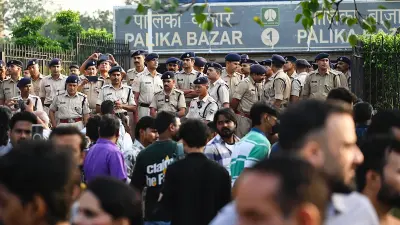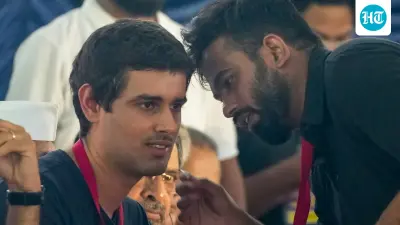
Twenty-nine years after a fire at Delhi's Uphaar Cinema killed 59 people and injured over 100, the Association of Victims of Uphaar Tragedy (AVUT) says India has learnt no lessons. On Saturday, marking the anniversary, the association intensified its demand for a dedicated legal framework to handle negligence-driven disasters — a call that has gone unanswered for nearly three decades.
A tragedy that changed nothing
The fire on June 13, 1997, during a screening of the film 'Border', remains one of India's worst cinema hall disasters. An illegal transformer in the basement sparked the blaze, and the building's safety violations — locked exits, no fire extinguishers, inadequate ventilation — turned a small fire into a mass casualty event. For the families of the victims, the pain has been compounded by a legal process that has dragged on for years, with the cinema's owners, the Ansal brothers, eventually receiving reduced sentences.
Why the demand for a special law matters now
AVUT argues that India lacks a comprehensive law to deal with disasters caused by negligence. Currently, such cases are handled under existing criminal and civil laws, which the association says are inadequate for ensuring accountability, swift compensation, and systemic reform. "Every time a tragedy happens, there is outrage, but no structural change," a senior AVUT member said. The association wants a law that mandates safety audits, imposes strict liability on owners, and ensures victims receive timely compensation without years of litigation.
29 years of legal battles and unlearnt lessons
The Uphaar case has seen multiple court rulings. In 2014, the Supreme Court convicted the Ansal brothers for culpable homicide not amounting to murder, but in 2015, it reduced their sentence to the time already served — about two years. The victims' families have repeatedly expressed frustration with a justice system they believe prioritizes the wealthy and powerful. Meanwhile, similar tragedies have occurred across India — from the 2011 AMRI hospital fire in Kolkata to the 2022 fire at a gaming zone in Rajkot — each time prompting outrage but little systemic change.
Who is affected and why it matters to every Indian
The Uphaar tragedy is not just a story of one fire. It is a story of how negligence in public spaces — cinemas, hospitals, malls, schools — can kill, and how the system often fails to prevent it. Every Indian who visits a cinema, a hospital, or a shopping mall is potentially at risk if safety norms are not enforced. AVUT's fight is for a legal framework that would make such spaces safer for everyone, not just for the families of the 59 who died.
What the victims' association is demanding
AVUT has been pressing for a "Special Law on Negligence-Driven Disasters" that would include: mandatory safety audits for all public buildings, strict liability for owners and managers, a fast-track compensation mechanism, and criminal accountability for repeat offenders. The association has also called for a national disaster response fund specifically for negligence-related incidents. "We don't want more families to go through what we did," said a spokesperson.
Why India has not acted — a deeper look
Experts point to a combination of factors: weak enforcement of existing laws, political and corporate influence, and a legal system that is slow and expensive. The Uphaar case itself took over a decade to reach a final verdict, and even then, the punishment was seen as lenient. The absence of a dedicated law means each new tragedy is treated as an isolated incident rather than a symptom of a systemic failure. "India has excellent safety laws on paper, but implementation is abysmal," said a fire safety expert who has studied the Uphaar case.
Confirmed facts vs what remains unclear
Confirmed: 59 people died in the Uphaar fire on June 13, 1997. The fire was caused by an illegal transformer in the basement. The cinema had multiple safety violations. The Ansal brothers were convicted but served reduced sentences. AVUT has been demanding a special law for years.
Unclear: Whether the government will respond to AVUT's renewed demand. Whether any new legislation is under consideration. The exact timeline for any potential legal reform.
Risks and balanced view
While AVUT's demand for a special law is widely supported by activists and safety experts, some legal experts caution that creating a new law may not solve the problem if enforcement remains weak. India already has the National Building Code, the Cinematograph Act, and state-level fire safety rules — but compliance is often poor. Critics argue that the focus should be on strengthening existing mechanisms rather than creating new legislation that may also be ignored. However, AVUT counters that a dedicated law would create a clear legal framework and political accountability.
A pattern of negligence across India
The Uphaar fire is part of a broader pattern of negligence-driven disasters in India. The 2011 AMRI hospital fire in Kolkata killed 89 people. The 2022 fire at a gaming zone in Rajkot killed 27. The 2023 fire at a hospital in Bhopal killed several patients. In each case, safety violations were cited, and in each case, the legal process has been slow. AVUT's demand for a special law is an attempt to break this cycle.
What citizens and policymakers should do now
For citizens, the Uphaar anniversary is a reminder to check safety measures in public spaces they visit — exits, fire extinguishers, emergency lighting. For policymakers, AVUT's demand is a clear call to action: create a legal framework that prioritizes prevention, swift justice, and victim compensation. The association has urged the government to introduce a bill in Parliament and has offered to share its draft proposal.
What could happen next
AVUT plans to continue its advocacy, including approaching lawmakers and possibly filing a public interest litigation if the government does not respond. The association is also exploring international examples, such as the UK's Corporate Manslaughter and Corporate Homicide Act, to strengthen its proposal. Whether the government will act remains uncertain, but the victims' families say they will not stop until a law is in place.
Our Take
The Uphaar tragedy is not just a historical event — it is a living indictment of India's failure to learn from its own disasters. Twenty-nine years later, the same safety violations that killed 59 people continue to exist in thousands of public buildings across the country. AVUT's demand for a special law is not just about justice for the dead; it is about protecting the living. The question is whether the government will listen before the next tragedy strikes.
Frequently Asked Questions
What was the Uphaar cinema fire tragedy?
The Uphaar cinema fire occurred on June 13, 1997, in Delhi, during a screening of the film 'Border'. An illegal transformer in the basement sparked a fire that killed 59 people and injured over 100. The cinema had multiple safety violations, including locked exits and no fire extinguishers.
What is AVUT demanding on the 29th anniversary?
The Association of Victims of Uphaar Tragedy (AVUT) is demanding a special law on negligence-driven disasters. The law would mandate safety audits, strict liability for owners, fast-track compensation, and criminal accountability for repeat offenders.
Why does AVUT say no lessons have been learnt?
AVUT points to subsequent tragedies across India — such as the AMRI hospital fire and the Rajkot gaming zone fire — where similar safety violations led to mass casualties. The association argues that without a dedicated legal framework, the cycle of negligence and tragedy continues.
What happened to the owners of Uphaar Cinema?
The Ansal brothers, who owned the cinema, were convicted of culpable homicide not amounting to murder in 2014. However, in 2015, the Supreme Court reduced their sentence to the time already served, which was about two years. The victims' families have criticized the lenient punishment.