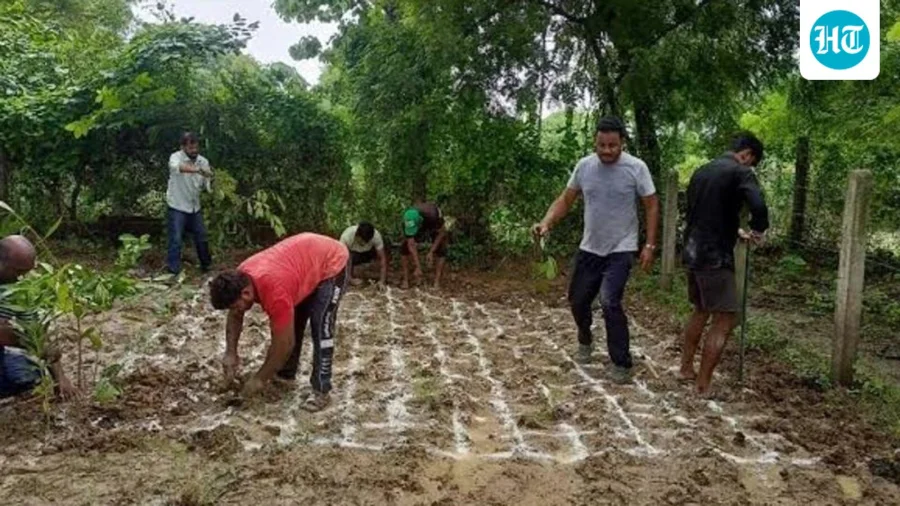
For years, a 150-acre stretch in the Aravalli range lay buried under 40 lakh metric tonnes of fly ash — a grey, toxic legacy of coal-fired power plants. Now, in a significant environmental turn, the Haryana Power Generation Corporation Limited (HPGCL) has told the National Green Tribunal (NGT) that it plans to turn this reclaimed waste site into a dense Miyawaki forest.
What HPGCL has proposed for the Aravalli fly ash site
In a compliance report submitted to the NGT on Thursday, HPGCL said the reclaimed land at the new ash dyke site will be developed into a Miyawaki forest. The technique, pioneered by Japanese botanist Akira Miyawaki, involves planting native species close together to create a dense, self-sustaining forest in a short period. The proposal covers the entire 150-acre area previously used for fly ash disposal.
Why this restoration matters for the Aravalli ecosystem
The Aravalli range, one of the oldest mountain systems in the world, has faced decades of mining, encroachment, and industrial waste dumping. Fly ash contains heavy metals and fine particles that can leach into soil and groundwater, posing health risks to nearby communities. Converting this site into a forest could help bind the soil, filter pollutants, restore biodiversity, and improve air quality in the region.
How the fly ash dump came to be
The site was used by HPGCL to dispose of fly ash from its thermal power plants. Over time, 40 lakh metric tonnes of the waste accumulated, creating a large, barren mound. The NGT had earlier directed HPGCL to take remedial measures, leading to the reclamation and now the forestation proposal. The timeline of the dumping and reclamation process has not been fully detailed in the report.
Who stands to benefit from the Miyawaki forest
Local residents in villages near the Aravalli foothills have long complained of dust, respiratory issues, and contaminated water sources linked to the fly ash site. If implemented, the forest could reduce dust pollution, recharge groundwater, and create a green buffer. Environmental activists and conservation groups have also welcomed the move as a step toward restoring degraded land in the ecologically sensitive zone.
HPGCL’s response and NGT’s role in the process
HPGCL has submitted the compliance report to the NGT, which is overseeing the restoration. The tribunal had earlier taken a strong stance on illegal mining and waste dumping in the Aravallis. The NGT will now evaluate the feasibility of the Miyawaki plan, including species selection, water availability, and long-term maintenance. No timeline for approval or implementation has been announced.
What the Miyawaki method means for this project
The Miyawaki technique is known for creating forests that grow 10 times faster and are 30 times denser than conventional plantations. It uses native tree species planted in multiple layers — canopy, understory, shrub, and ground cover. For a fly ash site, the soil may need amendments to support plant growth, and species that tolerate poor soil conditions would be prioritized. Experts say the method is well-suited for degraded urban and industrial land.
Confirmed facts vs what remains unclear about the plan
Confirmed: HPGCL has proposed a Miyawaki forest on the 150-acre reclaimed fly ash site. The site previously held 40 LMT of fly ash. The proposal is part of a compliance report to the NGT. Unclear: The exact timeline for planting, the species list, the budget, and whether the soil has been fully tested for contaminants. The NGT’s response and any conditions for approval are also pending.
Why HPGCL’s role matters in this restoration
HPGCL is the state-owned power generation company responsible for the fly ash. Its willingness to undertake the Miyawaki project signals a shift from mere waste management to active ecological restoration. The company has the land, resources, and regulatory mandate to carry out the plan. Its success could set a precedent for other power utilities in India dealing with fly ash disposal.
Risks and challenges in turning ash into forest
Fly ash sites often have poor soil structure, low organic matter, and potential heavy metal toxicity. Without proper soil treatment, saplings may not survive. Water scarcity in the Aravalli region could also hinder growth. Critics have pointed out that Miyawaki forests require intensive maintenance in the first three years. There is also the risk that the project could be delayed or underfunded, as seen with other restoration initiatives.
A broader trend: restoring industrial wastelands in India
This proposal is part of a growing movement to rehabilitate industrial wastelands across India. From coal mine reclamation in Jharkhand to fly ash brick-making in Uttar Pradesh, state agencies are exploring ways to turn waste into assets. The Miyawaki method has gained popularity in urban areas like Mumbai, Chennai, and Bengaluru for creating green cover. If successful, the Aravalli project could become a model for fly ash site restoration nationwide.
What local communities and environmentalists should watch for
Residents and activists should monitor the NGT’s decision and demand transparency on species selection, soil testing reports, and maintenance plans. They can also participate in tree-planting drives or community monitoring. Environmental groups may want to submit suggestions to the NGT to ensure the project meets ecological standards. The key is to ensure the forest is not just a symbolic gesture but a scientifically sound restoration.
What happens next with the Miyawaki forest proposal
The NGT is expected to review the compliance report and may call for additional studies or public hearings. If approved, HPGCL will need to prepare the site, source native saplings, and begin planting, likely in the next monsoon season. The forest could take 3–5 years to become self-sustaining. The outcome will be closely watched by environmentalists, regulators, and other power companies.
Our Take
The proposal to turn a 150-acre fly ash dump into a Miyawaki forest is a welcome step, but it must be executed with scientific rigor. The Aravallis have suffered enough from neglect and exploitation. This project offers a rare chance to reverse some of that damage — but only if the soil is properly treated, native species are chosen, and long-term maintenance is guaranteed. The NGT’s oversight will be crucial. For now, this is a promise on paper. The real test lies in the ground.
Frequently Asked Questions
What is a Miyawaki forest?
A Miyawaki forest is a dense, multi-layered forest created using native tree species planted close together. Developed by Japanese botanist Akira Miyawaki, it grows faster and is more biodiverse than conventional plantations.
Why is HPGCL planting a forest on a fly ash site?
HPGCL is complying with an NGT directive to restore the 150-acre reclaimed fly ash dump in the Aravallis. The Miyawaki forest is intended to rehabilitate the degraded land, reduce pollution, and improve local ecology.
How much fly ash was dumped on this site?
The site previously held 40 lakh metric tonnes (LMT) of fly ash, a byproduct of coal-fired power plants operated by HPGCL.
When will the Miyawaki forest be completed?
No official timeline has been announced. The proposal is under NGT review. If approved, planting could begin in the next monsoon season, and the forest may take 3–5 years to become self-sustaining.