The Congress on Tuesday launched a blistering attack on Union Home Minister Amit Shah, questioning why AK-47-armed security personnel, pellet guns, and "badgeless" plainclothes police were deployed during nationwide protests over the alleged NEET paper leak. The opposition party demanded answers, alleging excessive force against student protesters.
Congress leader's allegations: AK-47s, pellet guns, and badgeless cops
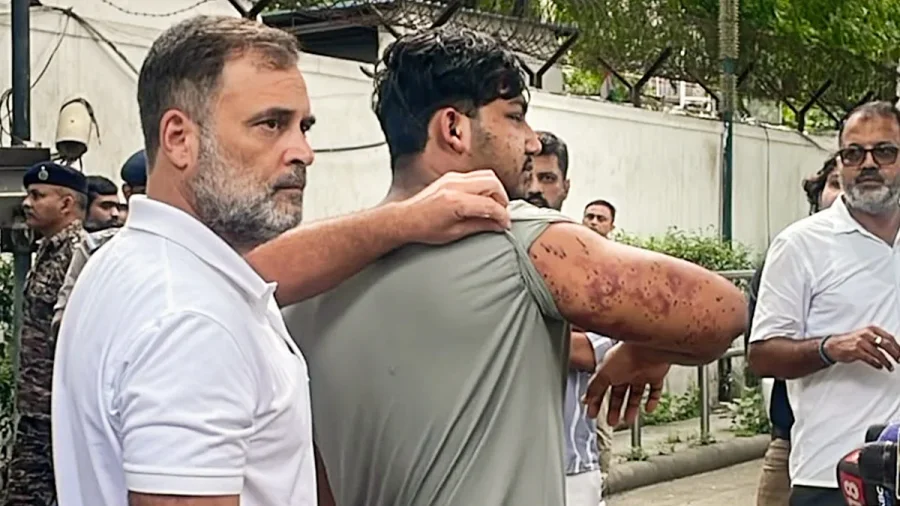
Speaking on NDTV India's news debate, Congress leader Gurdeep Singh Sappal alleged that security personnel used excessive force against students protesting the NEET paper leak. He claimed that the deployment included AK-47-armed personnel and the use of pellet guns, which he said violated Supreme Court guidelines governing police conduct during crowd-control operations.
Sappal specifically pointed to the presence of "badgeless" and plainclothes police officers, raising questions about their identity and authority. He referred to what he described as an Indian Express report, claiming that personnel of the Rapid Action Force (RAF), a specialised unit of the Central Reserve Police Force (CRPF), fired five rounds of pellet ammunition during the protests.
Why the security deployment near Amit Shah's residence matters
The protests over the alleged NEET paper leak had drawn thousands of students to the streets, with some demonstrations taking place near the residence of Union Home Minister Amit Shah. The Congress questioned why such heavy security — including AK-47s and pellet guns — was deemed necessary for student protesters demanding a fair investigation.
The use of pellet guns, which can cause serious injuries, has been a contentious issue in India, particularly after their use in Kashmir. The Congress argued that deploying such weapons against unarmed students was disproportionate and raised serious questions about the government's approach to dissent.
Timeline of the NEET paper leak protests and security response
The NEET paper leak allegations first surfaced in early May 2024, when reports emerged that the question paper had been leaked in several states. The Central Bureau of Investigation (CBI) took over the investigation, but students continued to protest, demanding a re-examination and a thorough probe.
As protests intensified, security was tightened around key government buildings and the residences of senior leaders, including Amit Shah. The Congress now alleges that the security measures went beyond standard protocol, with the use of pellet guns and the presence of unidentified plainclothes personnel.
Who is affected: Students, protesters, and democratic rights
The allegations directly impact the thousands of students who participated in the protests, many of whom were demanding justice over the alleged paper leak. The Congress claims that the heavy-handed security response has intimidated students and undermined their right to peaceful protest.
For the general public, the issue raises broader concerns about police conduct, the use of force, and the transparency of security operations. The presence of "badgeless" police officers, in particular, has sparked fears about accountability and the potential for misuse of authority.
Official response and political fallout
Congress leader Gurdeep Singh Sappal's allegations have put the government on the defensive. The Congress has demanded a formal explanation from the Home Ministry, questioning why such measures were taken and who authorised them.
As of now, there has been no official response from the Home Ministry or the CRPF regarding the specific allegations. The issue is expected to be raised in Parliament, with the opposition likely to demand a debate and a statement from Amit Shah himself.
Analysis: What the security deployment reveals about government approach
The Congress's attack goes beyond the immediate protest. It questions the government's broader approach to dissent and public order. The use of pellet guns and AK-47s against student protesters, if confirmed, would represent a significant escalation in crowd-control tactics.
Legal experts note that the Supreme Court has previously laid down guidelines for police conduct during protests, including the use of force only as a last resort and the need for clear identification of personnel. The presence of "badgeless" officers would directly violate these guidelines.
Confirmed facts vs what remains unclear
Confirmed: Congress leader Gurdeep Singh Sappal made the allegations during an NDTV India debate. He cited an Indian Express report about RAF personnel firing pellet rounds. The protests over the NEET paper leak did take place near Amit Shah's residence.
Unclear: The exact number of pellet rounds fired, the specific deployment of AK-47s, and the identity of the "badgeless" police officers remain unverified. The government has not yet responded to the allegations. The Indian Express report cited by Sappal has not been independently confirmed in this context.
Risks and balanced view: Security concerns vs protest rights
While the Congress has raised legitimate questions about the use of force, the government may argue that security around a senior leader like Amit Shah requires heightened vigilance, especially during large-scale protests. The presence of AK-47s could be standard protocol for VIP security, not necessarily aimed at protesters.
However, the use of pellet guns against unarmed students is harder to justify. Critics argue that it reflects a pattern of excessive force that has been criticised by human rights organisations. The balance between security and the right to peaceful protest remains a contentious issue.
Wider pattern: Police conduct and protest management in India
The NEET protest controversy fits into a broader pattern of concerns about police conduct during protests in India. From the use of pellet guns in Kashmir to the handling of farmers' protests, questions about proportionality and accountability have repeatedly emerged.
The Congress's allegations add to this narrative, suggesting that the government is increasingly willing to use heavy-handed tactics against dissent. The issue also highlights the lack of transparency in security operations, with "badgeless" officers raising questions about who is being deployed and under whose authority.
What students and protesters should know
For students and protesters, the key takeaway is the importance of documenting any instances of excessive force or unidentified personnel. Legal experts advise protesters to note badge numbers, record incidents, and report violations to human rights bodies.
Students should also be aware of their rights under Supreme Court guidelines, which mandate that police must identify themselves and use force only as a last resort. Any violation can be challenged in court.
Future outlook: What happens next
The Congress is likely to press the issue in Parliament, demanding a statement from Amit Shah and a formal inquiry into the security deployment. The government may respond by defending the measures as necessary for VIP security, but the use of pellet guns and badgeless officers will remain a flashpoint.
The NEET paper leak investigation itself continues, with the CBI probing the allegations. The outcome of that investigation could influence the political fallout, but the security controversy is now a separate issue that the government will have to address.
Our Take
The Congress's questions are legitimate and deserve a transparent response. The use of pellet guns and the presence of unidentified police personnel during a student protest raises serious concerns about proportionality and accountability. While VIP security is important, it should not come at the cost of democratic rights. The government must clarify who authorised these measures and whether they complied with Supreme Court guidelines. This is not just about one protest — it is about the kind of society we want to live in.
Frequently Asked Questions
What did the Congress allege about the security deployment near Amit Shah?
The Congress alleged that AK-47-armed personnel, pellet guns, and "badgeless" plainclothes police were deployed during NEET paper leak protests near Amit Shah's residence. They claimed this violated Supreme Court guidelines and was excessive force against student protesters.
What is the NEET paper leak case?
The NEET paper leak case involves allegations that the question paper for the NEET-UG 2024 exam was leaked in several states. The CBI is investigating, and students have been protesting demanding a re-examination and a thorough probe.
What are the Supreme Court guidelines on police conduct during protests?
The Supreme Court has laid down guidelines that require police to identify themselves clearly, use force only as a last resort, and ensure proportionality. The use of pellet guns and unidentified personnel would violate these guidelines.
What is the Rapid Action Force (RAF)?
The RAF is a specialised unit of the CRPF trained for crowd control and riot management. It is often deployed during large-scale protests and public order situations.