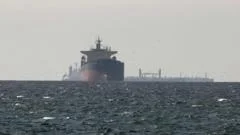
The United States has launched military strikes against Iranian targets, marking a sharp escalation in the long-running confrontation between the two nations. The operation, confirmed by US Central Command, targeted missile and drone storage facilities and coastal radar positions. The strikes came just hours after President Donald Trump accused Tehran of committing a "foolish violation" of a ceasefire by attacking a cargo ship in the strategic Strait of Hormuz.
What the US Military Hit and Why
US Central Command said the strikes were "powerful" and aimed at degrading Iran's ability to launch further attacks. The targets included facilities used to store missiles and drones, as well as coastal radar installations that help coordinate such strikes. The operation was a direct response to a drone attack on a cargo ship that the US says was carried out by Iranian forces. The Strait of Hormuz, a narrow waterway through which about a fifth of the world's oil passes, has been a flashpoint for years.
Why This Attack Crossed a Red Line
The drone attack on the cargo ship was not just another incident in a series of maritime tensions. For the Trump administration, it represented a direct violation of a ceasefire arrangement that had been in place. By striking back, the US is sending a clear signal that attacks on commercial shipping will not be tolerated. For the average person, this matters because the Strait of Hormuz is a critical chokepoint for global energy supplies. Any disruption there can send oil prices soaring, affecting fuel costs at the pump and the broader economy.
Timeline of Escalation: From Ceasefire to Strikes
The path to these strikes began with a fragile ceasefire between the US and Iran, which had reduced direct military confrontations. That calm was shattered when an Iranian drone struck a cargo ship in the Strait of Hormuz. President Trump quickly condemned the attack, calling it a "foolish violation." Within hours, US Central Command had identified targets and launched retaliatory strikes. The speed of the response suggests the military had pre-planned options ready for such a scenario.
Who Is Affected by This Escalation
The immediate impact is felt by the crews of commercial ships transiting the Strait of Hormuz, who now face heightened risk. But the ripple effects extend far beyond. Global shipping companies may reroute vessels, increasing costs and delays. Oil markets are likely to react with volatility, potentially raising prices for consumers in India and around the world. For the people of Iran, the strikes could mean further economic pressure and isolation. For US troops in the region, it means a heightened state of alert.
Official Response from Washington and Tehran
US Central Command released video footage purporting to show one of the strikes, emphasizing the precision and power of the operation. President Trump framed the action as a necessary response to an unprovoked violation. As of now, there has been no official statement from Iranian authorities regarding the strikes or the initial drone attack. The lack of immediate response from Tehran leaves open the question of whether this cycle of retaliation will continue.
What This Means for US-Iran Relations
The strikes represent a significant breakdown in what had been a period of relative calm. The ceasefire, which was never formalized but had been observed by both sides, now appears to be in tatters. Analysts believe that Iran may have calculated that a limited attack on a cargo ship would not provoke a major response. If so, that calculation proved wrong. The US decision to strike back forcefully suggests a new, more aggressive posture toward Iranian provocations at sea.
Confirmed Facts vs What Remains Unclear
Confirmed: US Central Command conducted strikes on Iranian missile and drone storage facilities and coastal radar positions. The strikes were in response to a drone attack on a cargo ship. President Trump called the attack a "foolish violation" of a ceasefire. Video of the US strikes has been released. Unclear: The exact extent of damage to Iranian facilities. Whether there were any casualties. Iran's official response or next steps. The identity and flag of the cargo ship that was attacked. Whether the drone attack was ordered by Iran's leadership or carried out by a proxy group.
Risks and Concerns: A Dangerous Game in a Narrow Strait
The biggest risk now is miscalculation. The Strait of Hormuz is one of the most militarized waterways in the world. Any escalation could quickly spiral into a broader conflict. Critics of the US strikes argue that they could provoke Iran into more aggressive actions, including targeting US naval vessels or mining the strait. There is also concern that the strikes could undermine diplomatic efforts to address Iran's nuclear program. Supporters of the action say that a failure to respond would have been seen as weakness, encouraging more attacks.
The Wider Pattern: Maritime Attacks and Global Trade
This incident is part of a broader pattern of attacks on commercial shipping in the Middle East. In recent years, both Iran and its proxies have targeted tankers and cargo ships using drones, mines, and missiles. These attacks are not just about military strategy; they are a form of economic warfare. By threatening the Strait of Hormuz, Iran can pressure global oil markets and the US-led coalition. The US response signals that it is prepared to use military force to keep the waterway open.
What This Means for India and Global Energy Security
India is heavily dependent on oil imports from the Middle East, much of which passes through the Strait of Hormuz. Any sustained disruption could lead to higher fuel prices and inflation. The Indian government will be watching the situation closely, as it has in past crises. For Indian readers, this story is not just a distant conflict — it has direct implications for the price of petrol, diesel, and cooking gas. The government may need to tap into strategic petroleum reserves if the situation worsens.
What Happens Next: Possible Scenarios
The immediate future depends on Iran's response. If Tehran chooses to de-escalate, the situation may cool down. If it retaliates with further attacks, the US could conduct more strikes, leading to a cycle of violence. Diplomatic channels, including through Oman or Iraq, may be activated to prevent further escalation. The UN Security Council could also become involved. For now, the region remains on edge, with both sides signaling resolve.
Our Take
This is a dangerous moment in an already volatile region. The US strikes were a predictable response to a deliberate provocation, but they also carry the risk of unintended escalation. The key question is whether both sides have an off-ramp. For now, the ball is in Tehran's court. The world will be watching to see if Iran chooses retaliation or restraint. For the average person, the biggest immediate impact will be felt at the fuel pump and in the cost of goods that rely on global shipping.
Frequently Asked Questions
Why did the US strike Iran?
The US struck Iranian military targets in response to a drone attack on a cargo ship in the Strait of Hormuz. President Trump called the attack a "foolish violation" of a ceasefire.
What did the US military target in Iran?
US Central Command said it struck missile and drone storage facilities and coastal radar positions. The strikes were described as "powerful" and targeted.
How does this affect oil prices and global trade?
The Strait of Hormuz is a critical chokepoint for global oil shipments. Any disruption can lead to higher oil prices, affecting fuel costs and the broader economy, including in India.
Could this lead to a wider war between the US and Iran?
There is a risk of escalation if Iran retaliates. However, both sides have historically avoided direct, full-scale war. The situation remains volatile and depends on next steps from Tehran.