The fragile calm that had held across the Gulf for hours shattered before dawn on Wednesday. In a sudden and dramatic escalation, Iran launched a wave of drones and missiles toward Kuwait, striking the country's main international airport and forcing an immediate halt to all air traffic. The attack came just hours after the United States carried out its own strikes on Iranian territory, marking a dangerous new phase in a conflict that now threatens to engulf the entire region.
Kuwaiti officials confirmed that the airport was "badly damaged" in the assault. Videos circulating on social media showed smoke rising from the terminal area, with emergency vehicles racing across the tarmac. The scale of the damage and the number of casualties remain unclear, but the attack has already sent shockwaves through global markets and raised fears of a broader war.
Why This Escalation Matters Right Now
This is not just another exchange of fire. The targeting of a civilian international airport in a sovereign nation marks a significant and dangerous escalation. For weeks, the conflict between the US and Iran had been largely contained to direct strikes on military and strategic targets. Now, the battlefield has expanded to include critical civilian infrastructure in a neighboring country. For millions of travelers, businesses, and families in the Gulf, the sense of safety has evaporated overnight. The suspension of traffic at Kuwait International Airport will disrupt travel, trade, and supply chains across the region, with ripple effects likely to be felt globally.
How the Attack on Kuwait Airport Unfolded
According to reports from Kuwait's state news agency and international wire services, the attack began in the early hours of Wednesday morning. Iranian drones and missiles were detected approaching Kuwaiti airspace. While Kuwait's air defense systems managed to intercept several of the incoming projectiles, some got through. The international airport bore the brunt of the assault, with multiple strikes causing significant structural damage.
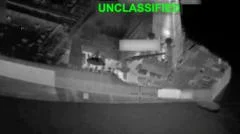
Iranian state media later claimed responsibility, framing the attack as retaliation for a US strike on Iran's Qeshm Island. That US strike, which occurred just hours earlier, had itself been a response to previous Iranian actions, creating a cycle of retaliation that now shows no signs of slowing.
"Kuwait says its air defences intercepted Iranian missiles and drones, but confirmed its international airport was hit by drones, causing injuries and forcing authorities to suspend all traffic." — Reuters
Who Is Affected and What Officials Are Saying
The immediate impact is on the people of Kuwait and the thousands of passengers who were at or traveling to the airport. Flights have been grounded indefinitely, leaving travelers stranded. The airport is a major hub for the region, and its closure will have cascading effects on airlines and connecting flights worldwide.
Kuwaiti officials have not yet released a full casualty count, but reports indicate injuries. The government is expected to hold an emergency meeting to assess the situation and determine the next steps. The US has not yet issued a formal statement on the Kuwait attack, but the timing — coming so soon after American strikes on Qeshm Island — suggests that Washington is bracing for a prolonged and widening conflict.
What We Know So Far — and What Remains Unclear
What we know: Iran launched a coordinated drone and missile attack on Kuwait International Airport. The airport was damaged. Traffic is suspended. The US had previously struck Iran's Qeshm Island. Iran claims the Kuwait attack was retaliation.
What remains unclear: The exact number of casualties. The full extent of the damage to the airport. Whether Iran will launch further attacks on Kuwait or other Gulf states. The US's next military move. Whether diplomatic channels are still open or have been completely severed.
Risks, Concerns, and the Balanced View
The risks are enormous. This conflict is no longer a bilateral dispute between the US and Iran. It has become a regional crisis. Kuwait, a nation that has historically tried to stay out of the direct line of fire, is now a battlefield. The attack on a civilian airport raises serious questions about the rules of engagement and the protection of non-combatants under international law.
From a balanced perspective, Iran argues it is acting in self-defense after the US strike on Qeshm Island. The US, in turn, says its strikes were necessary to degrade Iranian military capabilities. But the human cost is mounting. Civilians in Kuwait, Iran, and potentially other Gulf states are now living under the shadow of war. The risk of a miscalculation — a missile hitting a densely populated residential area, for example — could trigger an even more catastrophic escalation.
Why the Gulf Is Now the Epicenter of a Wider Crisis
This attack is not an isolated event. It is the latest in a series of escalations that have turned the Persian Gulf into a tinderbox. For months, tensions have been building. The US has increased its military presence in the region. Iran has accelerated its drone and missile programs. And now, the conflict has spilled over into the territory of a third party.
The targeting of Kuwait is particularly significant. Kuwait has long been seen as a relatively stable and neutral player in Gulf politics. If it can be attacked, no nation in the region is safe. This could trigger a broader alignment of Gulf states against Iran, or it could push some countries to seek a separate peace. Either way, the strategic landscape of the Middle East is shifting in real-time.
- Iran's drone and missile capabilities have been a key concern for Gulf states for years.
- The US has been working to build a regional air defense network, but this attack shows gaps in coverage.
- The closure of Kuwait International Airport will have immediate economic consequences for the region.
What Travelers, Investors, and Residents Should Know Now
For anyone in the Gulf region, the situation is fluid and dangerous. If you are in Kuwait, follow the instructions of local authorities. Avoid the airport area. Check with your airline for updates on flight cancellations. For investors, the energy markets are likely to react sharply. Oil prices could spike on fears of supply disruptions. For residents of neighboring Gulf states, be aware that the conflict could expand. Have an emergency plan in place.
What Could Happen Next
The immediate future is uncertain, but several scenarios are possible. The US could launch another round of strikes, this time targeting the launch sites used for the Kuwait attack. Iran could respond by targeting other Gulf airports or critical infrastructure. Diplomatic backchannels, if they still exist, could be activated to de-escalate. But given the speed of the escalation, a wider war seems more likely than a ceasefire.
The international community is watching with alarm. The United Nations is expected to call for an emergency session. But in the fog of war, words often matter less than actions. And the actions so far point in only one direction: more conflict.
Our Take: Why This Story Matters Beyond One Airport
The attack on Kuwait International Airport is a grim milestone. It shows that the US-Iran conflict has moved from a targeted military campaign to a regional war with civilian consequences. The airport is a symbol of global connectivity, of trade, of travel, of normal life. To see it in flames is to see the world order fraying. This is not just a story about a single attack. It is a story about how quickly peace can collapse, and how fragile the boundaries of war really are.
FAQs
Why did Iran attack Kuwait International Airport?
Iran claimed the attack was retaliation for a US strike on Iran's Qeshm Island. The attack was intended to demonstrate Iran's ability to strike US allies and critical infrastructure in the Gulf region.
Is Kuwait International Airport still open?
No. All traffic at Kuwait International Airport has been suspended indefinitely following the drone and missile attack. The airport sustained "badly damaged" according to Kuwaiti officials.
What was the US response to the Iran attack on Kuwait?
The US had already launched strikes on Iran's Qeshm Island hours before the Kuwait attack. As of the latest reports, the US has not announced a new round of strikes specifically in response to the Kuwait airport attack, but further military action is widely expected.
How does this affect travel and safety in the Gulf region?
The attack has severely disrupted air travel in the region. Kuwait's airport closure will affect connecting flights globally. Other Gulf states have heightened their security alerts. Travelers are advised to check with airlines and avoid non-essential travel to the region until the situation stabilizes.