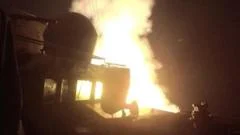
The United States and Iran have exchanged military strikes for a second consecutive day, escalating a conflict that now spans multiple countries across the Middle East. What began as US strikes on military targets in southern Iran has triggered a retaliatory response from Tehran targeting American military assets in Kuwait, Bahrain, and Jordan.
What Happened in the Second Day of Strikes
On the second day of hostilities, the US military confirmed it had launched strikes against "multiple" targets in Iran. The operation focused on military installations in southern Iran, according to official statements. Within hours, Iran responded by striking US military positions in three Gulf nations — Kuwait, Bahrain, and Jordan — marking a significant geographic expansion of the conflict.
Why This Escalation Matters for the Region
The exchange of fire across multiple countries transforms what could have been a contained confrontation into a broader regional crisis. For the first time in this cycle of violence, US military assets in allied Gulf states have come under direct attack. This raises the stakes for both Washington and Tehran, as well as for the host nations now drawn into the conflict.
How the Conflict Unfolded Over 48 Hours
The first day of US strikes targeted Iranian military sites in southern Iran, reportedly in response to earlier Iranian actions. The Trump administration framed the strikes as defensive. Iran's retaliation on the second day deliberately expanded the battlefield, hitting US positions in Kuwait, Bahrain, and Jordan — countries that host significant American military infrastructure. The pattern suggests a calculated Iranian strategy to avoid direct escalation on its own soil while pressuring US allies.
Who Is Affected by the Expanding Conflict
Civilians in southern Iran near the targeted military sites face immediate danger from the strikes. In Kuwait, Bahrain, and Jordan, populations near US military bases now live under the threat of further attacks. The escalation also endangers the fragile ceasefire between Israel and Hezbollah, which had been holding despite earlier tensions. Regional economies, already strained by years of instability, face fresh uncertainty.
Official Responses from Washington and Tehran
The US military confirmed the strikes in a statement, describing them as necessary to protect American interests and personnel. Iran's leadership, through state media, framed its retaliation as a legitimate response to aggression. No official statements from Kuwait, Bahrain, or Jordan have been released publicly, though these governments are likely engaged in urgent diplomatic consultations.
What This Escalation Means — Analysis
The second day of strikes signals that both sides are willing to sustain military action rather than seek immediate de-escalation. Iran's decision to target US assets in allied Gulf states is particularly significant — it tests the limits of American deterrence and the willingness of Gulf nations to host US forces under fire. The conflict now carries a higher risk of miscalculation, where a single errant strike could draw in additional actors.
Confirmed Facts vs What Remains Unclear
Confirmed: US launched strikes on military targets in southern Iran for a second day. Iran retaliated by targeting US military assets in Kuwait, Bahrain, and Jordan. The US military confirmed "multiple" targets in Iran.
Unclear: The exact number of casualties on either side. The specific military assets targeted in each country. Whether diplomatic backchannels are active. The full extent of damage to Iranian military sites. Whether additional US allies in the region have been placed on alert.
Risks and Concerns Emerging from the Escalation
The most immediate risk is a further expansion of the conflict. If Iran targets additional US allies or if the US strikes deeper into Iranian territory, the region could slide into a full-scale war. Gulf nations hosting US bases face a difficult choice: support the US military presence or distance themselves to avoid becoming targets. There is also the risk of non-state actors — such as militias in Iraq or Yemen — entering the fray. Critics of the US strikes argue that military action without a clear diplomatic off-ramp increases the likelihood of prolonged conflict.
Wider Pattern: US-Iran Hostilities in 2026
This escalation is the latest chapter in a long history of US-Iran tensions that have periodically flared into direct or proxy confrontations. The current cycle of strikes follows months of heightened rhetoric from both sides. The involvement of Gulf states as direct targets, rather than as passive hosts of US forces, marks a notable shift in the conflict's geography and intensity.
What Should People in the Region Do Now
Civilians in southern Iran and near US military installations in Kuwait, Bahrain, and Jordan should monitor official safety advisories from their governments. Those with the ability to relocate away from known military sites should consider doing so. Travelers in the region should check with their embassies for updated security guidance. Investors and businesses with exposure to Gulf economies should prepare for potential market volatility.
What Could Happen Next
The immediate trajectory depends on whether either side chooses to de-escalate or retaliate further. A third day of strikes would signal that both sides are locked in a cycle of escalation. Diplomatic intervention by regional powers — such as Saudi Arabia, Qatar, or Oman — or by international actors like the United Nations could provide a path to de-escalation. However, no such efforts have been publicly confirmed. The risk of a broader regional war is now higher than at any point in recent months.
Our Take
The second day of US-Iran strikes represents a dangerous inflection point. What began as a targeted military operation has become a multi-country exchange that threatens to draw in additional actors. The absence of clear diplomatic signals is concerning. Both Washington and Tehran appear to be testing each other's limits without a visible off-ramp. For the people of the Middle East, this escalation brings back the familiar dread of a conflict that could spiral beyond anyone's control. The coming days will determine whether this is a temporary spike or the beginning of a wider war.
Frequently Asked Questions
Why did the US strike Iran for a second day?
The US military stated the strikes targeted "multiple" military installations in southern Iran as part of ongoing operations. The specific trigger for the second day of strikes has not been officially detailed, but it follows a pattern of retaliatory exchanges between the two countries.
Which countries were affected by Iran's retaliation?
Iran targeted US military assets in Kuwait, Bahrain, and Jordan. These three Gulf nations host significant American military infrastructure, including bases and personnel.
Is this the start of a war between the US and Iran?
The situation is highly volatile. Two consecutive days of strikes with retaliatory responses indicate a serious escalation. Whether this becomes a full-scale war depends on whether either side chooses to de-escalate or continue military action. No ceasefire or diplomatic intervention has been announced.
What should I do if I live near a US military base in the Gulf?
Monitor official safety advisories from your government and local authorities. Follow instructions from military or civil defense officials. Consider avoiding areas near military installations. Keep emergency supplies ready and stay informed through reliable news sources.