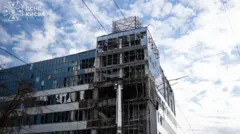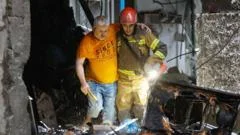
The deadliest attack on Kyiv in months has exposed a critical vulnerability in Ukraine's air defenses. President Volodymyr Zelensky confirmed Sunday that Russia launched a "massive" assault on the capital region, firing 68 missiles and 351 strike drones. At least 21 people were killed. But the most alarming detail to emerge is this: Ukraine's interceptor missile stockpile is dangerously low.
What happened in the Kyiv region attack
Sunday's assault was a coordinated, multi-wave attack combining ballistic missiles, cruise missiles, and Iranian-designed Shahed drones. The scale was designed to overwhelm Ukraine's air defense network. According to preliminary reports, Ukraine's air force intercepted many cruise missiles and drones, but critically, it intercepted zero of the 29 ballistic missiles fired at Kyiv and its suburbs. The ballistic missiles, which travel at hypersonic speeds and are extremely difficult to shoot down, struck residential areas, causing the majority of casualties.
Why the interceptor missile shortage is a crisis now
President Zelensky's warning is not new, but Sunday's attack makes it impossible to ignore. Ukraine relies heavily on Western-supplied systems like the US-made Patriot and the German-made IRIS-T to defend against ballistic missiles. Each Patriot interceptor missile costs millions of dollars and takes months to manufacture. Ukraine has been burning through its stockpile at a rate that far exceeds resupply. "We need more interceptors. This is a matter of life and death for our cities," Zelensky said in his nightly address. The shortage means that even when Ukraine detects incoming ballistic missiles, it may not have the means to stop them.
How the attack unfolded — timeline of Sunday's assault
The attack began in the early hours of Sunday morning, with waves of drones targeting energy infrastructure and military installations. As Ukrainian air defenses engaged the drones, Russian strategic bombers and naval vessels launched cruise missiles from the Caspian and Black Sea regions. The final and most devastating wave consisted of ballistic missiles, likely Iskander-M or Kh-47M2 Kinzhal variants, launched from Russian territory. These missiles reached Kyiv in under five minutes, giving residents almost no time to seek shelter. Air raid sirens sounded, but for many, it was too late.
Who is affected — the human cost in Kyiv
The 21 confirmed deaths include families in residential apartment blocks, a father and his two young children in a suburb, and several people who were in their cars when missiles struck. Over 60 people were injured, many critically. Hospitals in Kyiv are treating victims with shrapnel wounds and blast injuries. The attack has reignited fear among Kyiv's residents, who had begun to feel a fragile sense of normalcy after months of reduced strikes on the capital. "We thought we were safer here," one survivor told local media. "Now we realize nowhere is safe without enough air defense."
Zelensky's urgent appeal to international partners
In the aftermath of the attack, President Zelensky held emergency calls with US President Joe Biden, NATO Secretary General Jens Stoltenberg, and several European leaders. His message was direct: Ukraine needs more Patriot and NASAMS interceptor missiles immediately. He also reiterated the request for F-16 fighter jets, which could help engage Russian missile launchers before they fire. The White House confirmed it is "working urgently" to identify available interceptor stocks from allied nations, but acknowledged that global inventories are strained. Germany announced it would send an additional Patriot system, but delivery is expected to take weeks.
Why ballistic missiles are so hard to stop
Ballistic missiles follow a high-arcing trajectory, reaching speeds of Mach 5 or more. Unlike cruise missiles, which fly slower and at lower altitudes, ballistic missiles are extremely difficult to track and intercept. Only advanced systems like the Patriot PAC-3 or the Israeli Arrow system have demonstrated consistent success. Ukraine currently operates a limited number of Patriot batteries — believed to be three or four — each with a finite number of interceptor missiles. Once those interceptors are expended, the battery is effectively useless until resupplied. Sunday's attack may have exhausted a significant portion of Ukraine's ballistic missile defense capability.
Confirmed facts vs what remains unclear
Confirmed: Russia launched 68 missiles and 351 drones at Kyiv on Sunday. At least 21 people were killed. Ukraine intercepted zero ballistic missiles. President Zelensky publicly warned of an interceptor missile shortage. Unclear: The exact number of interceptor missiles remaining in Ukraine's stockpile. Whether any Patriot batteries were damaged or destroyed in the attack. The precise type of ballistic missiles used. Whether the attack was coordinated with ground operations elsewhere. Speculation: Some analysts suggest Russia may have timed the attack to test Ukraine's air defense capacity before a larger winter campaign against the energy grid. This has not been confirmed.
Ukraine's air defense strategy — strengths and gaps
Ukraine has built one of the most layered air defense networks in the world, combining Soviet-era systems like the S-300 and Buk with Western systems like Patriot, IRIS-T, and NASAMS. This layered approach works well against cruise missiles and drones, which are slower and more predictable. However, the gap in ballistic missile defense is a structural weakness. Ballistic missiles require top-tier, expensive interceptors that are in short supply globally. Ukraine's strategy has been to prioritize defense of critical infrastructure and major cities, but Sunday's attack shows that even priority targets can be overwhelmed.
Risks and concerns — what happens if the shortage continues
If Ukraine's interceptor missile stockpile is not replenished quickly, the consequences could be severe. Russia could exploit the gap to launch more frequent and devastating ballistic missile attacks on Kyiv, Kharkiv, and other major cities. The psychological impact on the civilian population would be immense, potentially increasing pressure on the government to negotiate. There is also a risk that Ukraine's energy grid, which was heavily damaged last winter, could be targeted again with impunity. Critics of Western aid delays argue that the shortage is a self-inflicted wound — a result of bureaucratic hesitation and production bottlenecks in the US and Europe.
Wider pattern — Russia's evolving missile strategy
Sunday's attack fits a broader pattern of Russia adapting its tactics to exploit Ukraine's weaknesses. In the early months of the war, Russia relied on large numbers of cruise missiles, which Ukraine learned to intercept effectively. Russia then shifted to drone swarms to exhaust air defenses. Now, it is combining drones and cruise missiles with ballistic missiles in a "salvo" approach designed to saturate and penetrate defenses. This evolution suggests that Russia is learning from each failed attack and adjusting its strategy accordingly. Ukraine and its allies must do the same — but that requires both technology and ammunition.
What Ukrainians and international observers should watch for
For Ukrainians living in major cities, the immediate advice is to take air raid warnings seriously, especially during ballistic missile alerts, which offer only minutes of warning. Identify the nearest shelter and have a go-bag ready. For international observers and policymakers, the key metric to watch is the speed of interceptor missile resupply. If new shipments arrive within weeks, Ukraine may be able to restore its defensive umbrella. If delays stretch into months, more cities could face the same devastation Kyiv experienced on Sunday. For investors and defense contractors, the attack underscores the growing global demand for advanced air defense systems — a market that is likely to expand significantly.
Future outlook — what could happen next
In the short term, Ukraine will likely prioritize the protection of its remaining Patriot batteries, possibly moving them to more concealed or mobile positions. Russia may attempt to locate and destroy these batteries with reconnaissance drones and long-range strikes. In the medium term, Ukraine is expected to receive additional air defense systems from Germany, the Netherlands, and possibly the United States. However, the production of Patriot interceptors takes 18–24 months, meaning the next several months will be a critical window of vulnerability. If Russia launches a sustained winter campaign against Ukraine's energy grid without adequate interceptor coverage, the humanitarian impact could be severe.
Our Take
Sunday's attack is a stark reminder that air defense is not a one-time solution but a continuous requirement. Ukraine has proven remarkably adaptable, but it cannot manufacture Patriot interceptors in a basement workshop. The interceptor missile shortage is not a failure of Ukrainian strategy — it is a failure of Western supply chains and political will. Every month of delay in ramping up production means more Ukrainian civilians will die preventable deaths. The question for NATO and its allies is no longer whether to support Ukraine, but whether they are willing to pay the industrial and financial cost of doing so effectively. The answer will be written in the rubble of Kyiv's next attack.
Frequently Asked Questions
What is an interceptor missile and why is Ukraine running out?
An interceptor missile is a defensive weapon launched to destroy an incoming enemy missile in mid-air. Ukraine is running out because it uses expensive, Western-made interceptors like the Patriot PAC-3, which are in limited global supply and take months to manufacture. Russia's recent attacks have consumed Ukraine's stockpile faster than allies can resupply it.
How many Patriot systems does Ukraine have?
Ukraine is believed to operate three to four Patriot batteries, each consisting of a radar, command post, and multiple launchers. Each battery carries a limited number of interceptor missiles. The exact number of remaining interceptors is classified, but officials have confirmed the stockpile is critically low.
Why couldn't Ukraine intercept the ballistic missiles in Sunday's attack?
Ballistic missiles travel at hypersonic speeds (over Mach 5) and follow a high trajectory, making them extremely difficult to track and intercept. Ukraine's Patriot batteries may have been overwhelmed by the sheer number of incoming missiles, or they may have run out of compatible interceptor missiles for ballistic threats.
What can ordinary Ukrainians do to stay safe during ballistic missile attacks?
During a ballistic missile alert, you have only 2–5 minutes to take cover. Move immediately to the nearest shelter, basement, or the lowest floor of a reinforced concrete building. Avoid staying in cars or open areas. Keep a go-bag with essentials near your shelter location at all times.