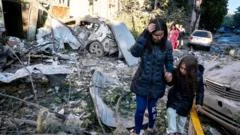
The bodies of an eight-year-old boy and three women were pulled from the rubble of an apartment block in Dnipro early Thursday morning, as the human cost of the latest wave of Russian strikes across Ukraine became devastatingly clear. The death toll has now climbed to at least 22 people, with rescue teams still digging through the debris, searching for anyone who might still be alive.
This is not just a number. It is a child who will never grow up. It is families shattered in seconds. And it is a stark reminder of the relentless toll this war continues to take on ordinary Ukrainian civilians.
Dnipro Apartment Block Becomes a Tomb
The most harrowing scene unfolded in the city of Dnipro, where a direct strike turned a residential building into a pile of twisted metal and concrete. Regional officials confirmed that among the 15 people killed in Dnipro alone were the eight-year-old boy and three women, all recovered from the same apartment block. Rescuers worked through the night, carefully lifting debris by hand and with heavy machinery, hoping to find survivors. At least 28 people were pulled from the rubble alive, but the search for more continues.
Why This Matters Right Now
This attack is not an isolated incident. It is part of a broader, intensifying pattern of Russian strikes targeting civilian infrastructure and residential areas. For every person reading this, the story is a window into the daily reality for millions of Ukrainians: the fear of a missile strike, the sound of an air raid siren, and the agonizing wait for news of loved ones. The death of a child in such an attack underscores the indiscriminate nature of the violence and raises urgent questions about the protection of civilians in conflict zones.
How the Attack Unfolded
The strikes began late Wednesday night and continued into Thursday morning. Multiple cities across Ukraine were targeted, but the attack on Dnipro was the deadliest. Witnesses reported hearing a series of explosions, followed by the terrifying sound of a building collapsing. Within minutes, emergency services were on the scene, but for many, help came too late. The scale of the destruction meant that rescue efforts were slow and painstaking.
Who Is Affected and What Officials Are Saying
The immediate victims are the families of the 22 people killed and the dozens more injured. Entire communities are in mourning. Local authorities in Dnipro have declared a period of mourning, and flags are flying at half-mast. Ukrainian officials have condemned the strikes as a deliberate act of terror against civilians. "This is the face of Russian aggression," a regional governor said in a statement. "They are targeting our homes, our children, our future." International leaders have also voiced their horror and reiterated their support for Ukraine.
What We Know So Far — and What Remains Unclear
What we know: At least 22 people are dead. An eight-year-old boy and three women were killed in Dnipro. Rescue operations are ongoing. The strikes involved missiles and drones.
What remains unclear: The exact number of people still trapped under the rubble. The full extent of injuries across the country. Whether the strikes were aimed at military targets or were indiscriminate attacks on civilians. The final death toll may rise as rescuers continue their search.
Risks, Concerns, and the Balanced View
The primary concern is the continued targeting of civilian areas, which is a violation of international humanitarian law. The risk for Ukraine is that these attacks will become more frequent and more deadly, further demoralizing the population and crippling infrastructure. From a broader perspective, some military analysts argue that such strikes are a tactical move to disrupt Ukrainian supply lines and command centers, even if they cause civilian casualties. However, the overwhelming evidence points to a pattern of attacks that show little regard for civilian life, raising serious questions about accountability and war crimes.
Why Similar Attacks Are Becoming More Frequent
This latest wave of strikes is part of a worrying escalation. In recent weeks, Russia has increased its use of long-range missiles and drones, targeting energy grids and residential areas. Analysts suggest this is a strategy to break Ukrainian morale and force the government into a weaker negotiating position. For civilians, this means a constant state of alert and the ever-present risk of becoming a casualty. The pattern is clear: as the war grinds on, the burden falls heaviest on those who are not fighting.
- At least 22 civilians killed in the latest Russian strikes across Ukraine.
- An eight-year-old boy and three women were among the dead in Dnipro.
- Rescuers have pulled 28 people alive from the rubble in Dnipro.
- The attacks involved a combination of missiles and drones.
"This is the face of Russian aggression. They are targeting our homes, our children, our future." — Regional official in Dnipro
What Readers Should Know Now
For those following the war, this is a moment to understand the human reality behind the headlines. For those who want to help, verified humanitarian organizations are providing aid to displaced families and supporting rescue efforts. Staying informed through credible news sources is crucial, as misinformation about the conflict is rampant. The most important takeaway is that the war is not abstract; it is a daily tragedy for millions of people.
What Could Happen Next
The death toll is expected to rise as rescuers clear more debris. Ukraine will likely call for more air defense systems from its allies to protect its cities. Russia may continue its campaign of strikes, potentially targeting other major cities. The international community will face renewed pressure to condemn the attacks and hold those responsible accountable. For the families of the victims, the long and painful process of grief and recovery is just beginning.
Our Take: Why This Story Matters Beyond One Incident
This story is a microcosm of the entire war. It is about the innocent lives lost, the bravery of rescuers, and the resilience of a nation under siege. The death of a child in a missile strike is not just a statistic; it is a moral indictment of a conflict that shows no signs of ending. This story matters because it forces us to confront the true cost of war, which is always paid in human lives. It is a reminder that behind every geopolitical analysis, there is a family that will never be the same.
FAQs
How many people were killed in the latest Russian strikes on Ukraine?
At least 22 people were killed across Ukraine, with the highest number of casualties reported in the city of Dnipro.
Who were the victims of the Dnipro apartment block strike?
Among the 15 people killed in Dnipro were an eight-year-old boy and three women, all pulled from the rubble of a single apartment block.
Are rescue operations still ongoing in Dnipro?
Yes, rescue teams are continuing to search through the debris for any remaining survivors or victims. They have already pulled 28 people alive from the rubble.
Why are Russian strikes targeting residential areas in Ukraine?
While Russia claims to target military infrastructure, the repeated strikes on residential buildings suggest a pattern of indiscriminate attacks that cause mass civilian casualties, which is a violation of international law.