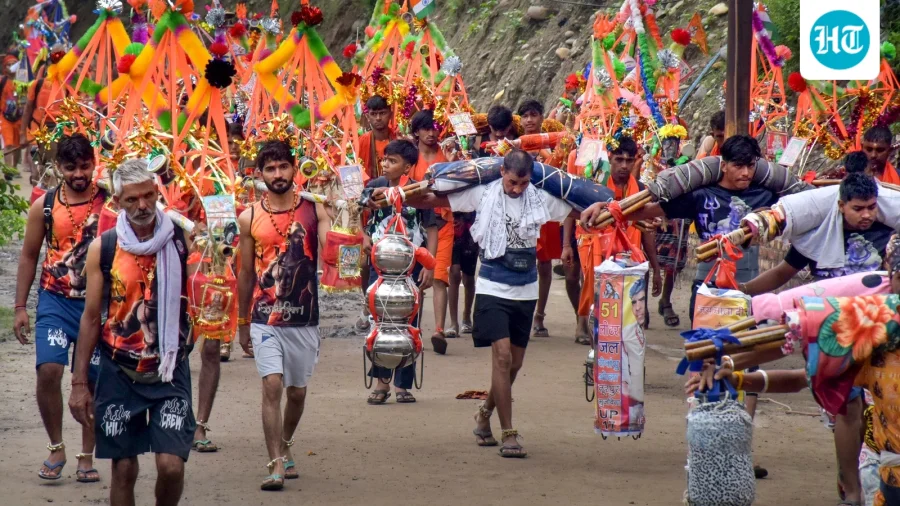
The annual Kanwar Yatra began on Thursday, bringing with it a wave of traffic restrictions across Delhi and Uttar Pradesh. For millions of commuters in the National Capital Region, this means longer travel times, route diversions, and heightened police presence at key junctions. The pilgrimage, which draws lakhs of devotees carrying holy water from the Ganga, is a deeply religious event — but for the average Delhi-NCR resident, it also signals a period of careful planning to avoid gridlock.
Which routes are affected in Delhi and Uttar Pradesh?
Traffic restrictions have been introduced on major arterial roads connecting Delhi to Uttar Pradesh, particularly those leading to Haridwar and other pilgrimage hubs. In Delhi, areas near the UP border — including Anand Vihar, Ghazipur, and Akshardham — are seeing increased police deployment and vehicle checks. In Uttar Pradesh, key routes through Ghaziabad, Meerut, Muzaffarnagar, and Roorkee are under strict monitoring. Authorities have set up dedicated lanes for Kanwar Yatra pilgrims to ensure their safe passage, but this has reduced road space for regular traffic.
Why these restrictions matter for daily commuters
For office-goers, students, and delivery personnel, the Kanwar Yatra period often means unpredictable delays. The restrictions are not just about traffic — they also involve security checks, which can slow movement at border points. Commuters traveling between Delhi and Noida, Ghaziabad, or Faridabad may face the most disruption. The emotional weight of the yatra for devotees is undeniable, but the practical impact on daily life is equally real. Many residents have already begun adjusting their schedules, leaving earlier or working from home where possible.
How the Kanwar Yatra evolved this year
The Kanwar Yatra is an annual pilgrimage observed during the Hindu month of Shravan, where devotees — known as Kanwariyas — walk to Haridwar, Gaumukh, or other Ganga ghats to collect holy water. They then return to their local Shiva temples to offer the water. This year, the yatra began on Thursday, with authorities expecting a significant number of participants. In previous years, the yatra has seen over a crore pilgrims, making it one of the largest religious gatherings in North India. The scale of the event necessitates extensive planning by traffic and police departments.
Who is most affected by the restrictions
The impact is most acute for daily commuters in Delhi-NCR, especially those who rely on roads connecting to Uttar Pradesh. Residents of East Delhi, Noida, Ghaziabad, and Meerut are likely to face the brunt. Additionally, commercial vehicles, including trucks and buses, may be diverted or delayed. For small business owners and delivery workers, every minute lost in traffic translates to lost income. The restrictions also affect emergency services, though authorities have said they are coordinating to ensure ambulances and fire brigades can pass through.
Official response from Delhi and UP Police
Delhi Police and Uttar Pradesh Police have jointly issued advisories, urging commuters to cooperate and plan alternate routes. "We have deployed additional personnel at border checkpoints and sensitive locations to ensure both the safety of pilgrims and minimal disruption to regular traffic," a senior Delhi Police officer said. The UP Police have set up control rooms to monitor the situation in real time. Social media handles of both police departments are being updated with live traffic information. Commuters are advised to follow these accounts for the latest updates.
What the restrictions mean in practice
The restrictions are not a complete shutdown but a series of diversions and speed limits on specific stretches. For example, on the Delhi-Meerut Expressway, certain lanes may be reserved for Kanwar Yatra vehicles. At border points, vehicles may be stopped for security checks, leading to queues. The police have also banned the movement of heavy vehicles on some routes during peak yatra hours. For the average commuter, the key is to avoid these routes during early morning and late evening hours, when pilgrim movement is highest.
Confirmed facts vs what remains unclear
Confirmed: Traffic restrictions are in place across Delhi and Uttar Pradesh as the Kanwar Yatra began on Thursday. Police have been deployed at key locations. Affected routes include major arterial roads and border points. Unclear: The exact duration of the restrictions — they are expected to last until the yatra concludes, but no specific end date has been announced. The precise list of all diverted roads is also not fully public; commuters are advised to check real-time updates from police sources.
Risks and balanced view of the restrictions
While the restrictions are necessary for the safety of pilgrims and to manage the massive crowd, they also create genuine hardship for daily commuters. Critics argue that better planning — such as staggered yatra timings or dedicated corridors — could reduce disruption. Supporters of the restrictions point out that the yatra is a centuries-old tradition and that the police are doing their best under challenging circumstances. The balance lies in acknowledging both the religious significance and the practical inconvenience.
Wider pattern of religious event traffic management
The Kanwar Yatra is part of a broader pattern in India, where major religious events — such as the Kumbh Mela, Chhath Puja, and Eid processions — require extensive traffic planning. Each year, authorities learn from past experiences, but the sheer scale of these events means that some disruption is inevitable. Technology, including real-time traffic apps and social media alerts, is increasingly being used to help commuters navigate these periods. The challenge remains to balance devotion with daily life in a rapidly urbanizing country.
Practical guidance for commuters
If you are traveling in Delhi-NCR or Uttar Pradesh during the Kanwar Yatra, here is what you can do: Check live traffic updates on Google Maps or the official Twitter handles of Delhi Police and UP Police. Avoid traveling on major routes connecting to Haridwar and Meerut during early morning (5 AM to 9 AM) and evening (5 PM to 9 PM). Use alternate routes like the Eastern Peripheral Expressway or the Delhi-Meerut Expressway's service lanes if possible. If your workplace is in a heavily affected area, consider working from home or adjusting your hours. For students, plan extra travel time for exams or classes.
What happens next
The Kanwar Yatra will continue for the duration of the Shravan month, with peak movement expected over the next few weekends. Authorities are likely to review and adjust restrictions based on real-time crowd data. Commuters should stay tuned to official advisories, as routes may be added or removed. The situation is fluid, and flexibility will be key. For the pilgrims, the journey continues; for the rest of Delhi-NCR, it is a time of patience and planning.
Our Take
The Kanwar Yatra is a powerful expression of faith, but it also highlights the tension between tradition and modern urban life. The traffic restrictions are a necessary compromise, but they also reveal the need for better infrastructure and planning for large-scale religious events. For now, the best approach for commuters is to stay informed, be patient, and respect the devotion of the pilgrims. The story is not just about traffic — it is about how a diverse society manages its many rhythms.
Frequently Asked Questions
Which routes are affected by Kanwar Yatra traffic restrictions in Delhi and UP?
Major routes include the Delhi-Meerut Expressway, roads near Anand Vihar, Ghazipur, and Akshardham in Delhi, and highways through Ghaziabad, Meerut, Muzaffarnagar, and Roorkee in Uttar Pradesh. Police have set up dedicated lanes for pilgrims, reducing space for regular traffic.
How long will the Kanwar Yatra traffic restrictions last?
The restrictions are in place for the duration of the Kanwar Yatra, which began on Thursday and continues through the Shravan month. No specific end date has been announced, but peak movement is expected over the next few weekends.
What should commuters do to avoid delays during Kanwar Yatra?
Check live traffic updates on Google Maps or official police social media handles. Avoid traveling on affected routes during early morning (5-9 AM) and evening (5-9 PM). Use alternate expressways like the Eastern Peripheral Expressway. Consider working from home or adjusting travel times.
Are there any security checks during the Kanwar Yatra?
Yes, police have deployed personnel at border checkpoints and sensitive locations for security checks. This may cause delays at entry points between Delhi and Uttar Pradesh. Commuters should carry valid ID and expect longer wait times.