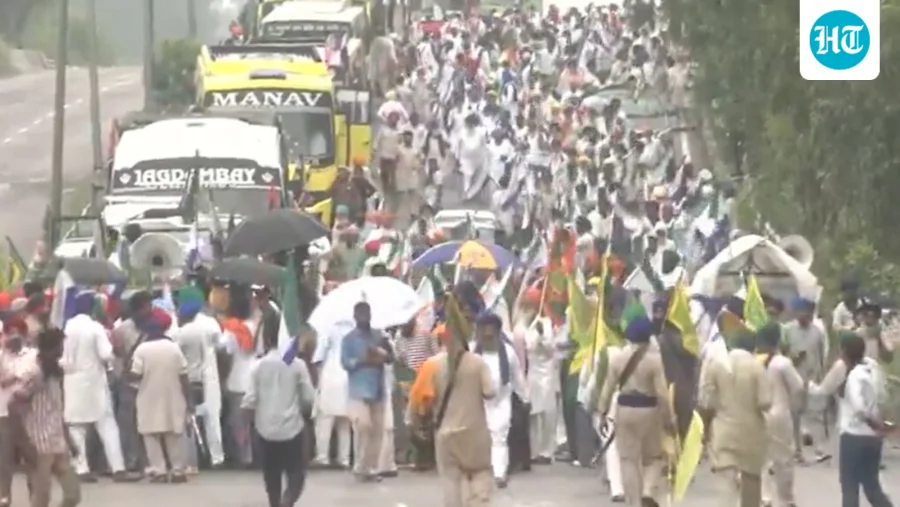
Thousands of farmers have once again gathered at the Shambhu border in Punjab, a familiar flashpoint for agrarian protests, as they prepare to march to Delhi for a Kisan Mahapanchayat. The sight of tractors, flags, and determined faces has revived memories of the 2020-21 protests, but this time, the immediate hurdle is a wall of barricades erected by the Haryana government.
Why farmers are marching to Delhi now
The farmers are heading to the national capital to participate in a Kisan Mahapanchayat, a large gathering aimed at pressing the central government on unresolved demands. Key issues include a legal guarantee for Minimum Support Price (MSP), debt waivers, and pension for farmers. The protest comes amid ongoing frustration over the lack of progress on promises made after the 2021 repeal of the three farm laws.
Haryana barricade: The immediate flashpoint
Farmer leader Sarwan Singh Pandher has accused the Haryana government of deliberately barricading the Shambhu border to stop the march. "They are blocking the democratic right of farmers to protest," Pandher said. The barricades, placed heavily on the Haryana side, have turned the border into a standoff zone. For the farmers, this is a direct challenge to their right to assemble and protest peacefully.
Who is affected and why it matters
For the thousands of farmers gathered, this is not just a march—it is a livelihood issue. Many have travelled from distant villages in Punjab, leaving their fields behind. The blockade affects not only the protesters but also local commuters and traders who use the border route daily. The standoff also raises broader questions about the right to protest in India and the balance between security and democratic expression.
Official response and government stance
While the Haryana government has not issued a detailed statement on the barricades, officials have cited security concerns and the need to maintain law and order. The Punjab government, meanwhile, has expressed support for the farmers' right to protest but has urged restraint. The central government has not yet commented on the specific march or the barricade.
What the barricade means for the protest
The barricade at Shambhu is a strategic choke point. If farmers cannot cross into Haryana, they cannot reach Delhi. This has forced the protesters to halt at the border, turning the site into a temporary camp. The situation mirrors the 2020-21 protests when farmers were stopped at Delhi's borders for over a year. The barricade is both a physical and symbolic barrier to their demands.
Confirmed facts vs what remains unclear
Confirmed: Thousands of farmers have gathered at the Shambhu border. The Haryana government has placed barricades. Farmer leader Sarwan Singh Pandher has accused the government of blocking the march. Unclear: The exact number of protesters, the duration of the blockade, and whether any negotiations are underway. It is also unclear if the farmers have an alternative route or plan.
Risks and balanced view
While the farmers have a democratic right to protest, the government's security concerns cannot be dismissed entirely. Past protests have led to clashes and disruptions. However, critics argue that barricading a border without dialogue escalates tensions. The risk of a prolonged standoff, with farmers camping in harsh weather, is real. Both sides need to find a resolution to avoid a repeat of the 2020-21 impasse.
Wider pattern of farmer protests
This gathering is part of a larger pattern of farmer unrest in India. Since the 2020-21 protests, farmers have continued to mobilize, especially in Punjab and Haryana. The demand for MSP legal guarantee remains a central, unresolved issue. The Shambhu border has become a symbol of this ongoing struggle, often witnessing protests and blockades.
Practical guidance for affected people
For commuters and locals near the Shambhu border, it is advisable to avoid the area and use alternative routes. Farmers planning to join the march should check for updates from protest leaders on the current status. For those concerned about the situation, following verified news sources and official statements from the Punjab and Haryana governments is recommended.
Future outlook
The immediate future depends on whether the Haryana government removes the barricades or the farmers find an alternative route. If the standoff continues, the protest could escalate or shift to other locations. The Kisan Mahapanchayat in Delhi may proceed without the Shambhu group, but the barricade issue could become a new rallying point for farmer unions across the country.
Our Take
The Shambhu border standoff is more than a logistical hurdle—it is a test of India's democratic fabric. Farmers have a constitutional right to protest, but the government also has a duty to maintain order. The lack of dialogue is concerning. Both sides must prioritize negotiation over confrontation. This story matters because it reflects the unresolved grievances of millions of farmers who feel unheard. A peaceful resolution is not just desirable—it is necessary for trust in the system.
Frequently Asked Questions
Why are farmers gathering at the Shambhu border?
Farmers are gathering to march to Delhi for a Kisan Mahapanchayat, a protest to demand legal guarantees for MSP, debt relief, and other agrarian reforms.
What is the Haryana government's role in this?
The Haryana government has barricaded the Shambhu border, blocking the farmers' route to Delhi. Farmer leaders accuse the government of preventing their democratic right to protest.
What is a Kisan Mahapanchayat?
A Kisan Mahapanchayat is a large gathering of farmers to discuss and protest agrarian issues. It is a platform for collective decision-making and pressure on the government.
What happens if the barricade is not removed?
If the barricade remains, farmers may camp at the border, seek alternative routes, or escalate the protest. The standoff could lead to prolonged tensions and potential clashes.