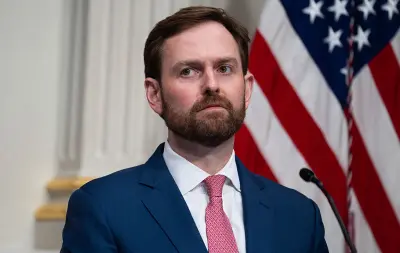
The United States government has privately told ASML, the Dutch company that makes the world’s most advanced chip-making machines, that it fears one of its top-of-the-line tools may have ended up in China. ASML has firmly denied the claim. The exchange, which took place between US Commerce Secretary Howard Lutnick and ASML’s senior leadership, has injected fresh tension into the already fraught global semiconductor supply chain.
What the US told ASML — and what ASML said back
According to a report by Bloomberg, Lutnick outlined concerns to ASML’s top executives that one of its extreme ultraviolet (EUV) lithography machines — the kind needed to produce the most advanced chips — may have made its way to a Chinese customer. ASML responded by stating unequivocally that the machine is not in China. The company has not provided further public details, but the denial was firm and immediate.
Why this matters for the global chip war
EUV machines are the crown jewels of semiconductor manufacturing. Each unit costs over $150 million and is tightly controlled under export restrictions led by the US and the Netherlands. If even one such machine were in China, it would represent a major breach of the most significant technology blockade of the decade. For the US, it would signal that its export controls are leaking. For ASML, it would mean a catastrophic loss of trust with its most important regulator.
The commercial logic that cuts against the US claim
There is a strong commercial reason why ASML would be unlikely to risk its export license. The company holds a near-monopoly on EUV machines. It does not need to smuggle one to China to make money. Its existing customers — TSMC, Samsung, Intel — pay billions. Losing access to the US market or facing sanctions would be far more damaging than any single sale to a Chinese firm. As one analyst put it, “ASML has everything to lose and very little to gain by breaking the rules.”
Who is affected by this dispute
If the US claim is true, it would undermine the entire architecture of export controls designed to slow China’s technological rise. If it is false, it risks damaging the relationship between Washington and one of its most critical allies in the chip war. For investors, the uncertainty alone is a risk. ASML’s stock is sensitive to any hint of regulatory trouble. For the broader tech industry, the outcome could shape how aggressively the US enforces its chip restrictions going forward.
What the US Commerce Secretary said — and what he didn’t
Howard Lutnick, who took office in 2025, has been more direct than his predecessors in pressing allies on chip compliance. His conversation with ASML was described as a “concern” rather than an accusation, but the implication was clear: the US believes there is a real possibility that an EUV machine has slipped through. Lutnick did not provide public evidence, and ASML has not been given a formal notice of violation. The matter remains in the realm of diplomatic pressure rather than legal action.
Why this story is more than a he-said-she-said
At its core, this dispute is about trust in the system of export controls. If the US cannot rely on ASML to self-police, it may demand more intrusive verification — including on-site inspections of Chinese factories. That would escalate the conflict further. On the other hand, if ASML is telling the truth, the US risks alienating a key partner by making unsubstantiated claims. Either way, the episode reveals how fragile the current arrangement is.
Confirmed facts vs what remains unclear
Confirmed: US Commerce Secretary Howard Lutnick raised concerns with ASML about a possible EUV machine in China. ASML has denied the claim. No public evidence has been released by either side. Unclear: Whether any machine actually reached China. Whether the US has intelligence to support its concern. Whether ASML has conducted its own internal investigation. All speculation about specific customers or locations is unverified.
ASML’s unique position in the chip ecosystem
ASML is not just any supplier. It is the sole manufacturer of EUV lithography machines, which use extreme ultraviolet light to etch circuits so small they are measured in nanometers. No other company in the world can make them. This monopoly gives ASML enormous leverage — but also makes it a target. The company’s entire business model depends on staying on the right side of export controls. Its compliance record has been strong, but the stakes have never been higher.
Risks and balanced view
If the US claim is correct, ASML faces severe consequences: fines, export license restrictions, and reputational damage. If it is incorrect, the US may be seen as overreaching, potentially pushing allies like the Netherlands to resist future demands. Critics of the US approach argue that export controls are already too broad and risk harming American companies more than China. Supporters say the controls are essential to maintaining technological superiority. Both sides have valid points, but the lack of public evidence makes it impossible to judge the current claim.
The wider pattern: US-China chip tensions escalate
This is not an isolated incident. The US has been tightening chip export controls since 2022, targeting not just equipment but also talent and software. China has responded by accelerating its own domestic chip production, though it remains years behind. The ASML dispute fits into a broader pattern of mistrust: the US suspects evasion, China denies it, and companies like ASML are caught in the middle. The outcome of this specific case could set a precedent for how future disputes are handled.
What investors and industry watchers should watch for
For now, the key signals to monitor are: any public statement from ASML or the US Commerce Department, any announcement of an investigation, and any change in ASML’s export license terms. Investors should also watch for comments from Dutch government officials, who have their own interests in protecting ASML. A formal US demand for proof could escalate quickly. A quiet resolution would suggest the matter was a misunderstanding.
What could happen next
Several scenarios are possible. The US could demand that ASML provide proof of where every EUV machine is located. ASML could push back, arguing that its existing compliance systems are sufficient. The Dutch government could intervene to mediate. Or the matter could simply fade if no evidence emerges. The most likely outcome is a period of heightened scrutiny, with ASML under pressure to demonstrate its compliance more transparently.
Our Take
This story matters because it tests the credibility of both the US and ASML at a critical moment. The US has staked its chip strategy on the assumption that export controls can be enforced. ASML has staked its business on the assumption that it can be trusted to comply. If either side is wrong, the consequences will ripple far beyond this single machine. For now, the absence of evidence means the benefit of the doubt goes to ASML — but the US clearly believes it has reason to be suspicious. That alone is a significant development.
Frequently Asked Questions
What is the ASML chip tool dispute about?
The US Commerce Secretary told ASML that one of its most advanced chip-making machines may have reached China. ASML denies this. The dispute is about whether export controls have been violated.
Why is ASML’s EUV machine so important?
EUV machines are the only tools capable of making the most advanced computer chips, used in smartphones, AI, and defense systems. ASML is the sole manufacturer globally.
Could ASML lose its export license?
If the US proves that ASML allowed an EUV machine to reach China, it could face severe penalties, including restrictions on its export license. However, no evidence has been presented yet.
What does this mean for the US-China chip war?
If the claim is true, it would show that US export controls are not fully effective. If false, it could strain US relations with key allies like the Netherlands. Either way, it highlights the high stakes of the technology rivalry.